- 5-500+ Ton Capacity | Custom-Engineered Heavy Lifting
- Full Hydraulic Drive | High-Torque Control for Rugged Jobsites
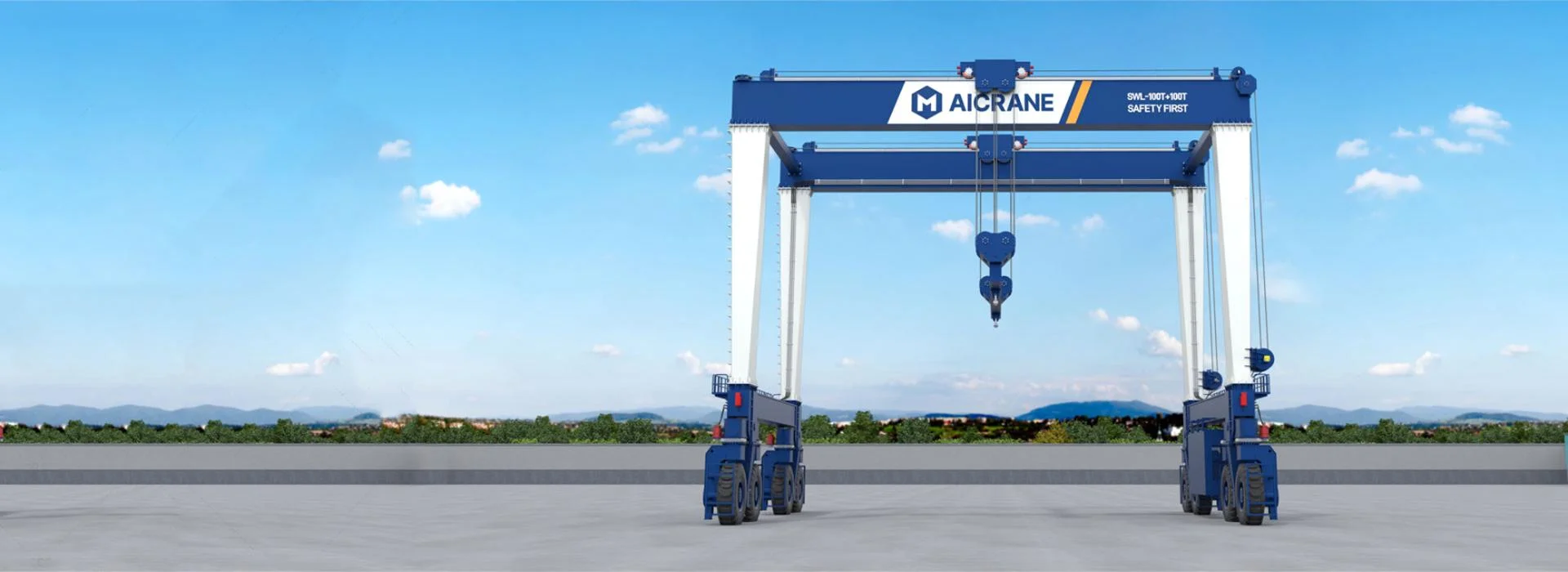
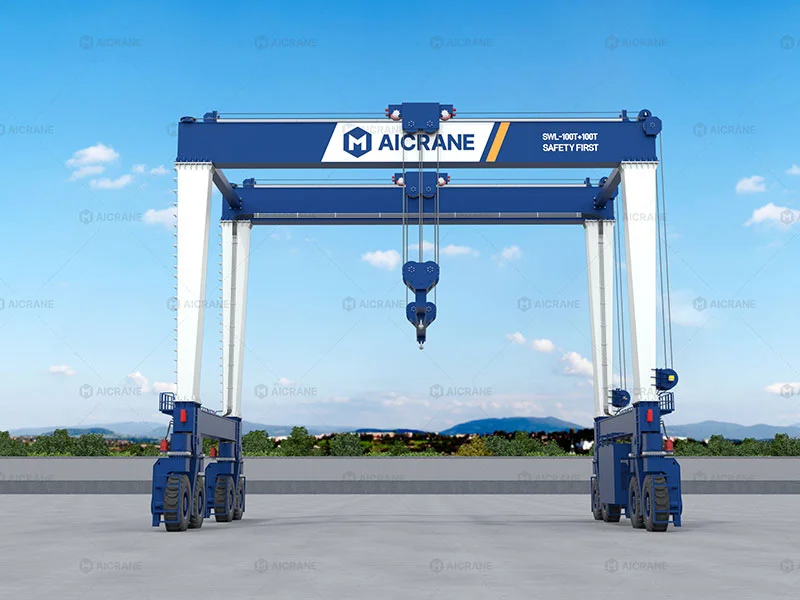
The YTL hydraulic rubber tyred gantry crane is designed for heavy-duty and large-component handling without fixed rail systems. Powered by an engine-driven hydraulic system, it provides high torque output, flexible steering, and customized lifting capacities from 5 to 500 tons for demanding precast, industrial, and marine applications.
YTL: Engineered for Reliable Performance in Demanding Working Conditions
YTL is engineered to tackle challenging jobsite conditions, integrating consistent hydraulic power, versatile steering modes, redundant safety systems, and standardized components to help contractors control risks, simplify maintenance, and maintain steady project timelines.
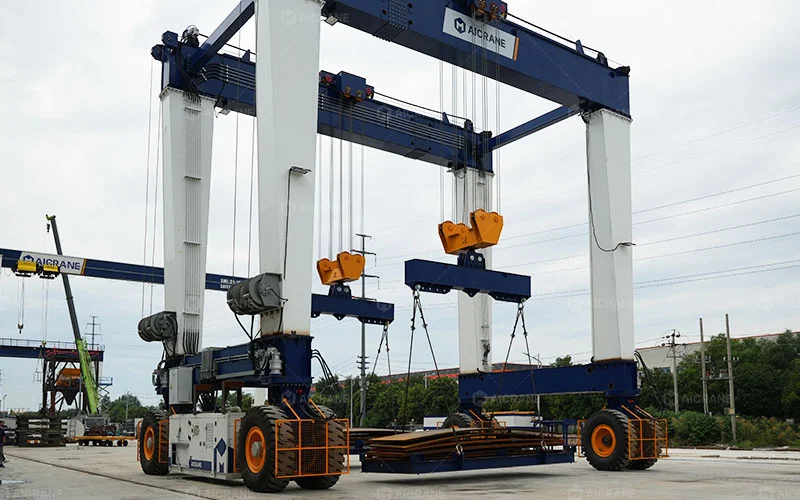
High-Load Stability: Consistent Power & Heavy-Duty Reliability
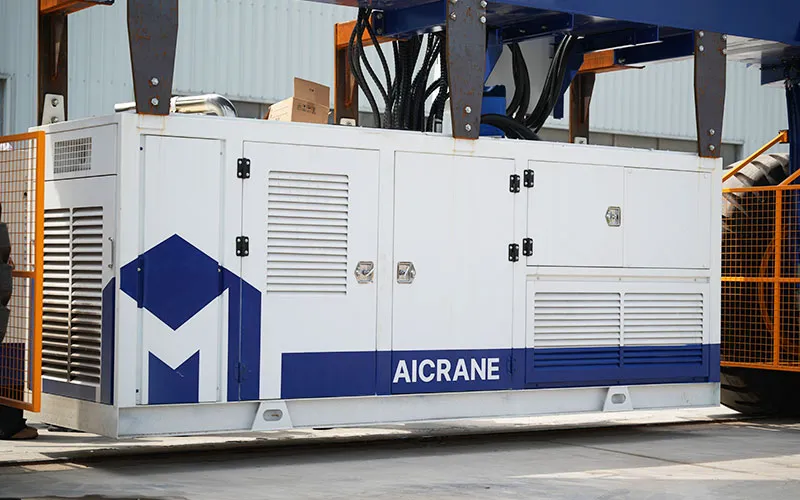
- Engine-Driven Hydraulic System: Direct coupling of engine and pump delivers smooth torque control, reducing power fluctuations during travel and hoisting for stable handling of sensitive loads.
- Integrated Travel Drive: Compact motor and planetary reducer configuration improves drivetrain efficiency and maintains traction on unpaved or uneven terrain.
- 5-500T Customized Structural Capacity: Load-bearing frames and critical structures are custom-engineered to handle repeated high-capacity lifts – such as precast concrete beams, steel structures, and heavy machinery – without premature fatigue.
Multi-Directional Mobility: Flexible Site Navigation without Rail Infrastructure
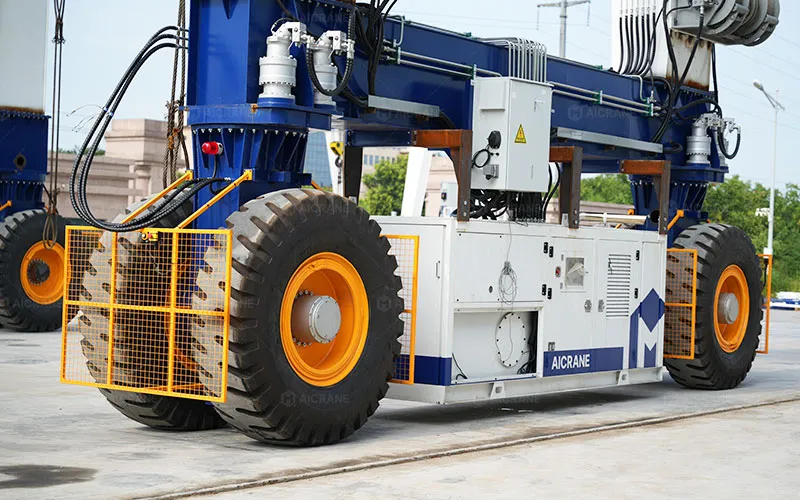
- 7 Configurable Steering Modes: The tire-based travel system enables straight, diagonal, 90° lateral, front/rear swing, 360° pivot, and Ackermann steering, allowing operators to navigate narrow corridors and non-standard project layouts.
- Customized Wheel Configurations: Steering geometry and axle load distribution are tailored to match specific component dimensions and ground pressure limits, avoiding expensive site modifications or rail setups.
Safety Protection: Multi-Layered Protection for High-Value Cargo
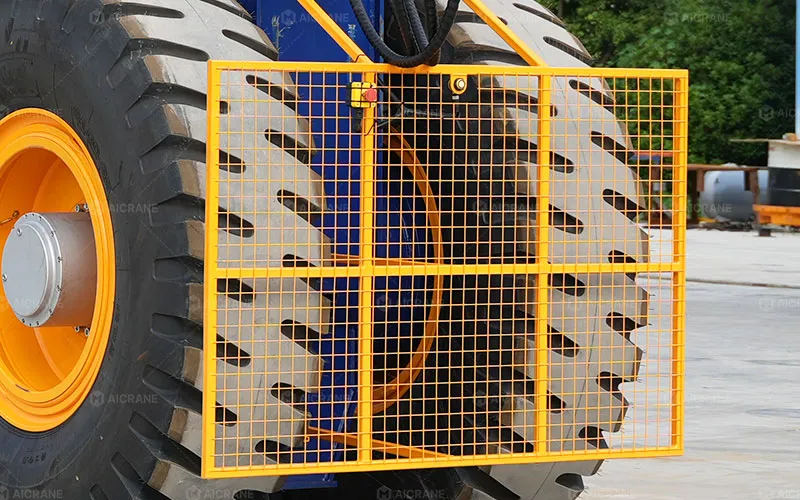
- Multi-Layer Safety Backup: Integrates overload protection, hydraulic relief valves, and emergency shut-offs to respond immediately to pressure spikes or operational anomalies.
- Dual-Stage Braking & Reinforced Rigging: Hoisting circuits use dual-stage braking with a mechanical backup brake. Combined with a wire rope safety factor of ≥5.6 and a forged hook with a 360° safety latch, load retention is secured during power outages or hydraulic interruptions.
- Real-Time Monitoring & Obstacle Detection: Wireless controllers provide clear visibility of system pressure, fluid temperature, and load status, while ultrasonic sensors assist operators in detecting perimeter obstacles during blind movements.
Equipment Serviceability: Designed for Easier Diagnostics & Global Sourcing
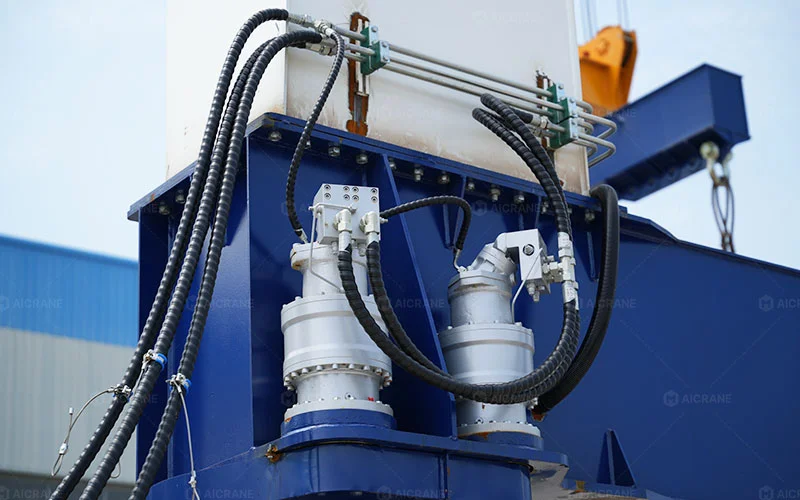
- 3D-Simulated Hydraulic Routing: Pre-assembled and modeled hydraulic piping prevents line abrasion, reduces leak points, and simplifies routine pressure inspections.
- Protected Conduit Wiring: Fully enclosed electrical harnesses guard cables against impacts and weather exposure while remaining easily accessible for diagnostics.
- Standardized Core Components: Main hydraulic valves, pumps, and electrical modules utilize globally common industry standards, allowing regional teams to source replacement parts locally without long international lead times.
Environmental Adaptability: Site-Ready for Diverse Climates & Standards
- Climate Resistance Packages: Optional cold-weather preheaters support reliable engine starting in low ambient temperatures, while upgraded cooling systems prevent overheating in high-humidity tropical zones.
- Protective Coatings: Marine-grade painting systems resist corrosion on coastal sites, salt-spray exposures, and harsh chemical environments.
- Regional Emission Compliance: Engine configurations can be selected to match local regulatory standards (Stage V, Tier 4 Final, etc.) for seamless project entry.
Configuration Options & Core Specifications
The YTL hydraulic rubber-tyred gantry crane offers tailored structural configurations and technical parameter ranges to match your specific lifting capacity, component dimensions, and site conditions.
Girder Structural Options
Depending on load characteristics, span requirements, and operating conditions, the YTL can be built in two primary structural configurations:
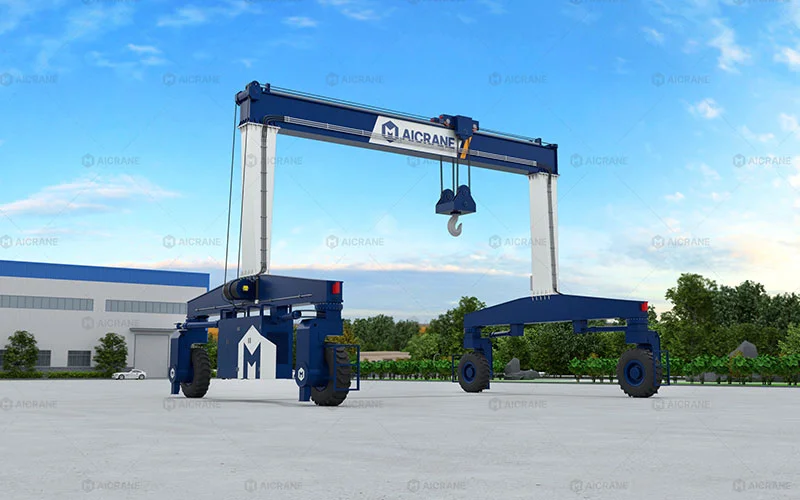
Single-Girder Option
The single-girder configuration features a lightweight and compact structure, making it suitable for medium-duty lifting applications, space-limited yards, and projects where structural efficiency is a priority.
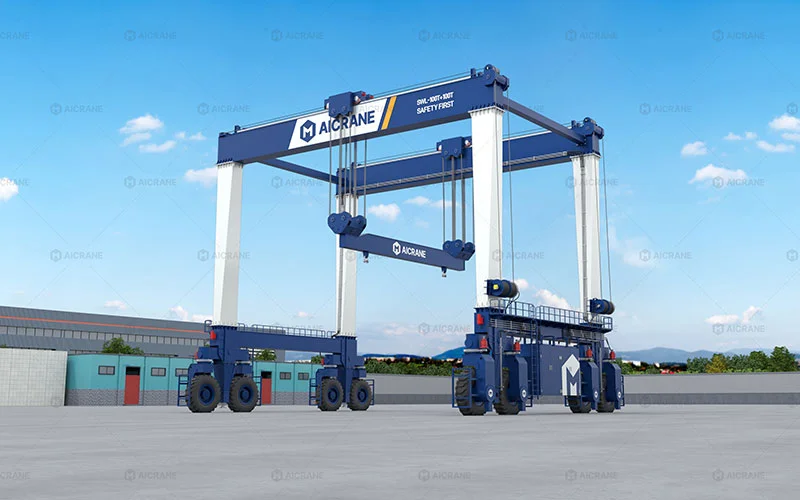
Double-Girder Option
The double-girder configuration provides higher structural rigidity and improved load distribution, making it ideal for heavy-duty lifting, oversized components, and long-span operations requiring enhanced stability.
Core Equipment Specifications
Every YTL unit is custom-engineered to align with site layout constraints and lifting parameters:
| Parameter | Specification |
|---|---|
| Model | YTL |
| Lifting Capacity | 5–500 T |
| Lifting Height | 5–15 m |
| Span | 6–20 m |
| Working Class | A3–A6 |
| Steering Modes | Straight-line movement, diagonal movement, 90° lateral shift, front swing, rear swing, 360° rotation, Ackermann steering |
| Drive System | Hydraulic Drive |
Field Application Scenarios: Where YTL Delivers Value
Traditional fixed crane infrastructure can limit operational flexibility when site layouts expand or lifting paths change. Below is how the YTL rubber tyred crane adapts to specific component-handling requirements across four key industrial sectors:
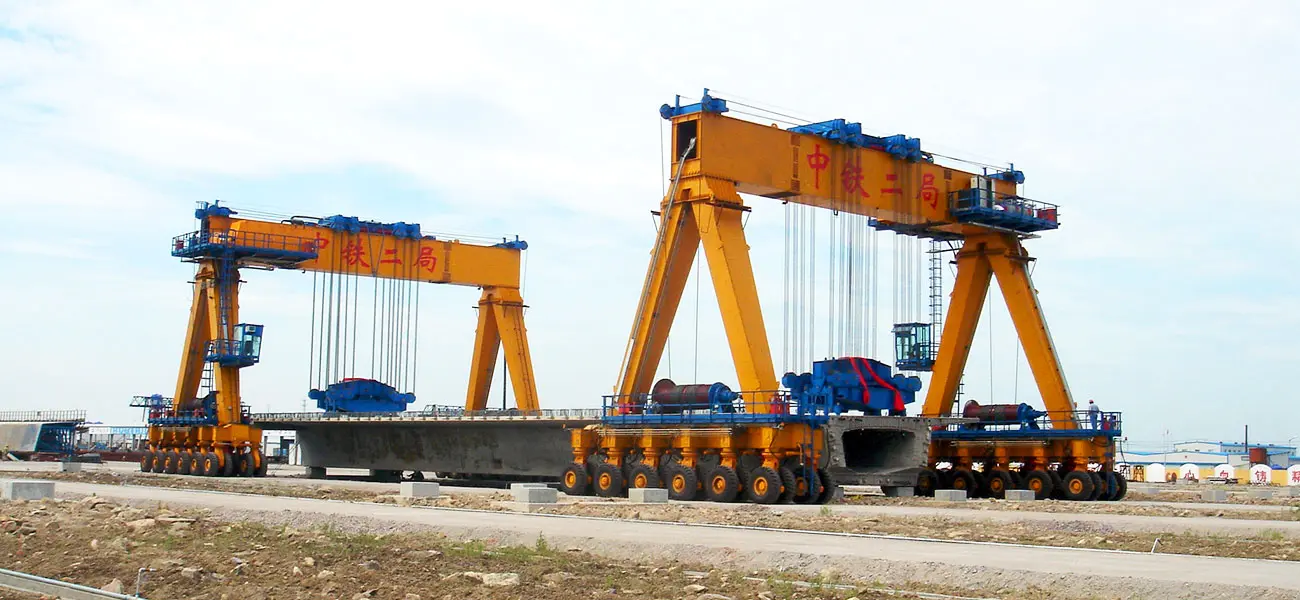
Precast Concrete Yards: Supporting Multi-Zone Material Flow
Centralized yards often supply multiple civil projects simultaneously. Moving box girders, T-beams, and concrete segments between casting beds, curing areas, and dispatch bays requires continuous routing adjustments as production volume increases.
- One crane serving multiple yard zones: YTL can move between casting beds, storage areas and loading zones without fixed rail tracks, allowing a single lifting system to support multiple production areas.
- Reduced restrictions during yard expansion: New storage areas or temporary working zones can be added without extending permanent crane runways.
- Better control for large precast components: Multi-directional steering enables accurate positioning of concrete beams and segments during transfer and stacking.
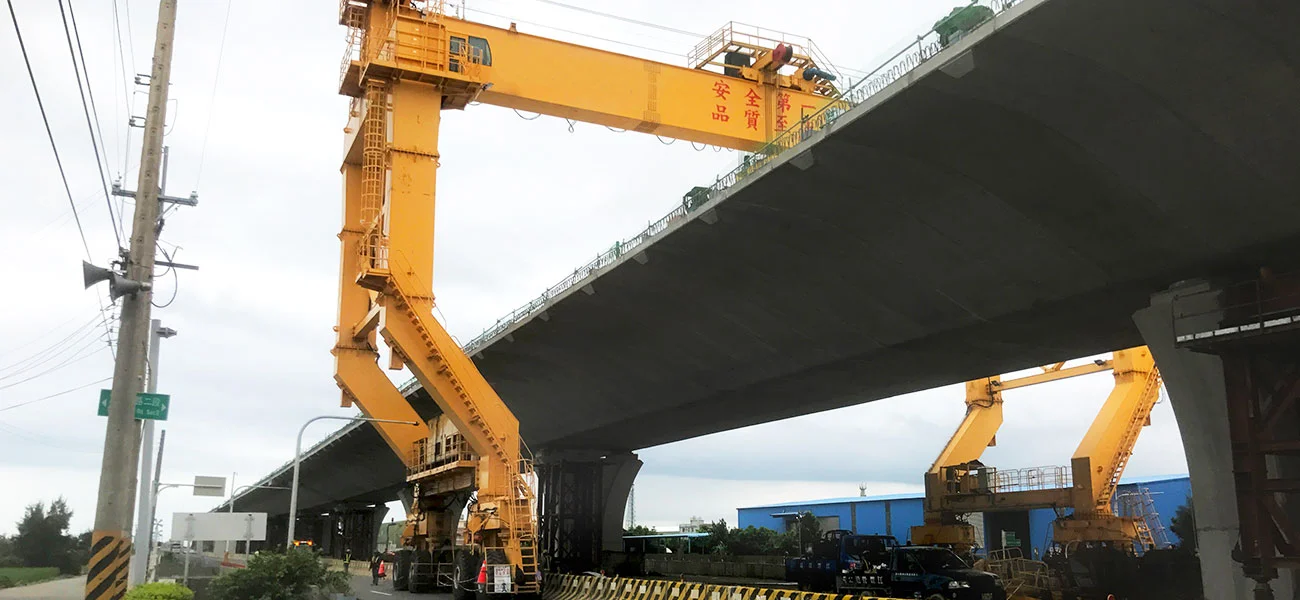
Bridge & Infrastructure Construction: Following Linear Site Progress
Highway and rail infrastructure projects advance linearly across long distances. As installation active zones move forward, setting up fixed crane rails at each consecutive section increases civil engineering overhead and project lead times.
- Phased Relocation: Rubber-tyred mobility enables the crane to drive directly to the next installation phase along prepared access roads, avoiding teardown and re-erection cycles.
- Reduced Temporary Works: Reduces the need for continuous concrete foundations or heavy rail prep along temporary lifting paths.
- Precision Placement: Stable travel dynamics and micro-meter positioning support the alignment of long steel girders and precast segments during placement.
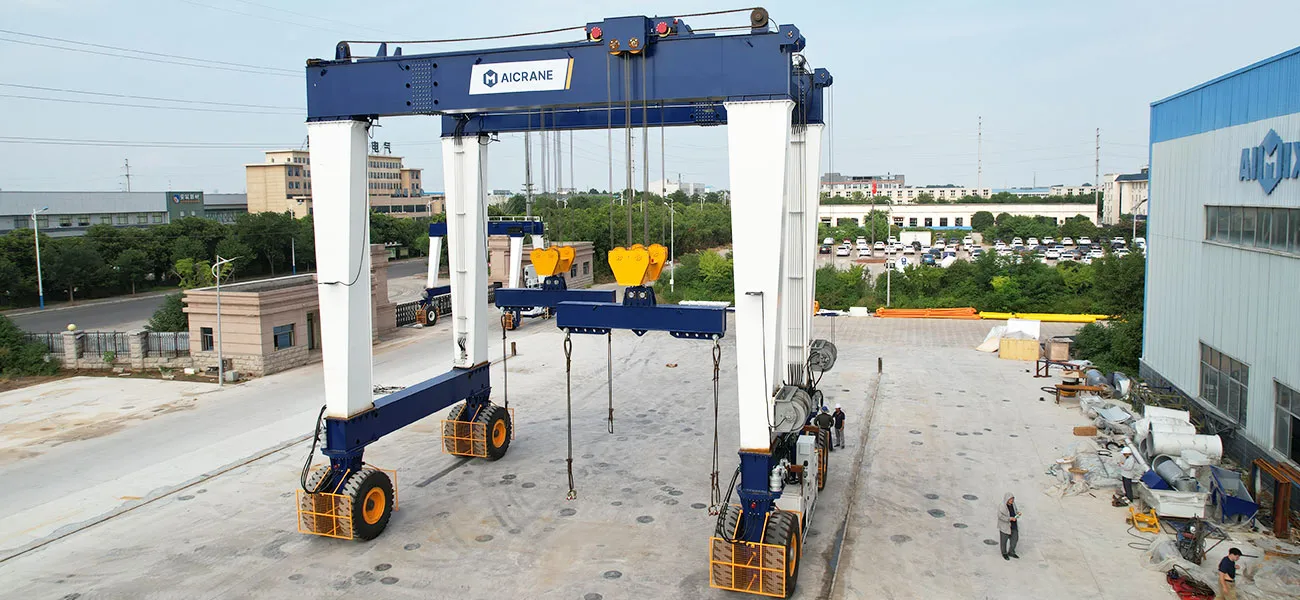
Heavy Industrial Fabrication: Extending Lifting Beyond Workshop Bays
Large pressure vessels, heat exchangers, and fabricated machinery modules frequently exceed the physical reach of workshop overhead cranes during outdoor assembly, painting, and trailer loading.
- Outdoor Yard Mobility: Serves as a flexible lifting link between shop exits, open-air assembly pads, and transport trailers.
- Obstacle Navigation: Easily maneuvers around changing yard storage profiles and temporary site obstructions that would block fixed rail equipment.
- Fit-Up Support: Controlled speeds assist fitting teams during the fine alignment of heavy vessel shells and structural modules prior to welding.
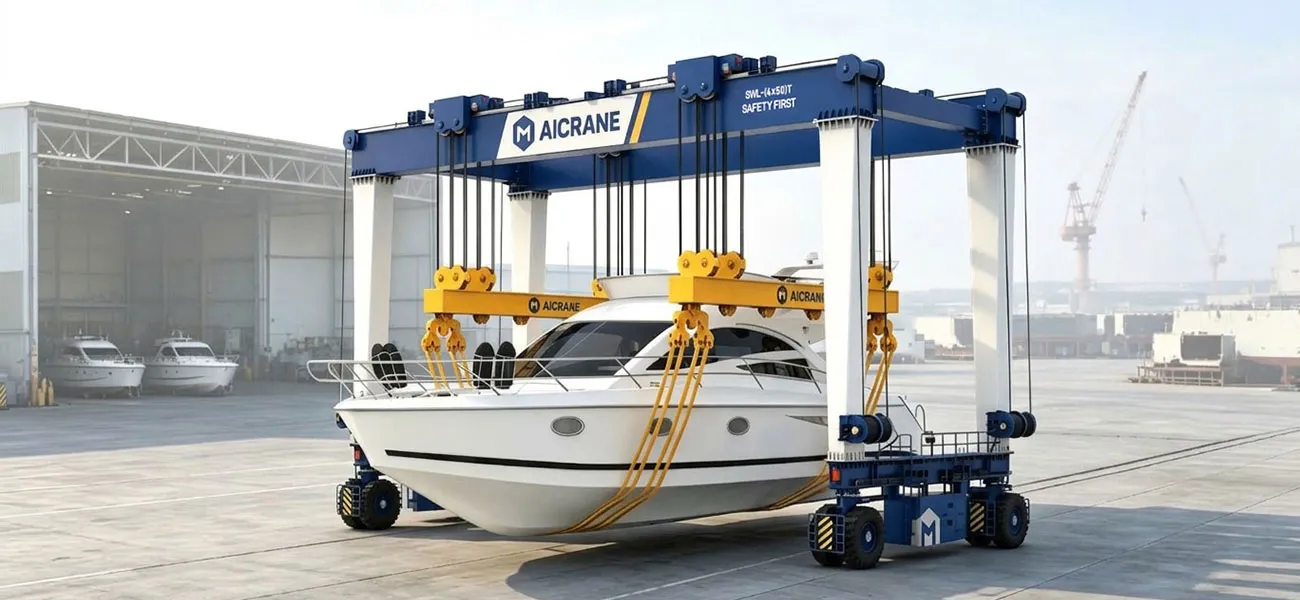
Shipyards & Coastal Facilities: Dynamic Handling in Marine Environments
Marine fabrication involves moving wide hull blocks, piping spools, and topside modules across sprawling coastal yards where build sequences shift and salt-spray corrosion is a continuous factor.
- Flexible Dock Assignment: Can be re-allocated across different hull assembly zones, block storage fields, and dry docks as vessel production schedules evolve.
- Corrosion Resistance: Available with marine-grade protective coatings and enclosed electrical conduits for long-term outdoor exposure in humid environments.
- Wide-Load Transport: Multi-directional steering geometry manages long or wide structural blocks through tight shipyard corridors.
Featured Project: 40T YTL Crane Replaces Forklift Handling in USA Steel Tank Manufacturing
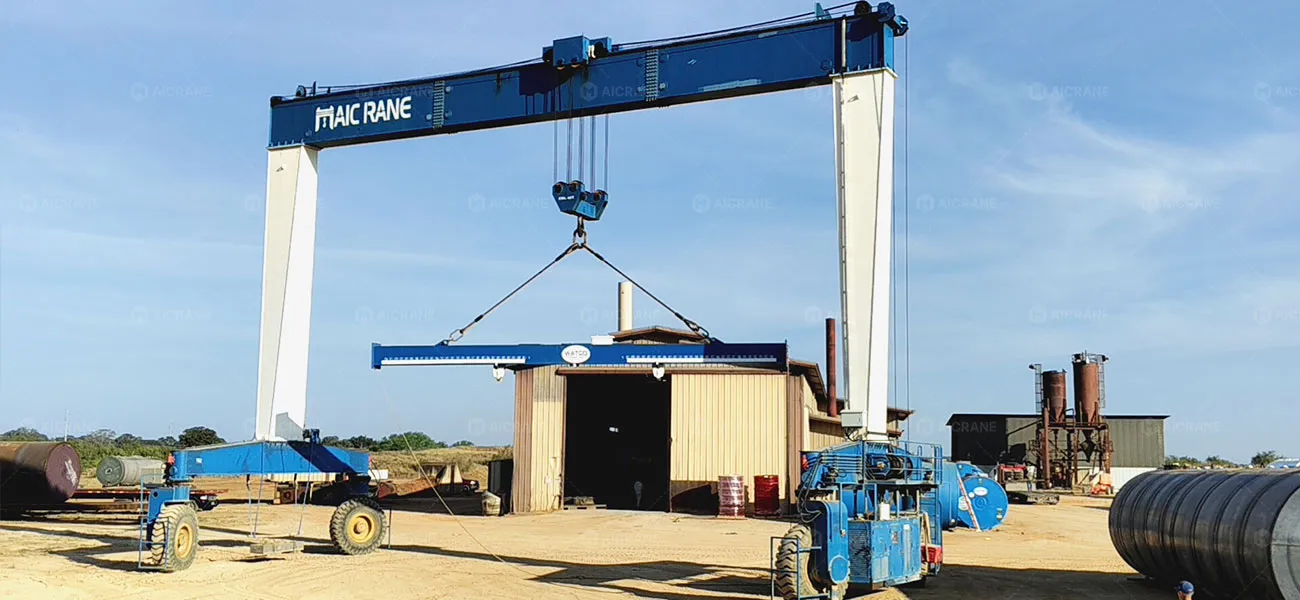
Customer Challenge
Before purchasing the YTL hydraulic rubber tyred gantry crane, the customer relied on forklifts to transfer finished steel tanks inside the factory yard.
However, forklift-based handling created several limitations:
- Limited capacity for oversized tanks: Larger tanks were difficult to move efficiently, especially during storage transfer and truck loading operations.
- Lower handling efficiency: Forklift movement required repeated repositioning and could not provide flexible multi-directional positioning for large components.
- High operator dependency: Forklift operation required dedicated operators, increasing labor requirements and daily operating costs.
The customer needed a more flexible lifting solution that could handle large tanks efficiently while adapting to existing yard conditions.
YTL Solution
- Customized 40T hydraulic rubber tyred gantry crane: The lifting capacity, span and overall dimensions were optimized according to the customer’s tank size, handling process and yard layout.
- 7 steering modes for flexible positioning: Unlike conventional forklift movement, YTL supports straight travel, diagonal movement, 90° lateral shifting and in-place rotation, allowing operators to position large tanks accurately in confined areas.
- Wireless remote operation: Remote control simplifies lifting and traveling operations, reducing dependence on specially trained forklift operators.
- Tire-mounted mobile design: The crane operates directly on the existing yard surface without fixed rails, providing greater flexibility for changing production layouts.
Project Result
The YTL40 hydraulic rubber tyred gantry crane transformed the customer’s tank handling process from forklift-based transportation to a dedicated mobile lifting solution.
- 30% higher daily tank transfer efficiency through faster positioning and smoother handling operations.
- Reduced forklift operator dependency with wireless remote-controlled operation.
- Expanded handling capability to 40T steel tanks, overcoming previous forklift limitations.
- One solution for multiple tasks: tank transfer, storage and truck loading.
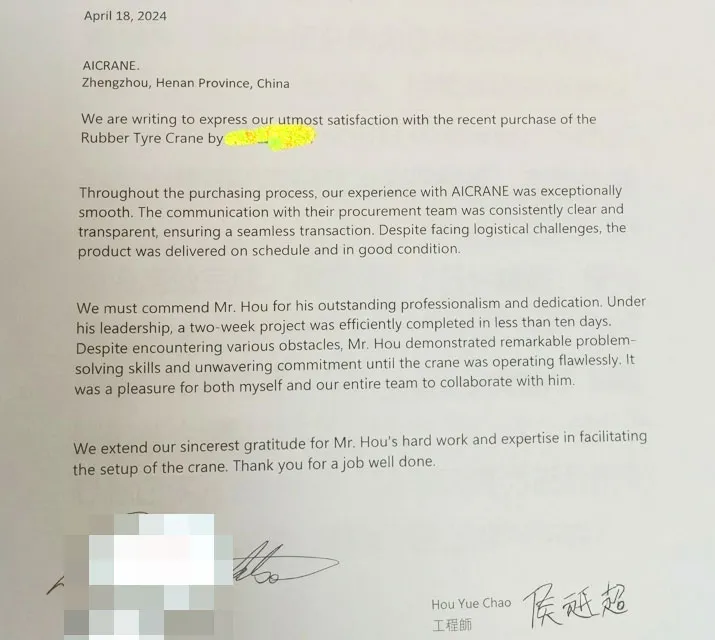
Customer Testimonial
“The communication with their procurement team was consistently clear and transparent, ensuring a seamless transaction. The product was delivered on schedule and in good condition.”
“Mr. Hou demonstrated remarkable problem-solving skills and unwavering commitment until the crane was operating flawlessly. We extend our sincerest gratitude for Mr. Hou’s hard work and expertise in facilitating the setup of the crane.”
– President, US Steel Tank Manufacturing Facility
Product Line Comparison: YTL vs. DTLS Series
This comparison highlights three representative AICRANE rubber tyred gantry crane models – YTL and DTLS – focusing on their differences in drive systems, girder configurations, structural design and suitable operating requirements.
| Comparison Factor | YTL Hydraulic Rubber Tyred Gantry Crane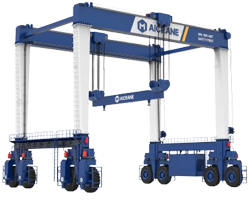 | DTLS Electric Rubber Tyred Gantry Crane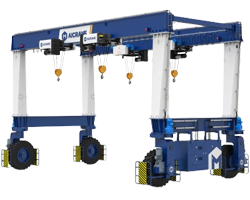 |
|---|---|---|
| Drive System | Hydraulic drive system | Electric drive system |
| Power Options | Engine-driven hydraulic power | Diesel generator, cable reel or battery power |
| Typical Capacity Range | 5-500 t | 5-100 t |
| Structural Focus | High torque output & smooth low-speed control for heavy loads | High structural rigidity & balanced load distribution for wide spans |
| Target Application | Heavy-duty, oversized component handling in off-grid or rugged sites | Medium-to-heavy industrial fabrication and precast handling |
Key Decision Drivers: Choosing the Right Series
- Select the YTL Series if: Your project involves high-tonnage lifting (up to 500T), demanding off-paved site conditions, or requires high torque and fine positioning control for non-standard, heavy components.
- Select the DTLS Series if: Your operations require higher structural stiffness, wider span coverage, and stable double-girder load handling for mid-to-heavy components (up to 100T) with electric power options. Learn more about the DTLS Electric Double-Girder Rubber Tyred Gantry Crane.
FAQs About YTL Hydraulic Rubber Tyred Gantry Crane
What is a YTL hydraulic rubber tyred gantry crane?
How does a hydraulic rubber tyred gantry crane work?
What lifting capacity can a YTL hydraulic rubber tyred gantry crane handle?
What is the difference between hydraulic and electric rubber tyred gantry cranes?
The main difference is the drive technology and operating characteristics.
A hydraulic rubber tyred gantry crane provides:
- Higher torque output for heavy-load operation
- Smooth speed control and flexible movement
- Strong adaptability for demanding working conditions
Electric rubber tyred gantry cranes can be configured with diesel generator, cable reel or battery power options and are suitable for projects prioritizing electric operation and structural efficiency.
What industries use YTL hydraulic rubber tyred gantry cranes?
YTL hydraulic rubber tyred gantry cranes are commonly used for:
- Precast concrete manufacturing: Handling bridge beams, concrete segments and large precast components.
- Infrastructure projects: Transporting bridge sections and oversized structural elements.
- Steel fabrication: Moving steel trusses, frames and fabricated structures.
- Heavy industry: Handling machinery, industrial modules and oversized equipment.
- Wind energy and shipbuilding: Moving large turbine components and marine structures.
How do I choose the right YTL rubber tyred gantry crane for my project?
The right YTL configuration depends on several factors, including:
- Load requirements: Weight, size and shape of the components being handled
- Working environment: Available space, ground conditions and travel routes
- Operation requirements: Required mobility, positioning accuracy and handling frequency
- Future needs: Possible capacity expansion or different component handling requirements
AICRANE engineers can recommend the suitable configuration based on the complete project conditions.
How much does a YTL hydraulic rubber tyred gantry crane cost?
The price of a YTL hydraulic rubber tyred gantry crane depends on factors such as:
- Lifting capacity
- Girder configuration
- Span and lifting height
- Steering system
- Power configuration
- Safety and customization requirements
Because YTL rubber tire cranes are engineered according to specific project conditions, AICRANE provides customized quotations based on customer requirements.
Get a Custom YTL Engineering Proposal for Your Handling Requirements
To develop the right YTL hydraulic rubber tyred gantry crane solution, our engineers evaluate your load characteristics, handling process and site conditions.
Share your key project information:
- Load Characteristics: Weight, dimensions, lifting points, center of gravity and load distribution.
- Handling Requirements: Transfer process, lifting frequency and application scenarios such as precast handling, industrial component movement or truck loading.
- Site & Mobility Conditions: Yard layout, travel routes, working space, ground conditions and steering requirements.
- Crane Configuration: Lifting height, span, power options, control system and environmental protection requirements.
Send us your site layout or handling requirements. AICRANE engineers will provide a customized GA drawing, technical recommendation and project proposal based on your application needs.