


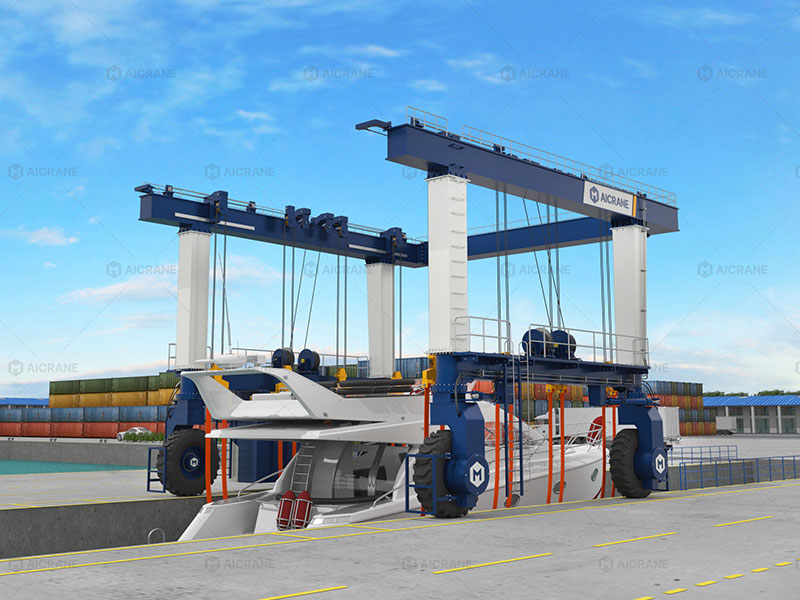
Aicrane boat travel lift (also known as a marine travel lift or mobile boat lift) is a professional-grade vessel handling solution designed for lifting and transporting boats with precision and safety. Built in compliance with international standards, it is widely used for yacht launching, vessel maintenance, and heavy-duty marine operations. With lifting capacities ranging from 10 tons to 1200+ tons, our boat travel lift cranes deliver reliable performance and high operational efficiency for marinas, shipyards, and industrial waterfront projects worldwide.
Marine Travel Lift Specifications: 10t – 1200t+ Capacity
The MBH series boat travel lift is engineered for high-performance vessel handling and industrial lifting. Below are the structured technical parameters across our primary capacity ranges. Whether you require a 10 ton small travel lift or a heavy duty boat lift up to 1200 tons, our systems are fully customizable to your site requirements.
| Boat Travel Lift Specifications | ||||
|---|---|---|---|---|
| Capacity (T) | 10-100T | 100-400T | 400-800T | 800-1200T |
| Span (m) | According to customer requirements | |||
| Lifting height (m) | According to customer requirements | |||
| Lifting speed (full load) | 0-1m/min | 0-1m/min | 0-1m/min | 0-1m/min |
| Lifting speed (no load) | 0-3m/min | 0-3m/min | 0-2m/min | 0-2m/min |
| Number of tires | 4 | 8 | 16 | 32 |
| Running speed (full load) | 0-20m/min | 0-20m/min | 0-20m/min | 0-20m/min |
| Running speed (no load) | 0-40m/min | 0-30m/min | 0-25m/min | 0-25m/min |
| Ground pressure (Bar) | ≤7 | ≤9 | ≤10 | ≤10 |
| Gradeability | 4% | 3% | 3% | 3% |
Each boat travel lift for sale can be fully customized in terms of structure, power, control, and steering configuration to meet specific site requirements. To help you evaluate suitable configurations, the following section introduces the key technical features and advantages of Aicrane boat lifts.
Technical Features and Advantages of Aicrane Travel Lifts
Aicrane MBH series boat travel lifts are designed for demanding marine and industrial lifting environments, focusing on structural reliability, operational safety, and long-term durability.
FEA-Optimized Structure: Maximum Stability and Longevity
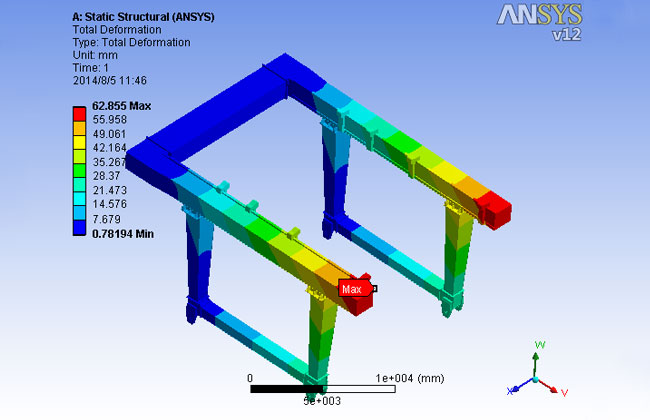
- The structure is validated through ANSYS Finite Element Analysis (FEA), which simulates real working load conditions to understand stress distribution and improve long-term fatigue resistance.
- Depending on vessel type and working conditions, the structure can be configured as either an open U-frame for boats with masts and protruding parts, or a closed box-frame for industrial and precast handling applications.
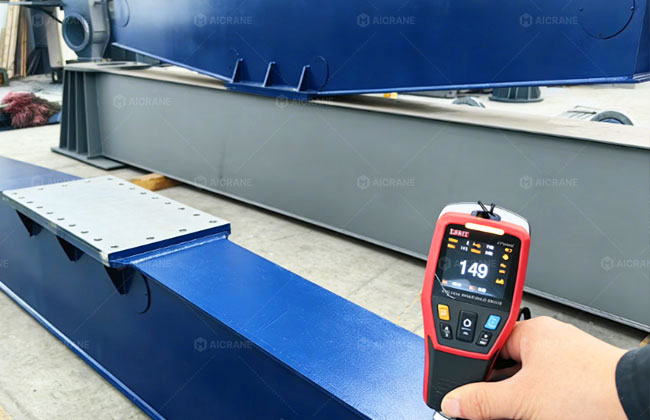
- The main frame is built using Q355B low-alloy steel in a box-girder design. It provides strong rigidity while keeping the overall structure balanced under heavy lifting conditions, especially during repeated operation cycles.
- For corrosion protection, the steel surface is treated with Sa 2.5 sandblasting followed by a ≥120um coating system using epoxy zinc-rich primer and polyurethane finish. This is designed for long-term use in marine humidity and outdoor environments.
Synchronized Hoisting Technology: Precision Handling and Load Safety
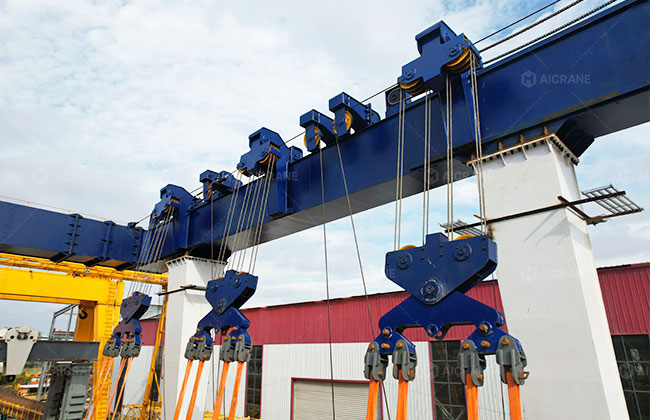
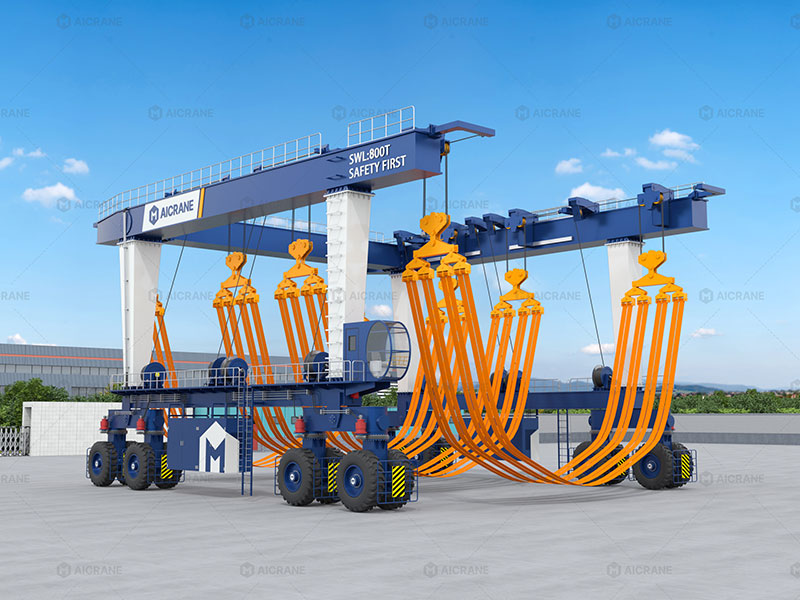
- The lifting system is designed for synchronized multi-point operation, typically configured with 4, 6, or 8 lifting points depending on capacity. Each winch works independently but remains synchronized during lifting and lowering operations.
- Load sensors and height encoders continuously send real-time data to the PLC system. This allows the operator to monitor lifting conditions and helps prevent issues such as overload, uneven lifting, or slack-rope situations.
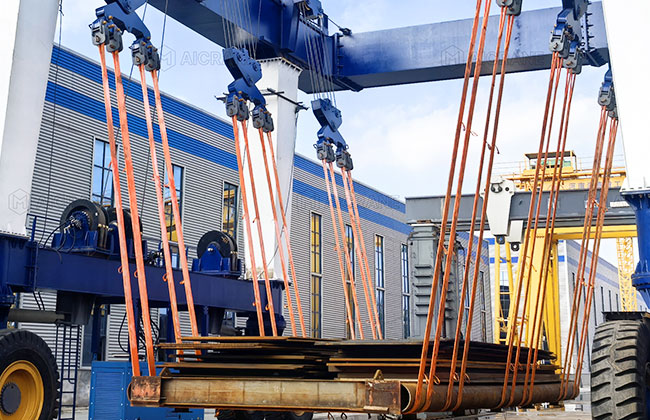
- High-strength fiber slings with protective rubber layers are used to reduce direct contact pressure on the lifted object. Rubber pads are also placed at key contact areas to protect yacht hulls or industrial components during handling.
Multi-Mode Steering System: Enhanced Maneuverability in Confined Spaces
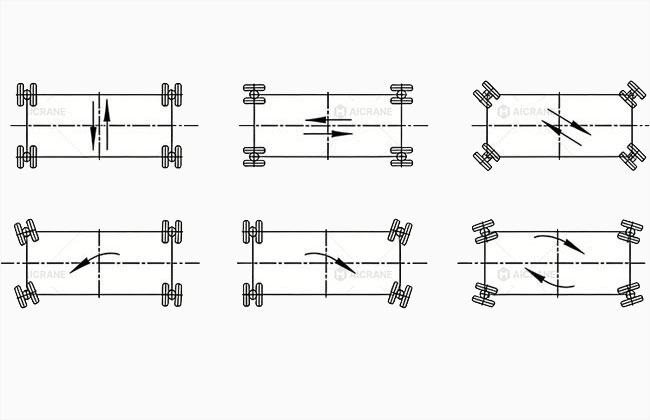
- The hydraulic steering system is designed for flexible movement in confined or complex yard environments. It supports multiple travel modes, including Ackermann steering, 90° lateral movement, 360° rotation, and diagonal travel. This makes positioning easier during vessel handling in limited working spaces.
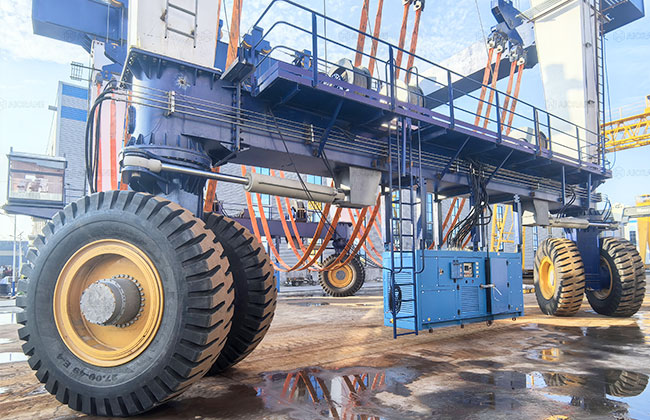
- Depending on capacity, the mobile boat crane is equipped with 4 to 32 high-strength tires to distribute load evenly and maintain stable ground pressure during operation.
Premium Power and Hydraulics: High-Torque Performance and Energy Efficiency
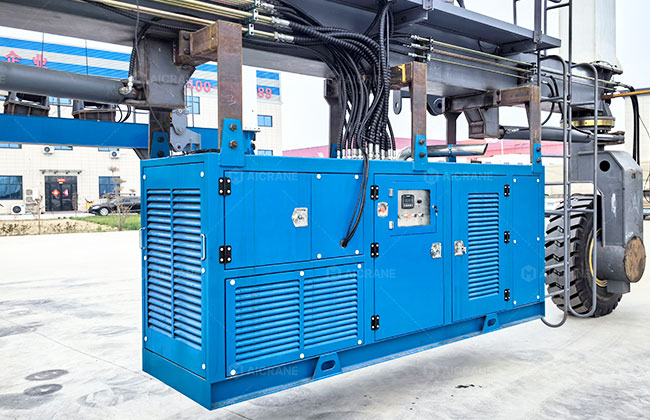
- The travel lift crane is powered by a Cummins diesel engine designed for continuous heavy-duty operation. Fuel consumption is optimized at around 210 g/kW·h, making it suitable for long working cycles in shipyards and marine facilities.
- For models above 250 tons, a dual-power unit configuration is often used to improve stability and synchronization during multi-point lifting operations.
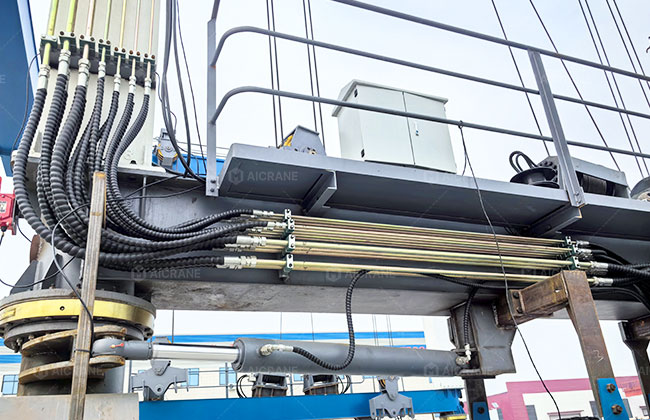
- Danfoss pump stations and Rexroth hydraulic valves are used to maintain stable hydraulic response during lifting, traveling, and steering operations. Hydraulic pipelines use cold-drawn galvanized steel tubing combined with multi-stage filtration systems to maintain internal cleanliness and reduce wear on key components.
- An integrated oil cooling system helps control hydraulic temperature during continuous operation, keeping performance stable in high-temperature working environments.
Integrated PLC Intelligence: Smart Diagnostics and Reduced Downtime
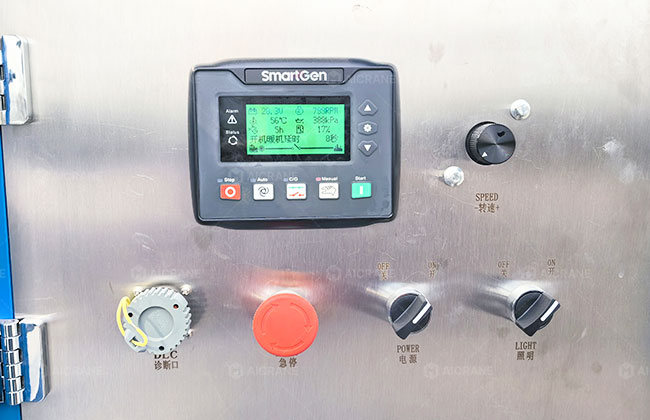
- A SmartGen industrial display provides centralized control and live operating data. Operators can monitor system status and adjust key parameters directly during daily lifting work in shipyard environments. The PLC system generates specific fault codes when issues occur. This allows operators and maintenance teams to quickly identify problems and reduce downtime during troubleshooting.
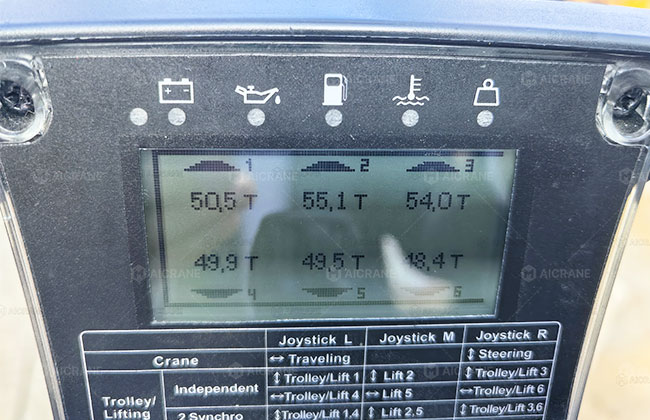
- The wireless remote control includes a built-in display for real-time feedback during operation. Key data such as load weight, hydraulic oil temperature, and system status can be checked from a safe working distance.
Every technical feature of the Aicrane travel lifts is designed to deliver measurable results in real-world environments. Explore our projects below to see how our cranes for lifting boats are optimizing operations in shipyards and industrial sites worldwide.
Boat Travel Lift Projects
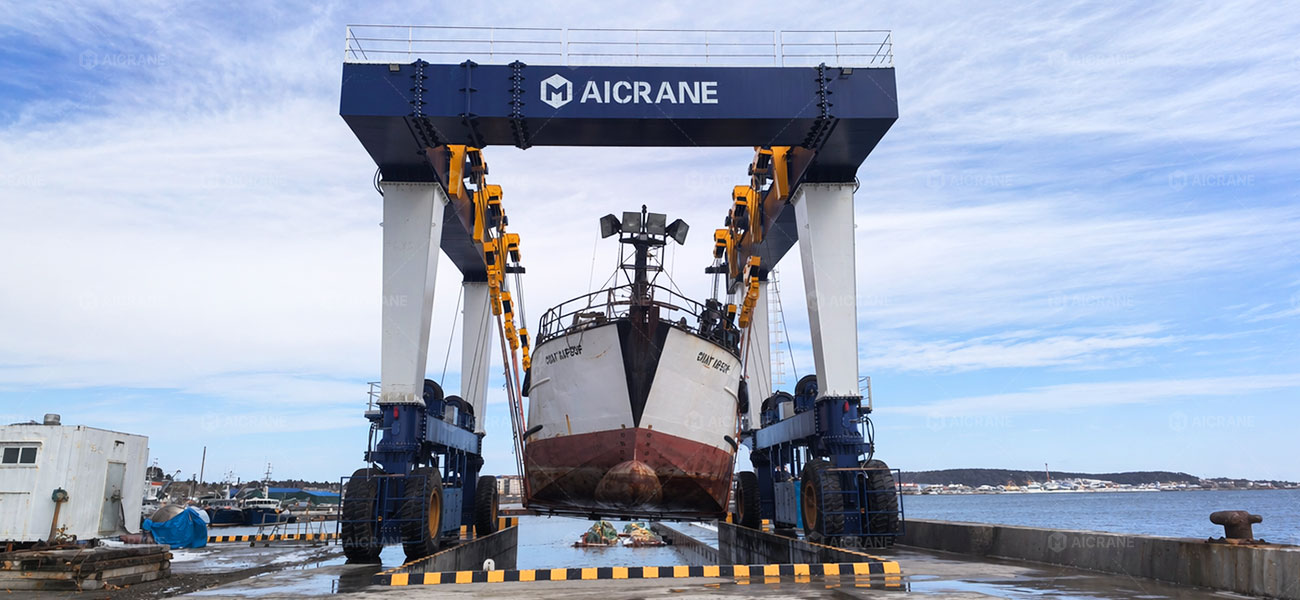
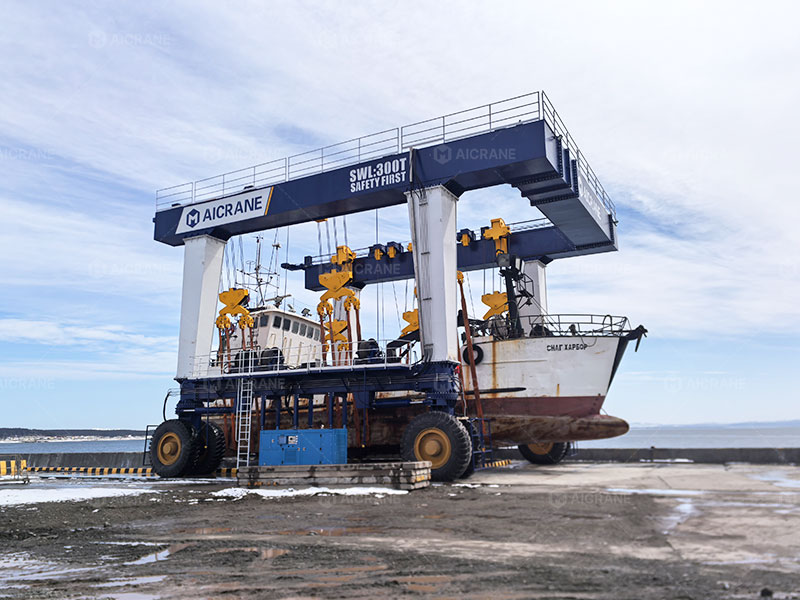
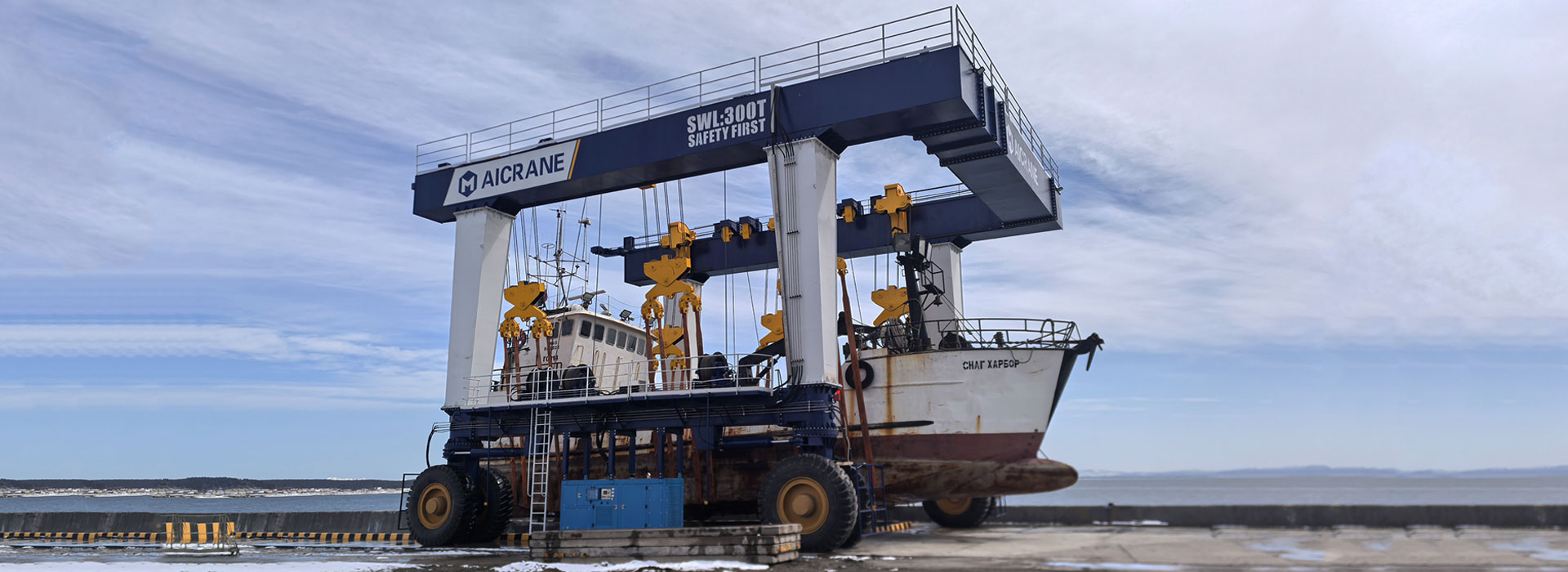
300 Ton Marina Boat Lift for Heavy-Duty Winter Operations
Project Location: Russia
Application: Marina fishing boat lifting in extreme cold climate
Project Overview
This 300-ton marina travel lift was installed in a Russian coastal yard where winter temperatures can drop below -30°C. The equipment is required to maintain stable lifting performance under severe low-temperature conditions.
Key Challenges
- Hydraulic oil viscosity increases in extreme cold
- Possible start-up delay or hydraulic response failure
- Reduced toughness of structural steel under thermal stress
Engineering Solutions
- Low-temperature resistant steel structure with impact-tested performance
- Weld joints designed and tested for cold-weather durability
- Integrated thermal management system, including: engine pre-heating system, and hydraulic oil heating unit.
Project Result
The system operates reliably through multiple winter seasons, ensuring stable lifting performance and improving shipyard maintenance efficiency.
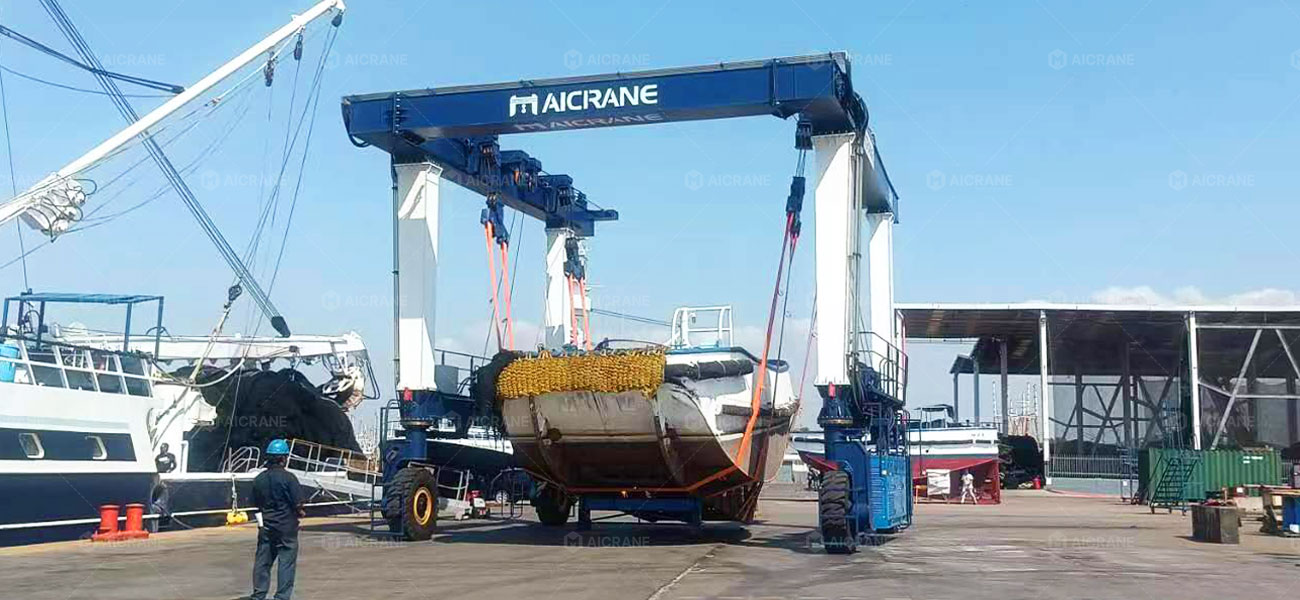
50 Ton Marine Travel Lift for Corrosive Aquaculture Environment
Project Location: Mexico
Application: Fishing vessel lifting & maintenance
Project Overview
This 50 ton gantry boat lift is used in a coastal aquaculture facility for frequent lifting of fishing vessels for inspection and maintenance.
Key Challenges
- High humidity and continuous salt spray exposure
- Long-term steel corrosion risk
- Risk of hull surface damage during repeated lifting operations
Engineering Solutions
- Marine-grade anti-corrosion coating system
- High-strength fiber slings with rubber protection liners
- Additional padding at all vessel contact points
Project Result
Improved maintenance efficiency, reduced downtime, and significantly lower risk of vessel surface damage.
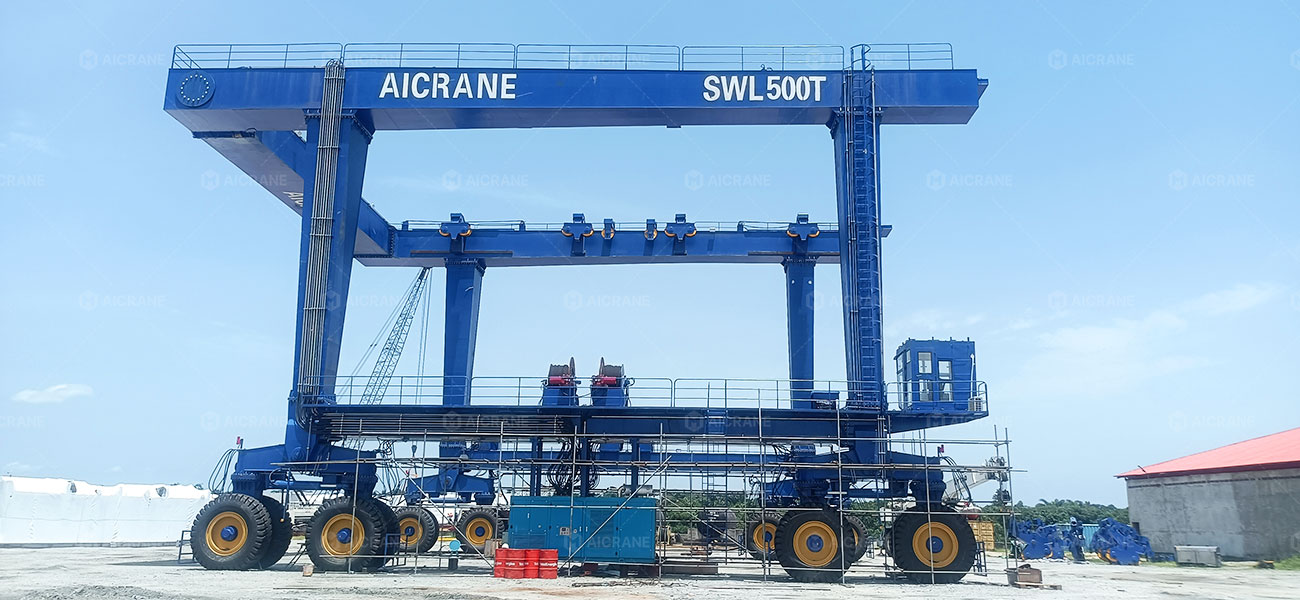
500 Ton Travel Lift for Large Shipyard Block Assembly
Project Location: Nigeria
Application: Heavy ship block assembly & large structural lifting
Project Overview
This 500 ton large boat lift is designed for large-scale shipyard operations, including heavy vessel block assembly and structural lifting.
Key Challenges
- Extremely high load capacity (500 tons)
- Need for precise synchronization between multiple lifting points
- Maintaining alignment accuracy during ship section assembly
Engineering Solutions
- High-rigidity box-girder structure to minimize deformation
- PLC-based synchronized lifting control system
- Real-time multi-point balance control
Project Result
Stable performance in tropical and dusty environments, supporting continuous heavy-duty shipyard operations.
How to Choose the Right Mobile Boat Lift
Based on the project cases above, one thing is clear: selecting a mobile boat lift is not only about rated capacity. In real shipyard or marina operations, the correct choice depends on vessel characteristics, yard layout, and working environment conditions. Here are the key factors to consider when making a selection.
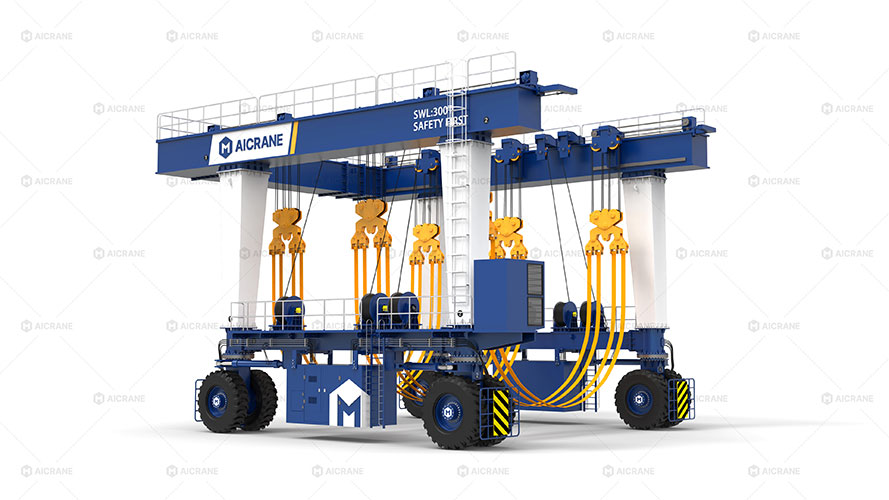
Application Scenario (Operating Environment)
Different working environments require different structural and control priorities:
- Yacht marinas & private yacht clubs → focus on smooth handling, low noise, and hull protection
- Shipyards & boat repair facilities → focus on heavy-duty lifting, high-frequency operation, and durability
- Commercial ports & service docks → focus on continuous operation and efficiency
- Tourism & water sports facilities → focus on operational simplicity and safety control
- Government & marine service bases → focus on all-weather reliability and system stability
Lifting Capacity (Rated Load Selection)
Lifting capacity should be based on maximum operational vessel weight including safety margin:
- 10-100 tons → small boats, fishing boats, leisure vessels
- 100-300 tons → yachts, patrol boats, workboats
- 300+ tons → large vessels and heavy-duty marine operations
Recommended safety margin: 10%-20% above maximum vessel weight
Vessel Dimensions & Structural Compatibility
Correct sizing ensures safe and stable lifting:
- Beam width (boat width)
- Overall length
- Hull type (V-hull / flat bottom / catamaran)
- Center of gravity distribution
Wider or asymmetric hull structures require customized frame spacing and sling positioning design.
Site Conditions & Port Layout
Site constraints directly affect equipment configuration and steering system selection:
- Pavement strength and ground bearing capacity
- Turning radius and working corridor width
- Waterfront slope and docking alignment
- Space limitation in marina or yard
Tight environments typically require crab steering or multi-directional steering systems to improve maneuverability.
Power System Selection
Power configuration should match infrastructure and environmental requirements:
- Diesel system → high torque, suitable for remote or heavy-duty operations
- Electric system → low noise, zero emissions, ideal for modern marinas
- Hybrid system → balanced performance for mixed operational conditions
The best choice is usually determined by your site’s power availability and environmental regulations, rather than performance alone.
Safety & Control Systems
Safety systems are essential for protecting high-value vessels:
- Load balancing control system
- Anti-tilt and stability protection
- Soft start / soft stop control
- Emergency stop system
- Overload protection and real-time monitoring
These systems ensure controlled lifting force distribution and prevent hull deformation or damage.
Marine Environment Protection
As marine lifting equipment operates in corrosive environments, protection design is essential:
- Anti-corrosion coating or hot-dip galvanizing
- Marine-grade hydraulic system
- IP-rated electrical protection enclosure
- Salt spray and UV resistance design
Equipment lifespan is highly dependent on corrosion protection level in coastal environments.
A properly selected mobile boat crane not only improves vessel handling efficiency, but also helps reduce operational risk, maintenance requirements, and long-term ownership costs. Because lifting capacity, steering system, power configuration, and site conditions all affect the final equipment specification, they also directly influence the overall project cost.
Marine Travel Lift Price: What Affects the Cost?
Since most marine travel lifts for sale are customized engineering projects, pricing is typically based on specific technical requirements rather than a fixed standard. As a reference, 150-300 ton systems usually range from $520,000 to over $1,000,000, depending on specifications and complexity. Below are the main factors affecting the marine travel lift cost:
Rated Capacity & Structural Steel Volume
- Tonnage Scaling: Boat lift pricing increases non-linearly with rated capacity (e.g., 50t, 200t, 500t+). Higher tonnage requires thicker steel plates and reinforced box-girder designs to manage increased stress and torque.
- Duty Class: Heavy duty boat lifts engineered for high-frequency operation require higher fatigue resistance and more robust structural components, leading to higher manufacturing costs than light duty models.
Custom Dimensions (Span & Height)
- Clear Span: A wider internal span significantly increases the bending moment on the cross-beams. To prevent structural deflection, the beam section and reinforcement must be upgraded, which directly increases the total weight and cost of steel.
- Lifting Height: Increased height requires longer wire ropes, extended hydraulic hosing, and taller, more stable vertical columns, all of which add to the total bill of materials.
Steering System Complexity
The chosen steering functionality dictates the complexity of the hydraulic and electronic control architecture:
- Standard Steering: Basic longitudinal movement with limited pivot angles. This requires fewer hydraulic actuators and simpler control logic, representing the most economical configuration.
- Advanced Steering: Modes such as 90° Transverse, Carousel (Pivot), or Crab steering require additional hydraulic actuators and specialized PLC synchronization. These advanced systems typically add 15% to 25% to the base equipment price.
Power Unit & Component Origin
- Drive Configuration: There is a notable price difference between full hydraulic systems and modern electric/hybrid drive systems.
- Brand Premium: Integrating Tier-1 international brands (e.g., Rexroth, Cummins, Parker) increases the initial investment. While this raises the travel lift price, it ensures higher reliability and easier access to spare parts globally.
Tire Quantity & Bogie Systems
- Hardware Cost: The number of tires (4, 8, 16, or 32) is dictated by the shipyard’s Ground Bearing Pressure. More tires directly increase the procurement cost of rubber components.
- Mechanical Complexity: To distribute loads evenly across multiple tires, complex Articulated Bogie Systems are required. Every increase in tire count involves additional precision machining and heavy-duty pivot structures, significantly driving up the total mechanical cost.
For detailed pricing or a tailored quotation for a marine travel lift for sale, please contact our engineering team with your project requirements.
Marine Travel Lift Installation and Commissioning
The installation and commissioning of a travel lift crane is a critical engineering stage that ensures the equipment operates safely, accurately, and in full accordance with design requirements. We provide full installation support for every project, including both remote technical guidance and on-site installation service, depending on project conditions and customer capability.
Marine Mobile Lift Installation Support Options
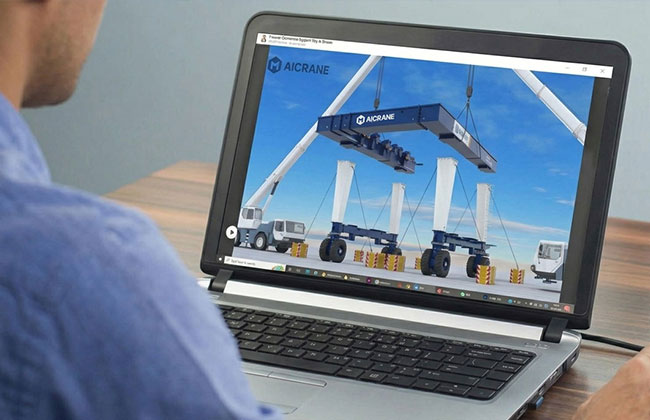
Remote Installation Guidance
We provide remote installation guidance to support customers who complete boat crane lift installation with their local team. The service is designed to ensure smooth installation, correct execution, and reduced on-site risk.
- Detailed installation drawings and technical documents
- Step-by-step video or visual guidance
- Real-time communication via video call, email, or messaging
- Engineering clarification during key installation stages
With this support, customers can correctly complete structural assembly, hydraulic connection, and electrical setup under professional supervision, even without on-site engineers.
On-site Installation Service
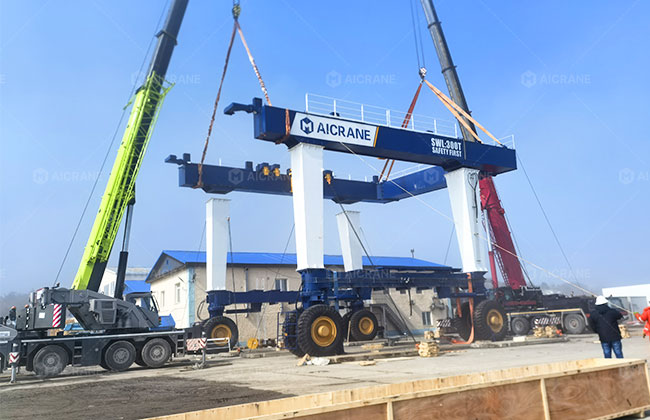
We provide on-site installation service for projects that require full engineering support at the job site. Our engineers work directly with your team to ensure proper installation, accurate system integration, and stable final performance.
- On-site supervision of structural assembly and positioning
- Technical guidance during wheel system installation and alignment
- Hydraulic system installation support, including pressure and safety checks
- Electrical system connection and control system setup assistance
- On-site coordination during commissioning and functional testing
With on-site involvement, key installation stages are completed under direct engineering supervision, helping ensure correct assembly, system stability, and safe operation in real working conditions.
Marine Lift Installation Process Overview
Marina travel lift installation follows a controlled engineering sequence designed to ensure structural accuracy and system reliability before commissioning. Typical stages include:
Site Preparation and Load Check
Before installation begins, the working site is evaluated to ensure it can safely support full operating loads. Key checks include:
- ground bearing capacity under maximum wheel load
- surface flatness and settlement risk
- drainage and travel path clearance
If necessary, local reinforcement or leveling is carried out to ensure stable operation.
Main Structure Assembly and Alignment
The main frame is assembled in sections according to engineering drawings.
- structural components are connected step by step
- bolt tightening follows a controlled sequence
- alignment is adjusted to ensure correct geometry
This ensures the structure can safely transfer load during operation.
Wheel System Installation and Movement Test
The wheel system is installed to enable smooth movement without rail guidance.
- wheel groups are aligned for even load distribution
- steering modes are adjusted based on site requirements
- movement is tested for direction accuracy and synchronization
Hydraulic System Connection and Testing
The hydraulic system controls lifting and load balance.
- cylinders are installed and connected through pipelines
- system is filled, bled, and pressure balanced
- synchronization is tested under no-load and partial load conditions
Electrical System and Safety Setup
The control system manages lifting, movement, and safety protection.
- control cabinet and sensors are connected
- PLC system is configured for coordinated operation
- safety functions (emergency stop, overload protection) are tested
Commissioning and Load Testing
Final testing ensures the system is ready for operation.
- no-load test for movement and control response
- step-by-step load testing up to rated capacity
- adjustment of hydraulic and control parameters
A step-by-step installation video is available to provide a clearer understanding of the full installation process:
Long-term Support for Marine Travel Lift
After installation and commissioning, we provide continuous technical support for marine travel lift systems throughout its entire lifecycle to ensure stable performance under long-term shipyard operation conditions.
Remote technical assistance for operational or system issues
Troubleshooting guidance for hydraulic, electrical, and control systems.
Spare parts consultation and replacement recommendations
Maintenance planning and optimization suggestions based on working conditions
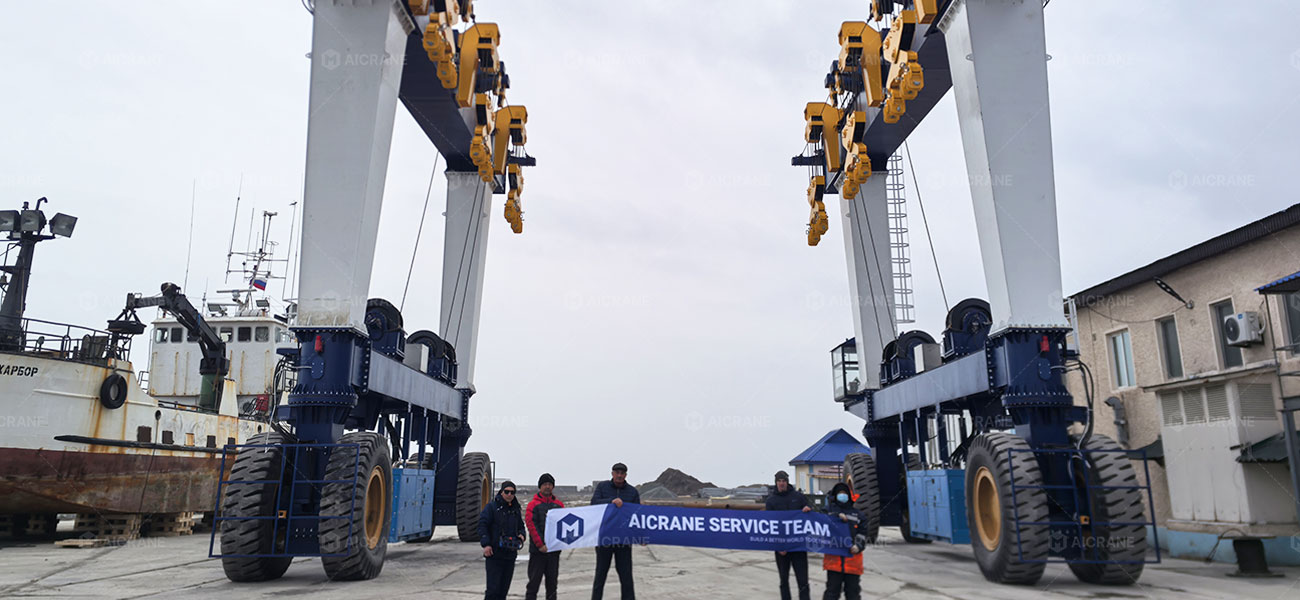
To further help operators maintain stable performance and quickly respond to common issues, we also provide practical maintenance guidelines and typical troubleshooting solutions in the following sections.
Maintenance Tips for Marine Travel Lift
Maintenance of a marine travel lift focuses on key systems that directly affect lifting safety, movement stability, and operational reliability. Regular inspection is based on operating conditions rather than fixed rules alone.
Hydraulic System
Hydraulic performance directly determines lifting stability and synchronization.
- Hydraulic oil condition should be checked regularly for viscosity changes, contamination, or discoloration. When oil quality deteriorates, the entire system oil should be fully drained before refilling to avoid mixing old and new oil.
- Filters must be inspected and replaced to prevent contamination from entering cylinders and valves, which may cause unstable lifting or synchronization deviation.
- Hydraulic hoses and fittings should be checked for leakage, surface cracking, or pressure loss during operation.
Power System (Generator Set)
The generator set is responsible for stable power supply during lifting and travel operations.
- Engine oil level, coolant condition, belt tension, and fuel quality should be inspected regularly. Abnormal vibration, unstable output voltage, or irregular engine noise may indicate the need for further servicing.
- Air and fuel filters should be kept clean to ensure stable combustion performance under continuous or heavy-load operation conditions.
Wheel and Travel System
The wheel system affects load distribution and movement stability across shipyard surfaces.
- Wheel tread wear, bearing condition, and drive alignment should be inspected regularly. Uneven wear or abnormal vibration during travel may indicate misalignment or overload conditions.
- Lubrication of wheel bearings should be carried out based on operating frequency to reduce friction and extend service life.
Structural System
The structural system carries the full load of the lifting operation.
- Bolted connections should be checked for tightness, especially in high-stress areas. Welded joints should be inspected for fatigue signs, cracks, or deformation.
- Structural alignment should be verified under loaded and unloaded conditions to ensure long-term stability during repeated lifting cycles.
Electrical and Control System
The electrical system ensures coordinated control of lifting, movement, and safety functions.
- Control cabinets, PLC modules, sensors, and limit switches should be inspected for connection stability and signal accuracy.
- Emergency stop functions, overload protection, and synchronization monitoring systems must be tested regularly to ensure correct response under abnormal operating conditions.
Troubleshooting for Boat Travel Lift
Troubleshooting of a travel lift for boat is based on identifying system performance deviations in hydraulic, electrical, mechanical, and power systems. Most issues can be diagnosed through operating symptoms and system behavior during load conditions.
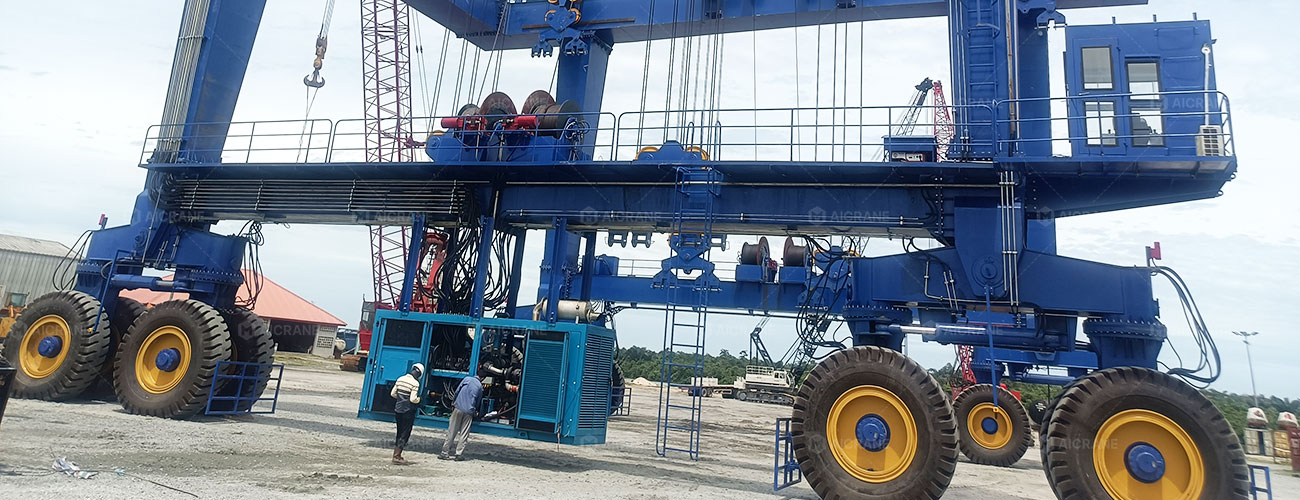
Hydraulic System Issues (Unstable Lifting / Slow Response)
Possible symptoms:
- Uneven lifting speed between different points
- Slow response during lifting or lowering
- Pressure fluctuation during operation
Possible causes:
Hydraulic oil contamination or viscosity degradation, air entering the system, or filter blockage may affect flow stability and pressure balance.
Corrective actions:
Hydraulic oil condition should be checked and replaced if necessary. Air should be removed from the system, and filters should be inspected or replaced to restore stable hydraulic flow and synchronization.
Power System Issues (Generator Output Instability)
Possible symptoms:
- Unstable voltage output during operation
- Abnormal engine vibration or noise
- Difficulty maintaining load under continuous operation
Possible causes:
Fuel contamination, clogged air or fuel filters, low oil level, or belt tension issues may affect engine performance.
Corrective actions:
Engine oil level, coolant condition, and fuel system should be checked. Filters should be cleaned or replaced, and belt tension adjusted to restore stable generator operation.
Battery Starting Issues (Weak or Failed Start)
Possible symptoms:
- Weak engine start
- Delayed or failed ignition
- Voltage drop during startup
Possible causes:
Battery discharge, aging, loose terminals, or insufficient charging may reduce starting performance.
Corrective actions:
Battery voltage should be checked and recharged if necessary. If capacity cannot be restored, replacement is required. Terminal connections should be tightened and cleaned to ensure stable contact.
Wheel and Travel Issues (Uneven Movement / Vibration)
Possible symptoms:
- Uneven travel speed
- Abnormal vibration during movement
- Deviation from straight travel path
Possible causes:
Wheel wear, bearing damage, misalignment, or uneven load distribution may affect movement stability.
Corrective actions:
Wheel condition and alignment should be inspected. Bearings should be lubricated or replaced if necessary. Load distribution should be verified under operating conditions.
Electrical and Control System Issues (Signal or Control Failure)
Possible symptoms:
- Delayed system response
- Sensor signal error
- Incomplete synchronization between systems
Possible causes:
Loose wiring, sensor malfunction, PLC communication error, or moisture intrusion in control cabinets.
Corrective actions:
Electrical connections should be checked for stability. Sensors and control modules should be tested and replaced if necessary. Control cabinets should be kept dry and properly sealed in coastal environments.
Boat Travel Lift FAQ
What Is a Boat Travel Lift?
Can a Boat Travel Lift Operate on an Incline?
What Is the Difference Between Hydraulic and Electric Boat Lifts?
- Hydraulic Boat Lift: The industry standard. Offers high torque, smooth control, and durability in saltwater environments.
- Electric Boat Lift: An emerging trend for “Green Marinas.” They reduce noise pollution, eliminate the risk of oil leaks, and lower long-term energy costs.
Why Is the U-shaped Design Important?
How to Prevent Hull Damage During Lifting?
Hull damage is usually caused by uneven pressure or sling friction.
- Variable Sling Points: Hydraulically adjust sling positions to align with the boat’s strongest structural bulkheads.
- Load-Sensing System: Ensures synchronized hoisting to prevent the vessel from tilting.
- High-Tenacity Slings: Use wide, soft-cover synthetic slings to distribute weight and protect the gelcoat/paint.
Can the Boat Lift Operate Safely in High-wind Areas?
Coastal environments face frequent gusts that can destabilize high-profile vessels.
- Anemometer Integration: Real-time wind speed monitoring with automatic safety alarms.
- Dynamic Braking: Heavy-duty hydraulic brakes ensure the unit remains stationary on inclines even during storms.
- Low Center of Gravity: The structural design minimizes wind resistance and sway.
Get the Right Boat Lifting Solution for Your Operation
Whether you operate a yacht marina, shipyard, repair facility, or commercial dock, choosing the right mobile boat lift is essential for safe vessel handling, efficient daily operation, and long-term reliability.
With different vessel sizes, site conditions, and operational requirements, a properly customized solution can significantly improve handling efficiency while reducing maintenance costs and operational risk. Send us your vessel specifications and project requirements to get a suitable boat travel lift solution.