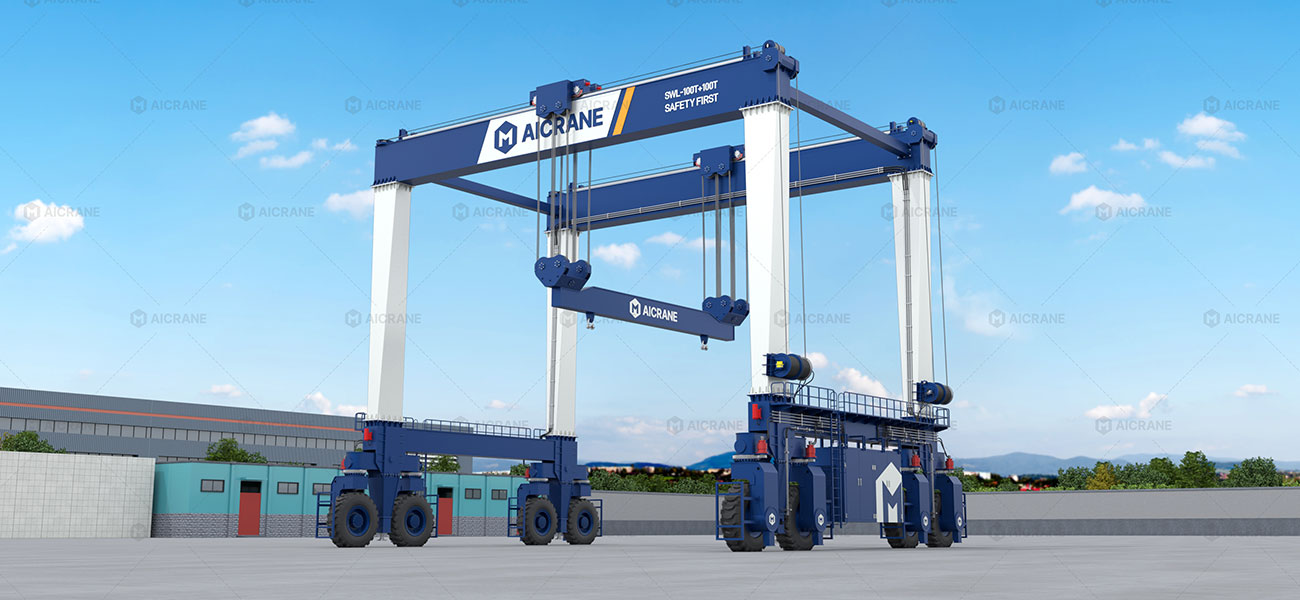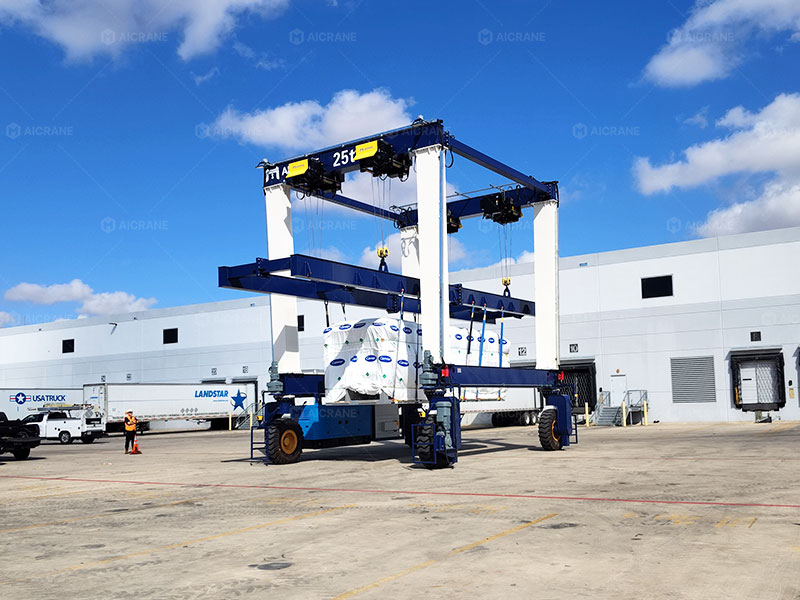
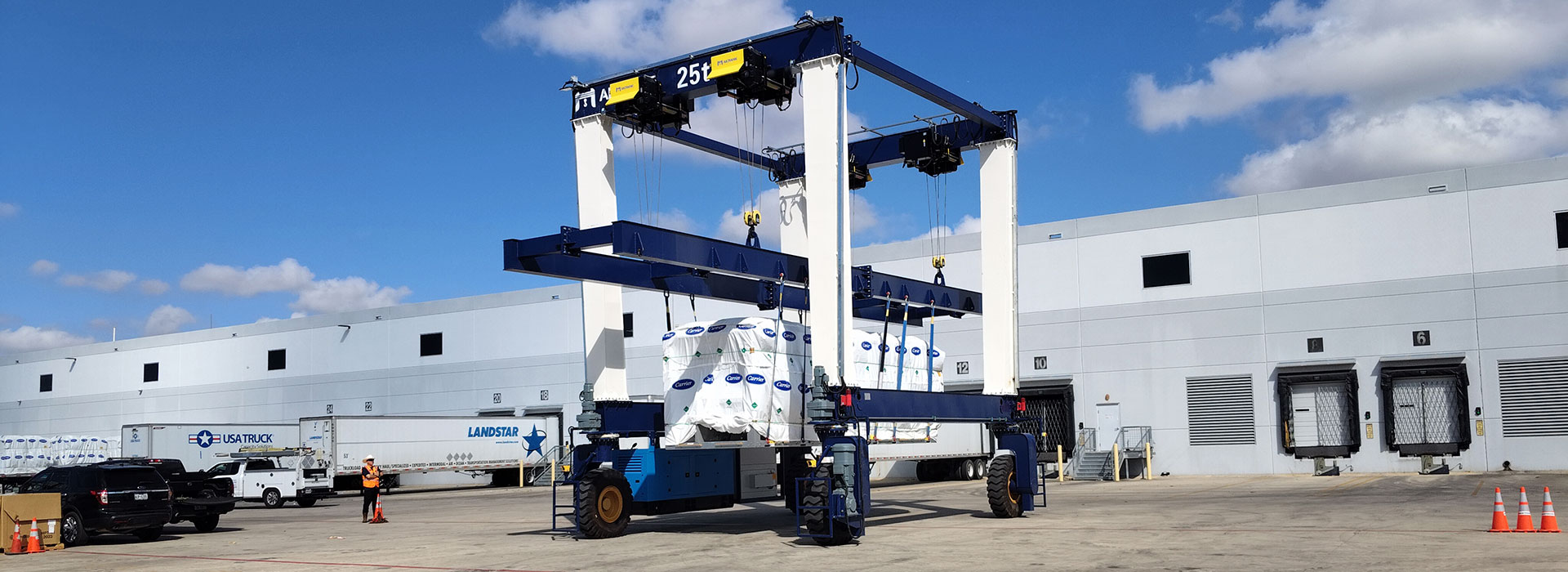
Rubber Tyred Gantry (RTG) cranes are engineered for multi-industry yard material handling applications, including container terminals, steel processing yards, precast production facilities, shipyards, and heavy industrial assembly sites. They are designed to adapt structural configuration, lifting systems, and control performance to match different load characteristics and operating environments.
Port & Container Terminals: RTGs for Container Stacking and Handling Operations
Container terminals are the most intensive application environment for RTG cranes. Although containers are standardized loads, real port operations involve high-frequency cycles, narrow yard layouts, wind influence, and increasing automation requirements, making container handling a complex and highly coordinated system rather than a simple lifting task. In modern logistics and port transportation, RTG cranes must operate as high-efficiency container yard logistics systems, ensuring continuous flow between stacking, truck loading, and rail intermodal transfer.
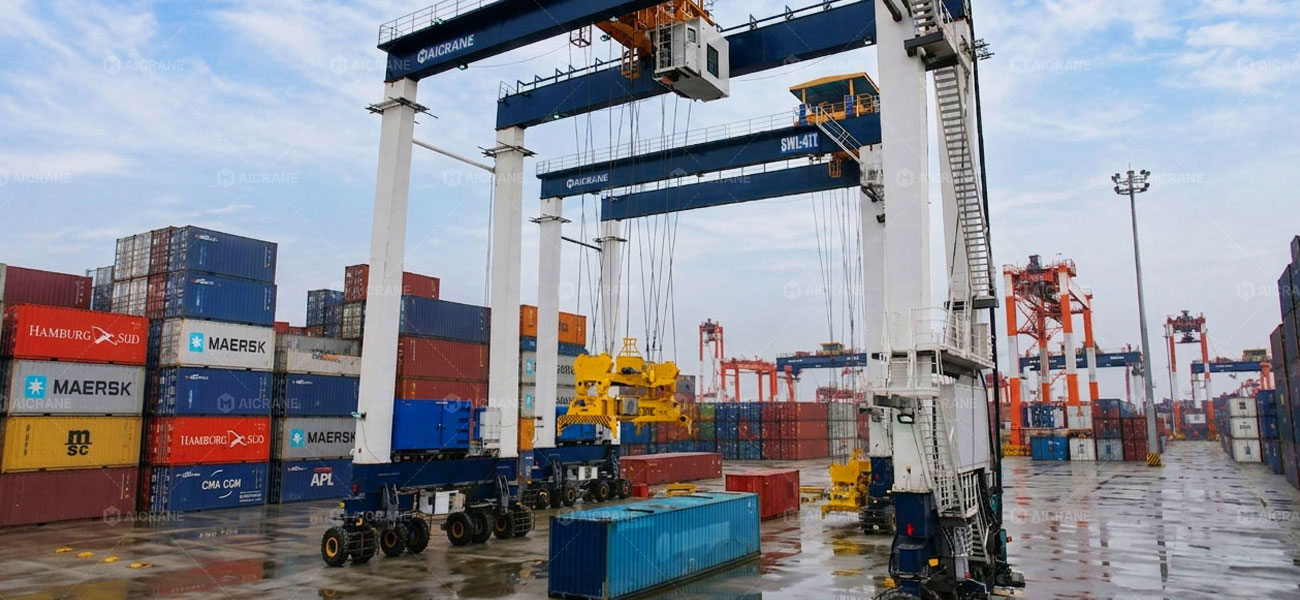
Port Container Yard Applications And Working Conditions
RTG cranes in ports and container terminals are typically used for:
- Container stacking and retrieval in yard blocks
- Truck loading and unloading operations
- Container transfer between yard lanes
- Rail intermodal loading and discharge
In real port environments, RTGs operate under:
- 24/7 continuous high-duty cycles
- High-frequency lifting and travel movements
- Narrow stacking layouts (5+1 / 6+1 container rows)
- Outdoor wind exposure affecting suspended loads
- Increasing automation and remote operation integration
Key Engineering Challenges in Container Terminals
- Container sway under wind and high-speed travel: During fast trolley or gantry movement, container sway increases significantly, especially under wind conditions, leading to reduced positioning accuracy and higher collision risk.
- High-density yard positioning constraints: In 5+1 or 6+1 stacking layouts, operating space is limited, requiring higher precision in container placement and faster correction response.
- Continuous 24/7 fatigue loading: Long operating hours create cumulative fatigue stress on steel structure, wheel assemblies, and drive systems, affecting long-term reliability.
- Throughput vs energy efficiency pressure: Ports continuously demand higher handling efficiency while reducing fuel consumption and operational cost per container cycle.
Customized RTG Engineering Solutions for Container Terminals
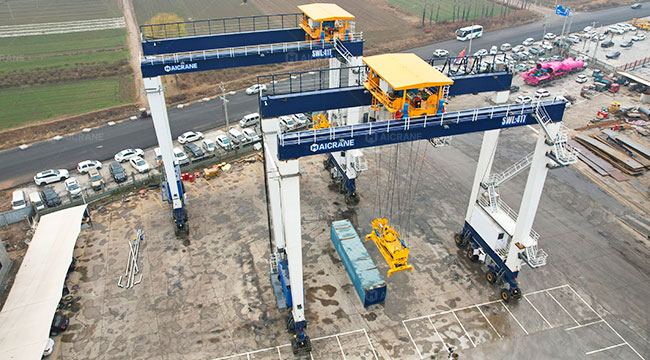
Structural Design for Continuous Duty Operation
- High-strength double girder structure designed for A6–A8 duty classification
- Optimized stress distribution along main beams to reduce fatigue concentration
- Reinforced end carriage structure to support frequent start-stop travel cycles
- Lightweight but high-rigidity frame to balance speed and structural stability
👉 Designed for high structural reliability under long-term continuous container handling cycles.
Anti-Sway Technology Design
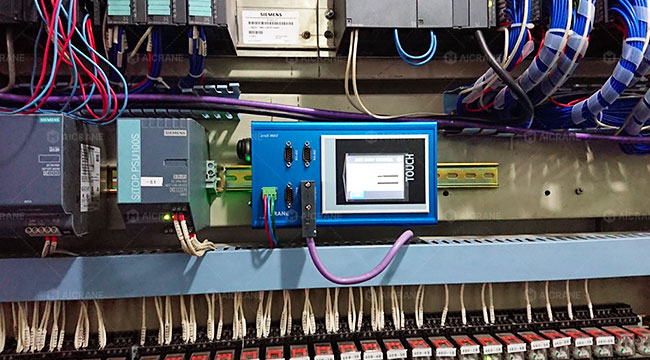
- Closed-loop anti-sway control system integrated into hoisting and trolley drives
- Load-dependent sway damping parameters based on rope length and load weight
- Wind compensation algorithm based on real-time sensor feedback
- Multi-axis motion coordination between trolley and gantry movement
👉 Engineered for controlled load stabilization under dynamic motion and wind influence.
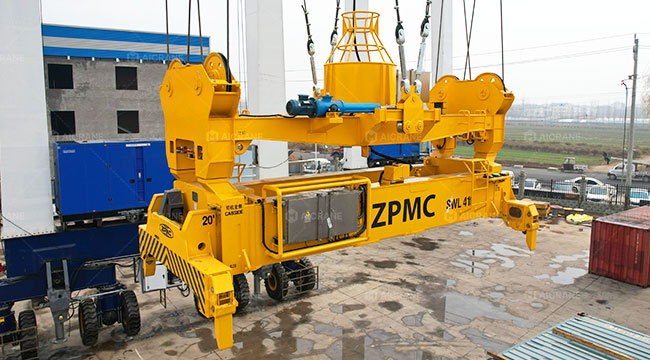
Container Spreader & Lifting System Design
- Telescopic beam structure compatible with ISO 20ft / 40ft / 45ft containers
- Automatic twistlock engagement mechanism with alignment tolerance control
- Integrated electrical-hydraulic synchronization system
- Structural load centering design to minimize eccentric stress during lifting
👉 Engineered for stable and standardized container-to-crane load connection.
Yard Adaptation Design
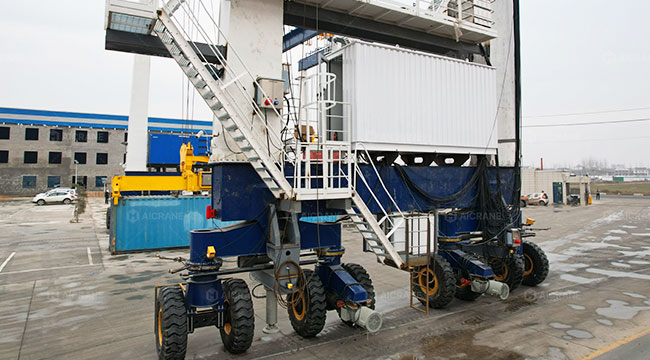
- Gantry span optimized for 5+1 / 6+1 high-density stacking layouts
- Wheel load distribution system designed for uneven yard settlement conditions
- High-clearance structural configuration for narrow lane operation
- Reinforced travel system for long-distance yard movement
👉 Designed for stable structural performance in high-density container yard environments.
Precast Industry: RTGs for Bridge Girders, Beams, and Precast Element Handling
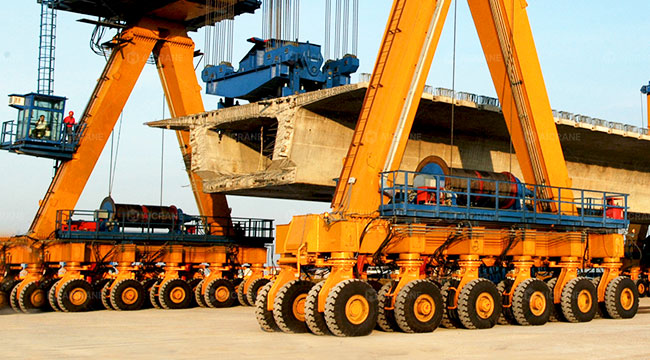
Precast concrete production yards involve the handling of large, heavy, and often flexible structural elements such as bridge girders, precast beams, slabs, and segmented infrastructure components. Unlike standardized container handling, precast concrete operations require RTG rubber tyred gantry systems to manage non-uniform load geometry, long-span deflection risk, and high-precision positioning for assembly readiness.
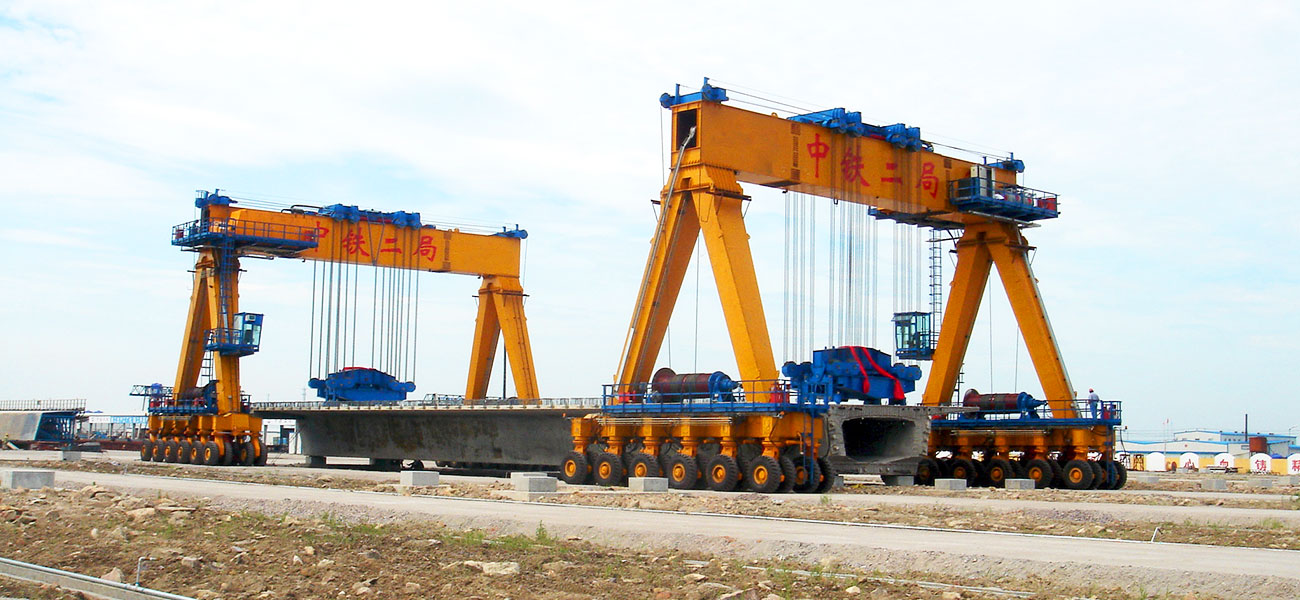
Rubber Tyred Gantry Applications in Precast Yard
RTG cranes in precast yards are commonly used for:
- Bridge girder lifting and transfer
- Precast beam stacking and curing yard handling
- Segmental bridge component transport
- Concrete slab movement and storage
- Loading for transport to construction sites
Precast Yard Working Conditions
Typical operating conditions include:
- Very long and heavy structural elements (10-40m+ components)
- High risk of bending and stress concentration during lifting
- Outdoor curing yards with uneven ground conditions
- Frequent mold-to-storage-to-transport handling cycles
- Requirement for precise alignment during stacking and loading
Key Engineering Challenges in Precast Handling
- Structural deformation of long-span concrete elements: Bridge girders and beams are highly sensitive to uneven lifting forces, which can cause cracking or permanent deformation.
- Multi-point lifting force distribution requirement: Improper load distribution leads to stress concentration and structural damage during lifting and turning operations.
- High-weight + large-span combined loading: Precast elements often combine extreme weight with long geometry, increasing bending moment during handling.
- Yard variability and ground settlement: Precast yards often operate on semi-prepared ground, affecting crane stability and load positioning accuracy.
Customized RTG Engineering Solutions for Precast Concrete Industry
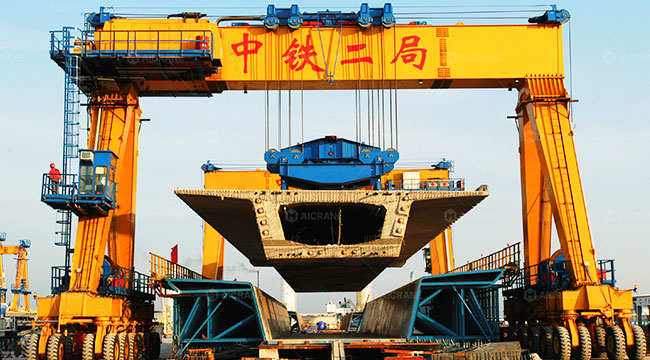
Structural Design for Long-Span Load Handling
- Engineered with a high-span gantry structure designed to accommodate long bridge girders and precast beams
- Structural stiffness is increased through reinforced main girder configuration to control mid-span deflection
- Load path is optimized across the primary structural frame to reduce localized stress concentration
👉 Designed for maintaining structural integrity of long-span precast concrete elements during handling and transport.
Multi-Point Lifting System Design
- Multi-hoist configuration engineered for synchronized lifting across multiple load points
- Load distribution system designed to maintain equal tension across all lifting points
- Center-of-gravity alignment architecture integrated into lifting configuration design
- Structural reinforcement applied at lifting zones to handle concentrated stress during hoisting
👉 Engineered for controlled load distribution of long and heavy precast structural components.
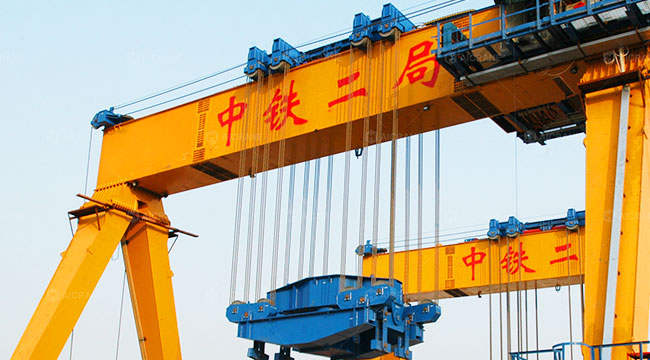
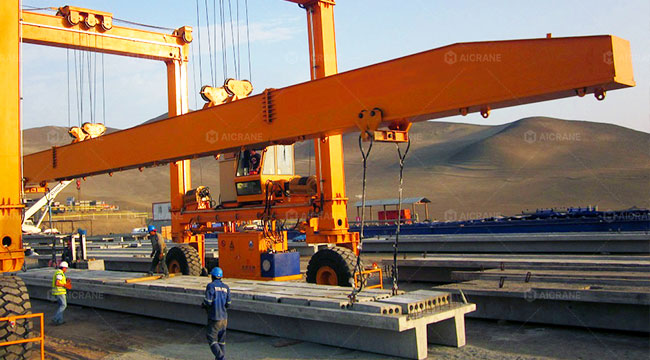
Lifting Beam & Sling System Design for Precast Elements
- Adjustable spreader beam system engineered for different girder lengths and geometries
- Sling-based multi-point lifting configurations designed for flexible load adaptation
- Surface protection interface elements integrated to reduce contact stress on concrete surfaces
- Modular spreader beam design configured for irregular structural component handling
👉 Engineered for safe load engagement across variable precast element geometries.
Precision Handling Motion Design
- Low-speed drive system configured for fine positioning of precast elements during placement operations
- Soft-start and soft-stop drive architecture designed to reduce dynamic impact during lifting and lowering
- Micro-positioning control system integrated for mold-to-storage alignment processes
- Structural damping design incorporated to reduce vibration during suspended load movement
👉 Designed for high-precision handling of fragile and deformation-sensitive concrete components.
Steel Industry: RTGs for Steel Coil, Plate, and Heavy Metal Handling Operations
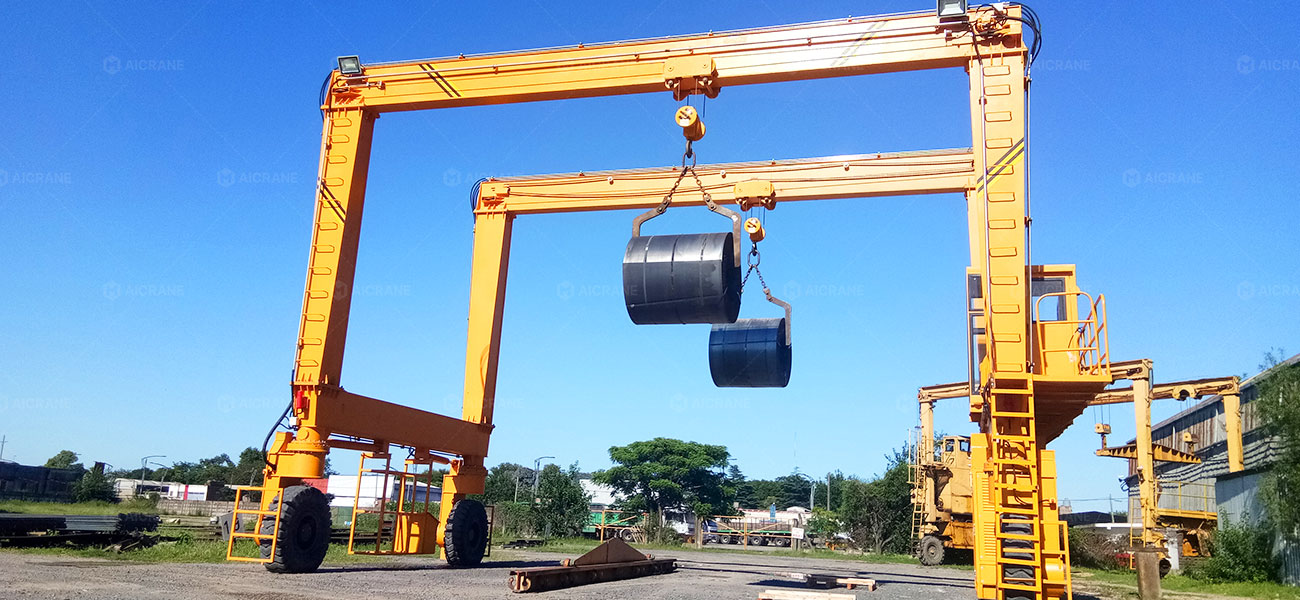
Steel handling environments impose significantly more severe mechanical and operational demands on RTG cranes compared to container or precast applications. The key challenges are not operational speed, but high-impact loads, concentrated stress distribution, and unstable cylindrical geometry of steel coils. RTG cranes in steel yards are therefore engineered as impact-resistant lifting systems specifically designed for heavy and irregular steel product handling.
RTG Applications in Steel Yards
RTG cranes in steel yards are commonly used for:
- Steel coil storage and dispatch
- Steel plate stacking and transfer
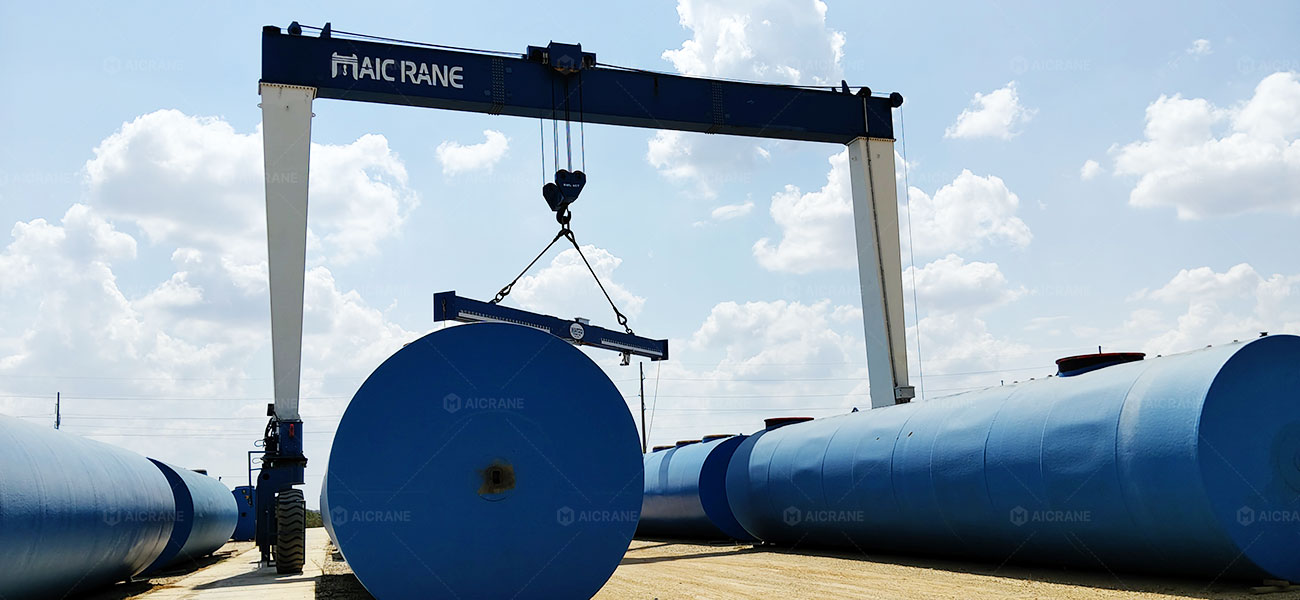
- Pipe bundle handling and loading
- Semi-finished steel product logistics
- Yard-to-transport vehicle loading operations
Steel Yard Working Conditions
Typical operating conditions include:
- Heavy single-load weights (often 10-60+ tons per unit)
- Frequent impact loading during lifting and placement
- Outdoor exposure to dust, heat, and moisture
- High-frequency material turnover in production-linked yards
- Irregular load shapes and unstable center of gravity
Key Engineering Challenges in Steel Handling
- High Impact Forces from Concentrated Steel Mass: Steel coils and plates generate severe impact loads during lifting and landing due to their high density and rigid structure.
- Cylindrical Instability of Steel Coils: Steel coils present rolling risk and center-of-gravity shift during lifting and transport.
- Localized Structural Stress Concentration: Unlike distributed loads, steel products apply point-like stress on hooks, beams, and lifting attachments.
- Harsh Environmental Degradation: Steel yards expose equipment to corrosive and abrasive conditions, accelerating structural and mechanical wear.
RTG Engineering Design Solutions for Steel Handling
Steel-Specific Lifting Attachment Configuration
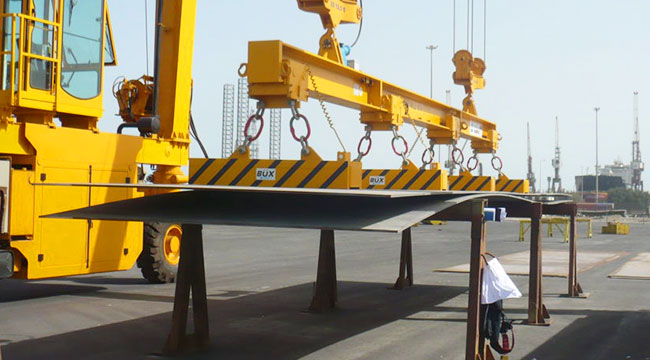
- C-hook designed for safe coil lifting without surface deformation
- Electro-permanent magnetic system for efficient steel plate handling
- Rotatable hook configuration for coil alignment adjustment during lifting
- High-load-rated lifting attachments designed for concentrated stress distribution
👉 Provides flexible lifting solutions for different steel product geometries and handling methods.
Environmental Durability Design for Steel Processing Yards
- Corrosion-resistant coating system designed for outdoor steel industrial environments
- Sealed electrical and drive components designed to resist dust and metallic particles
- Reinforced wheel and travel system designed for uneven heavy-load yard surfaces
- High-temperature and humidity-resistant configuration for continuous outdoor operation
👉 Engineered for long-term reliability in harsh steel production environments.
Shipyard & Marine Industry: RTGs for Large Vessel and Offshore Structure Handling
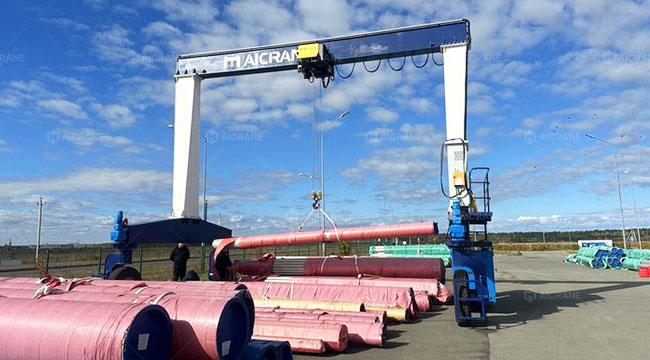
In shipyards and marine fabrication yards, RTG cranes are used for handling large and irregular structures such as yacht hulls, workboats, vessel sections, and offshore modules. Unlike industrial yards, these loads are non-rigid, highly sensitive to deformation, and often operate in corrosive coastal environments. This makes shipyards and marine RTG applications one of the most technically demanding scenarios in material handling engineering.
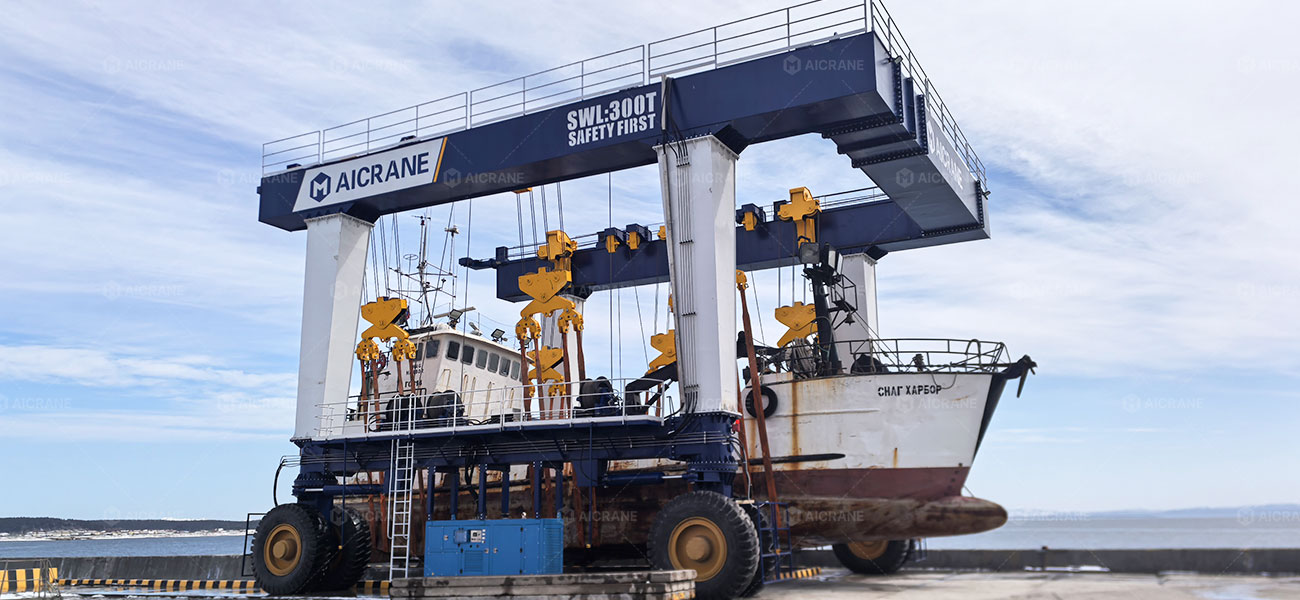
RTG Crane Application in Shipyard & Marine
RTG cranes in shipyards are commonly used for:
- Yacht and boat hull launching and retrieval
- Vessel maintenance and refit lifting
- Offshore module handling
- Large marine structure assembly and transport
- Dry dock and waterfront yard operations
Shipyard & Marine Working Conditions
Typical operating conditions include:
- Extremely large and irregular load geometry
- Flexible structural behavior of hulls and composite materials
- High humidity and salt-spray corrosion environment
- Outdoor coastal wind influence
- Limited clearance in dock or slipway areas
Key Engineering Challenges in Vessel Handling
- Ultra-Large and Irregular Load Geometry: Ship blocks and offshore structures often have asymmetric shapes and uneven center-of-gravity distribution.
- High Structural Flexibility of Marine Components: Thin-walled hull sections are sensitive to deformation during lifting and require controlled stress distribution.
- Multi-Point Lifting Complexity: Large marine modules require synchronized lifting at multiple structural points to prevent torsional deformation.
- Corrosive Coastal Environment: High humidity and salt exposure accelerate corrosion of structural and electrical components.
RTG Engineering Design Solutions for Shipyard & Marine Applications
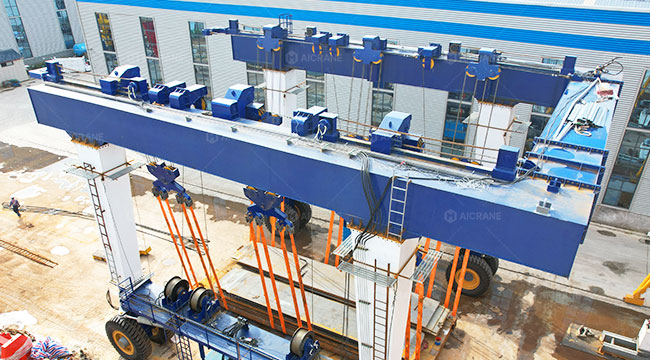
Adaptive Gantry Frame Architecture for Variable Vessel Geometry
- Open U-frame configuration for vessels with vertical structures such as masts or superstructures
- Closed-frame configuration for heavy offshore modules requiring higher structural rigidity
- Modular structural sections allowing adaptation to different ship lengths and yard constraints
👉 This ensures the lifting system can physically adapt to different vessel geometries without compromising structural stability.
Multi-Point Synchronized Lifting for Hull Integrity Control
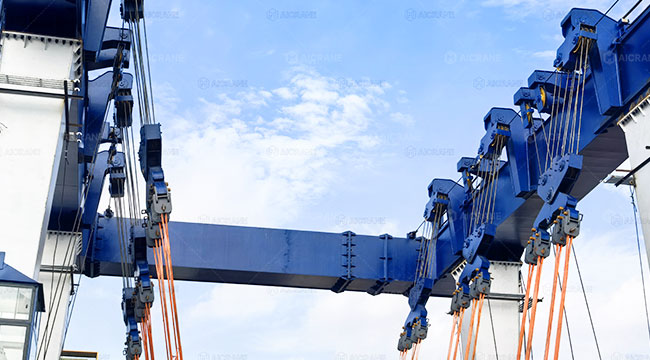
- Multiple winch units operating in coordinated lifting mode
- Flexible lifting point configurations (4, 6, or 8 points depending on load type)
- Balanced force distribution across all lifting points
- Real-time synchronization to prevent torsional deformation
👉 This design ensures that large marine structures remain geometrically stable during lifting and positioning.
Load Safety and Surface Protection System
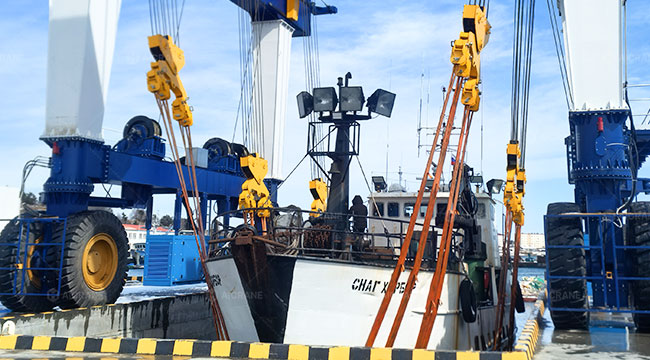
- High-strength synthetic lifting slings used as primary contact interface
- Protective rubber layers applied between sling and hull surface
- Load-bearing zones distributed to avoid localized pressure concentration
👉 This design minimizes structural and surface damage during repeated lifting operations.
Integrated Power and Control Architecture
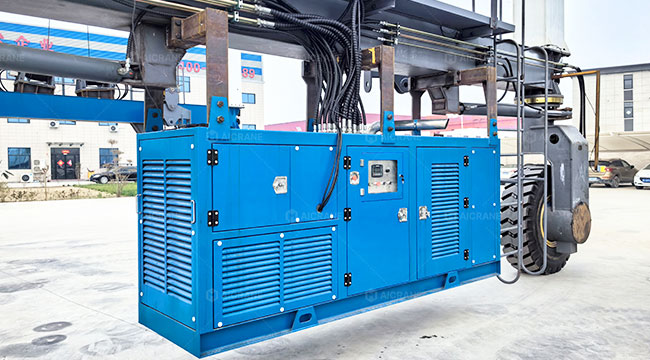
- Diesel engine-driven hydraulic power unit for multi-function operation
- Distributed hydraulic control for winches and travel systems
- Synchronized power delivery across all lifting points
- Redundant configuration for heavy-duty applications
👉 This ensures stable and continuous operation in high-load shipyard environments.
Heavy Industry & Modular Construction: RTGs for Heavy Equipment and Structural Modules
In heavy industry and modular construction projects, RTG cranes are used for handling extremely heavy and large-scale components such as power plant modules, transformers, pressure vessels, steel frameworks, and prefabricated industrial assemblies. Unlike conventional material handling scenarios, these applications involve extreme load weights, high structural value components, and strict installation alignment requirements, making system reliability and load control the top engineering priorities.
Rubber Tyred Gantry Applications in Heavy Industry
RTG cranes in heavy industry are commonly used for:
- Power plant module lifting and installation
- Transformer and generator handling
- Large pressure vessel transportation
- Modular industrial plant assembly
- Heavy steel structure positioning
- Pre-assembled infrastructure modules
Heavy Industry & Modular Construction Working Conditions
Typical operating conditions include:
- Ultra-heavy single loads (often 100-500+ tons in system configurations)
- Large and rigid structural components
- High-value, non-replaceable equipment
- Long-distance yard transportation between fabrication and installation zones
- Precise alignment required for final installation
Engineering Challenges in Heavy Modular Handling
- Extreme Unit Weight and Structural Load Concentration: Large industrial equipment introduces extremely high single-point and distributed loads that require reinforced structural capacity.
- Non-Standard Modular Geometry: Modules are often partially assembled and irregular in shape, making standard lifting geometry insufficient.
- Assembly-Level Positioning Accuracy: Unlike transport lifting, modules must be positioned with high precision for installation alignment.
- Structural Sensitivity During Lifting and Installation: Some equipment (e.g., pressure vessels or large frames) is sensitive to deformation during lifting.
RTG Engineering Design Solutions for Heavy Equipment Applications
Multi-Point Load Balancing System for Irregular Modules
- Multi-point lifting architecture designed for distributed load support
- Adaptive load balancing between lifting points to compensate for geometry variation
- Structural compensation logic for shifting center-of-gravity conditions
- Reinforced lifting zones for high-stress module contact points
👉 Ensures stable lifting of non-uniform industrial structures.
Flexible Lifting Configuration for Modular Construction
- Adjustable lifting beam systems designed for variable module sizes
- Sling-based lifting configurations for irregular structural assemblies
- Custom spreader systems for heavy industrial equipment handling
- Interchangeable lifting attachments for different project requirements
👉 Provides adaptable lifting solutions across different construction stages.
Industrial Environment Durability Design
- Reinforced structural coating system for dust, heat, and outdoor exposure
- Sealed electrical and hydraulic components for industrial environments
- Heavy-duty travel system designed for uneven construction ground conditions
- Material selection optimized for long-term industrial usage cycles
👉 Engineered for continuous operation in heavy industrial construction environments.
Integrated Hydraulic Power System for Ultra-Heavy Operations
- High-capacity diesel hydraulic power unit for continuous heavy lifting
- Synchronized hydraulic distribution to all lifting and travel systems
- Multi-actuator coordination for precise load control
- Optional redundant configuration for ultra-heavy duty applications
👉 Ensures stable energy delivery for large-scale industrial lifting operations.
Customizable RTG Solutions for Diverse Industries
For projects involving non-standard loads, complex operating environments, or industry-specific handling requirements, RTG gantry systems can be engineered and configured based on application-specific conditions. Our engineering team collaborates with clients to define structural parameters, lifting requirements, and operational scenarios to ensure the RTG system is properly aligned with project needs.
For project-specific material handling requirements, AICRANE can support you in developing a tailored RTG crane solution.