


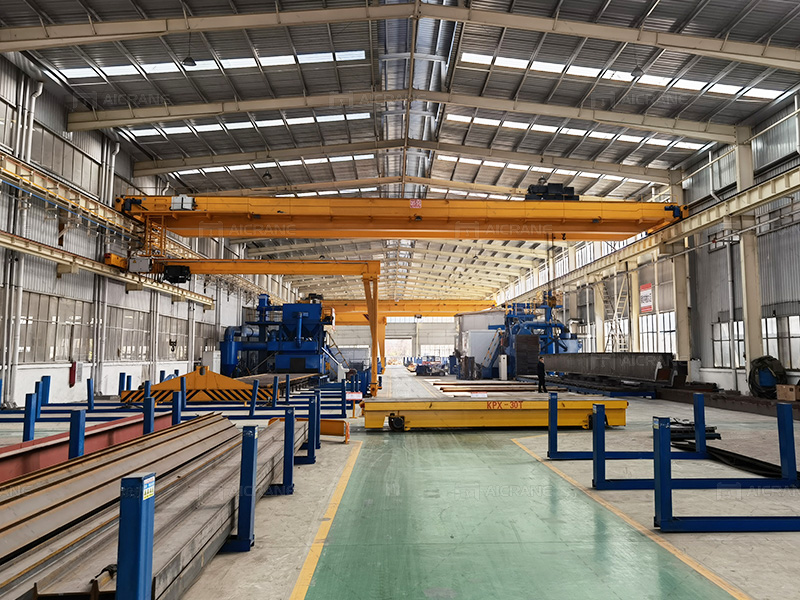
In the highly competitive field of machinery manufacturing, efficiency, safety, and precision are paramount. The integration of overhead cranes and transfer carts has emerged as a highly efficient solution, optimizing material handling processes and enhancing overall operational productivity. This article explores the benefits, applications, and considerations involved in integrating these two critical components in a manufacturing environment.
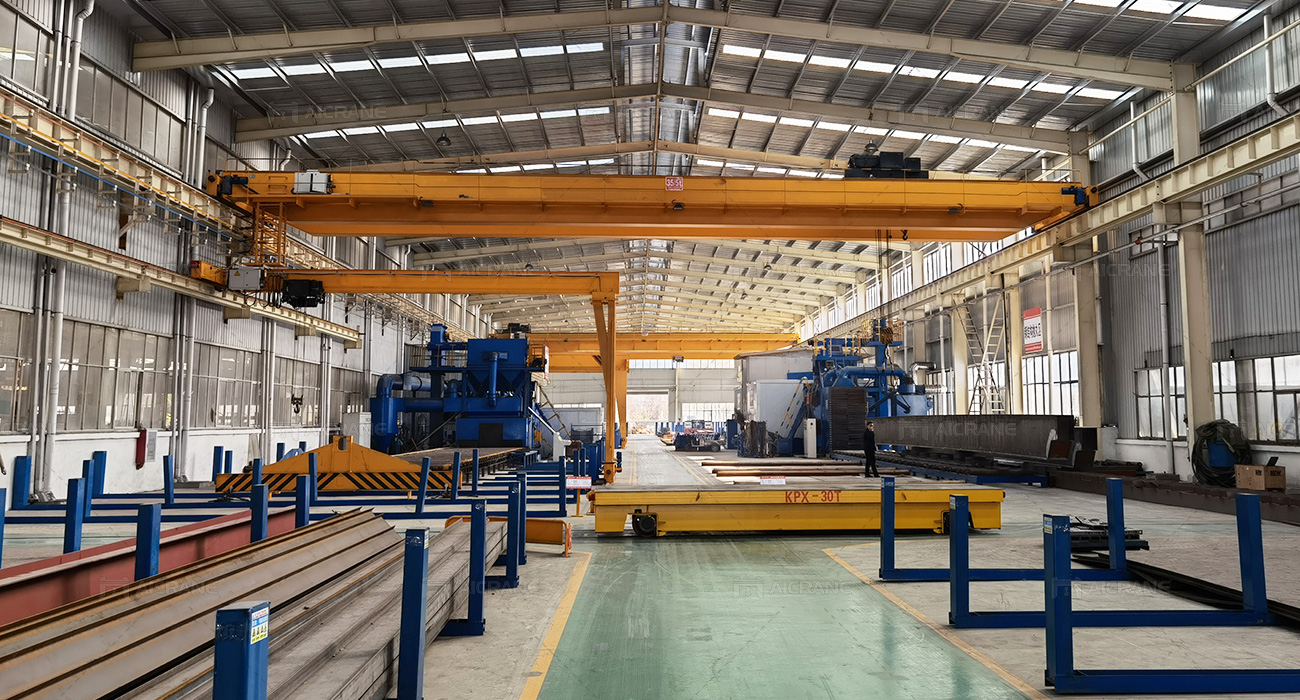
The Role of Overhead Cranes and Transfer Carts
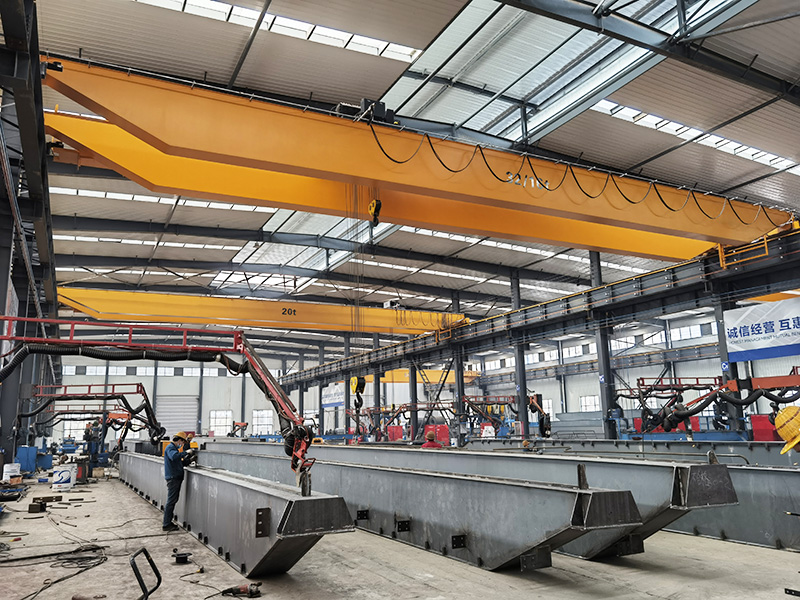
- Overhead Cranes: Overhead cranes, also known as bridge cranes, are vital for lifting and transporting heavy loads within a factory or workshop. They consist of parallel runways with a traveling bridge spanning the gap. The lifting component, or hoist, travels along the bridge. Overhead cranes are commonly used for tasks that involve moving large machinery parts, raw materials, or finished products over relatively short distances within a facility.
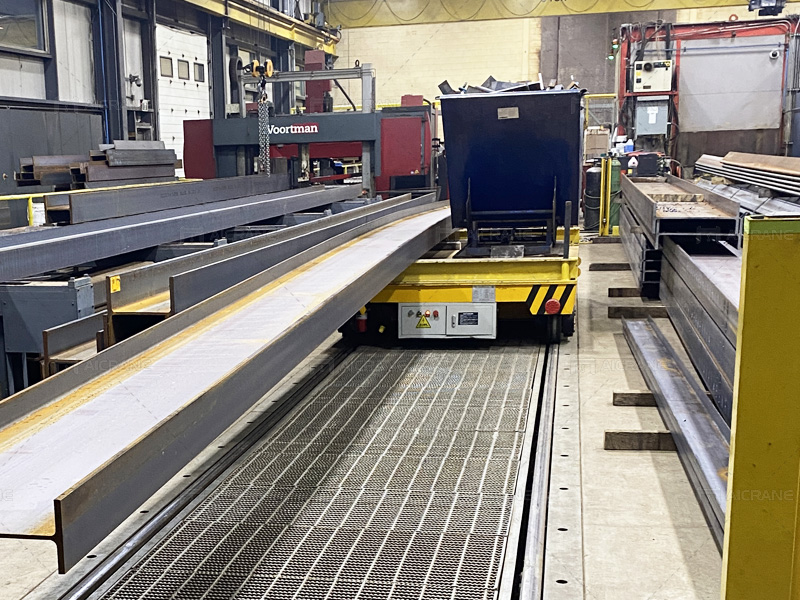
- Transfer Carts: Transfer carts, also known as industrial carts or material transfer trolleys, are designed to move heavy loads across different parts of a manufacturing facility. These carts can be rail-guided, or trackless and are typically powered by electricity, or batteries. They provide a flexible and efficient way to transport materials, particularly when the path includes multiple stops or complex routes that cranes cannot easily navigate.
Benefits of Integration of Overhead Cranes And Transfer Carts
- Enhanced Efficiency: Integrating overhead cranes and transfer carts in a manufacturing facility streamlines the material handling process. Overhead cranes can handle vertical lifting and initial transport, while transfer carts manage horizontal movement across the facility. This combination reduces handling times and minimizes the need for manual labor, leading to faster production cycles.
- Improved Safety: The integration of these systems significantly enhances workplace safety. Overhead cranes can lift heavy loads without the risk of tipping or falling, which is a common hazard with forklifts or manual handling. Transfer carts reduce the need for manual pushing or pulling of heavy materials, lowering the risk of musculoskeletal injuries among workers.
- Increased Precision: Modern overhead cranes and transfer carts are equipped with advanced control systems that offer precise movement and positioning. This precision is crucial in machinery manufacturing, where components must often be placed with millimeter accuracy. Automated systems can further improve precision by coordinating movements between cranes and carts.
- Space Optimization: The vertical lifting capability of overhead cranes allows manufacturers to utilize the vertical space in their facilities more effectively. Transfer carts, on the other hand, can navigate through narrow aisles and tight spaces, optimizing the horizontal layout of the production floor. This combined use of vertical and horizontal space maximizes the available working area.
Applications in Machinery Manufacturing
- Assembly Lines: In assembly lines, overhead cranes can lift heavy components from storage areas and place them on transfer carts. The carts then transport these components to various workstations along the assembly line, ensuring a smooth and continuous flow of materials.
- Maintenance and Repair: Overhead cranes and transfer carts are invaluable in maintenance and repair operations. Cranes can lift large machinery parts that need servicing, while transfer carts can transport these parts to and from the maintenance areas without disrupting the production process.
- Storage and Retrieval: Integrating these systems in storage areas enhances the efficiency of storing and retrieving raw materials or finished products. Overhead cranes can lift items to high storage racks, while transfer carts can move them horizontally to and from storage locations.
Here is an example of our 10-ton overhead crane and 20-ton transfer cart being utilized in a steel coil warehouse in Kazakhstan:
Considerations for Integration of Overhead Cranes And Transfer Carts
- Infrastructure Requirements: Implementing overhead cranes and transfer carts requires a thorough assessment of the facility’s infrastructure. This includes evaluating the strength of the building’s structure to support crane systems and ensuring there are appropriate tracks or pathways for transfer carts.
- Control Systems: The integration process should involve advanced control systems that can synchronize the operations of both cranes and carts. Automation and IoT (Internet of Things) technologies can enhance coordination, allowing for seamless transitions between vertical and horizontal movements.
The integration of overhead cranes and transfer carts in machinery manufacturing gives companies a big advantage. These tools make the work more efficient, safer, more accurate, and better at using space. As the industry changes, using these advanced material handling systems will be crucial for manufacturers aiming to stay competitive and meet the growing demands for high-quality machinery. To get a custom lifting solution for machinery manufacturing industry, contact us today.