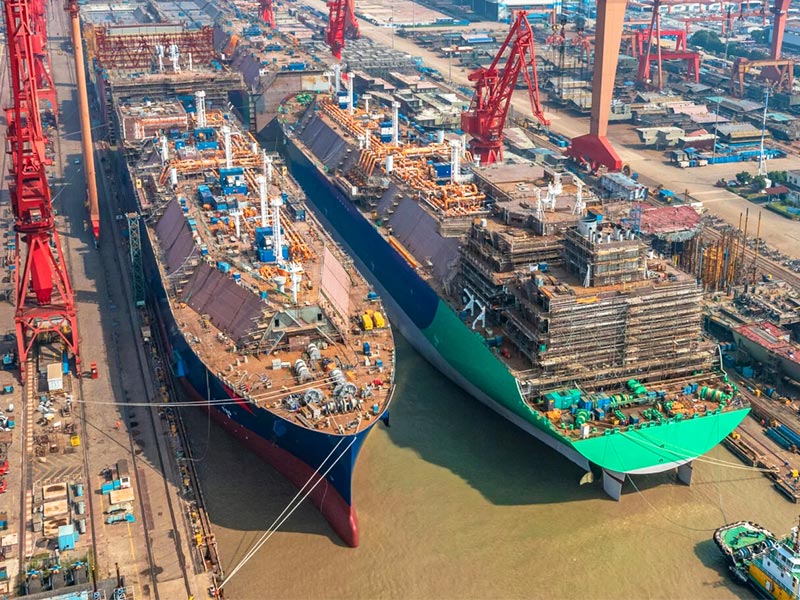
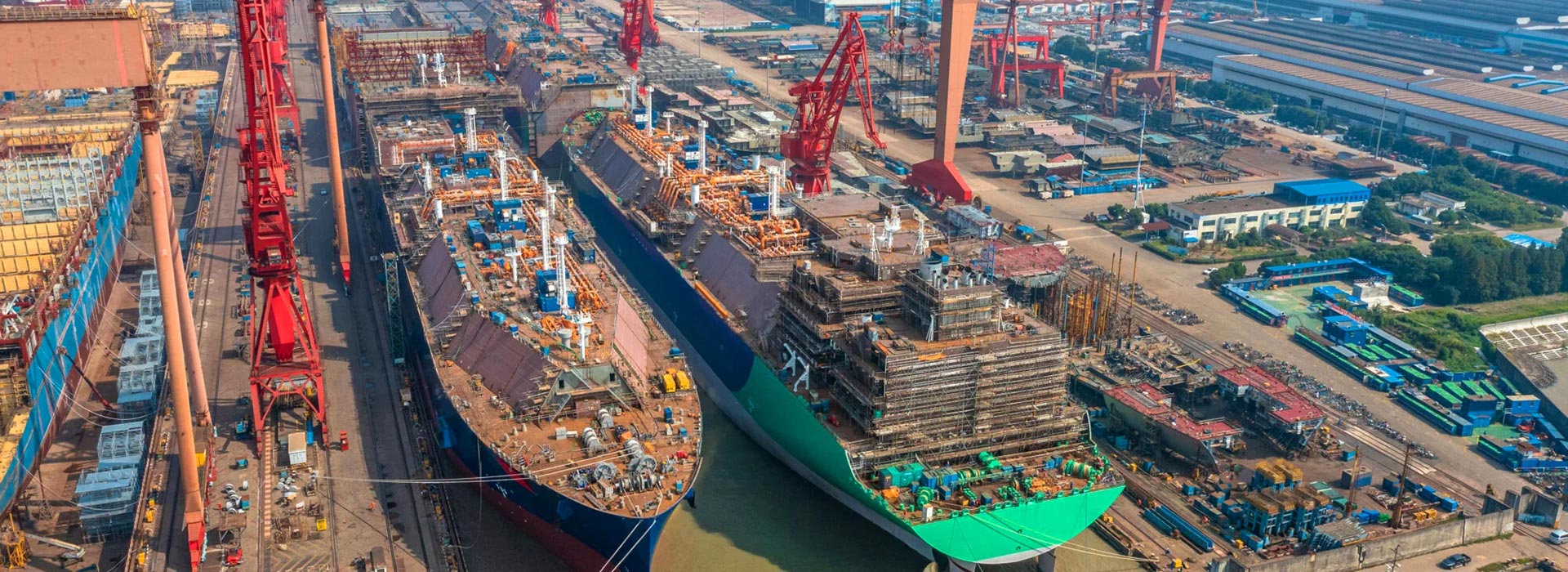
Modern shipbuilding is inherently a challenge of heavy logistics. As mega-vessels and modular construction become the global standard, material handling efficiency directly dictates a shipyard’s throughput, safety, and profitability. Below, we break down the 5 critical stages of the shipbuilding lifecycle and the advanced lifting solutions that power them.
Stage 1: Raw Material Processing & Steel Cutting
The journey begins in fabrication and cutting workshops, where large steel plates and structural profiles are shot-blasted, primed, and precisely cut using CNC cutting machines.
Material Handling Challenges
At this stage, material handling operates under continuous 3-shift, high-frequency production, requiring fast transfer between storage yards, blasting lines, and CNC cutting stations. The main challenges are preventing steel plate deformation and surface damage during handling, while ensuring precise positioning during CNC feeding to avoid cutting misalignment and material waste.
Technical Solutions
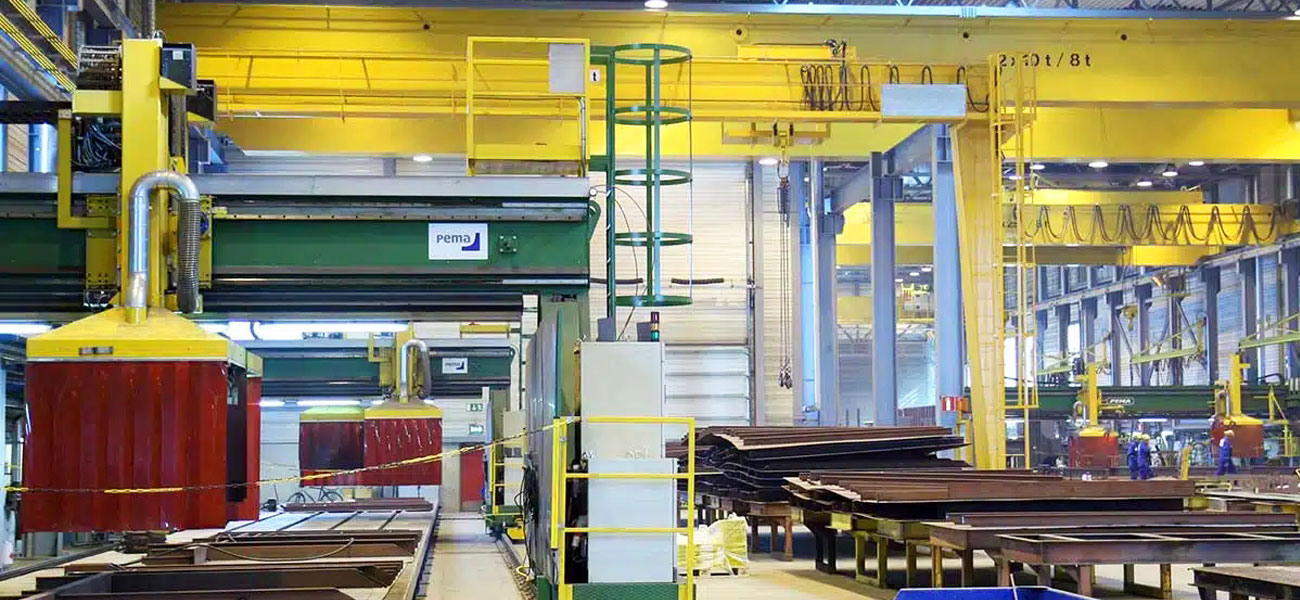
In fabrication workshops, overhead cranes serve as the primary lifting system, equipped with electromagnetic or vacuum systems for efficient steel plate handling and CNC feeding operations.
However, a complete shipyard material flow relies on a multi-layer lifting system:
Gantry cranes are widely used in outdoor steel yards for unloading, stacking, and transferring raw plates into workshops.
Heavy-duty forklifts and transport vehicles support short-distance and flexible handling tasks within workshops.
In advanced smart shipyards, AGV transfer systems are increasingly integrated to automate material flow between CNC cutting and assembly areas.
Specialized lifting attachments such as C-hooks, spreader beams, and vacuum frames ensure safe and deformation-free handling of steel plates.
Stage 2: Sub-Assembly & Component Fabrication
Once cut, steel plates and profiles are welded into sub-assemblies, bulkhead sections, and stiffened panels within fabrication workshops. This stage marks a transition from simple material handling to precision structural assembly.
Material Handling Challenges
As components are progressively welded, they become large, heavy, and structurally unstable due to thermal distortion during fabrication. Handling these irregular assemblies requires multi-point lifting to avoid deformation. In addition, fabrication shops are typically highly congested, with multiple production lines operating in parallel, making precise movement and coordination essential to prevent interference between lifting operations.
Technical Solutions
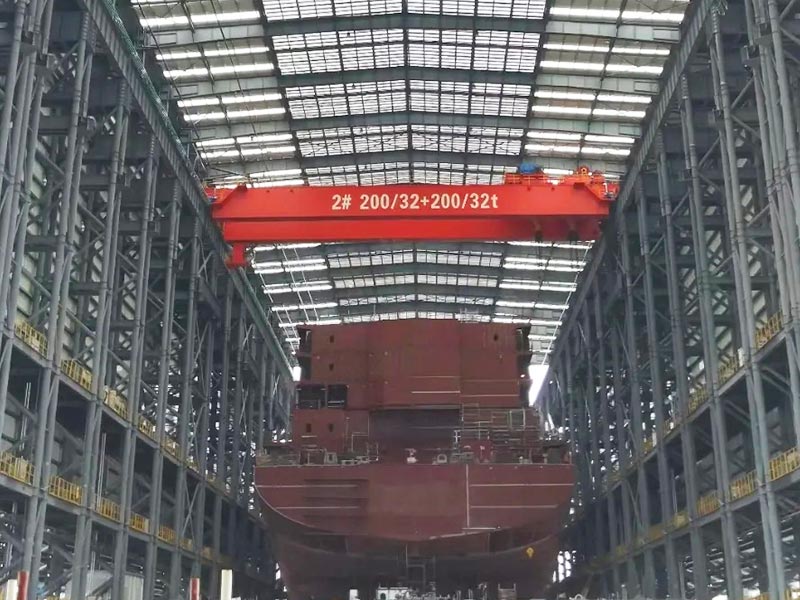
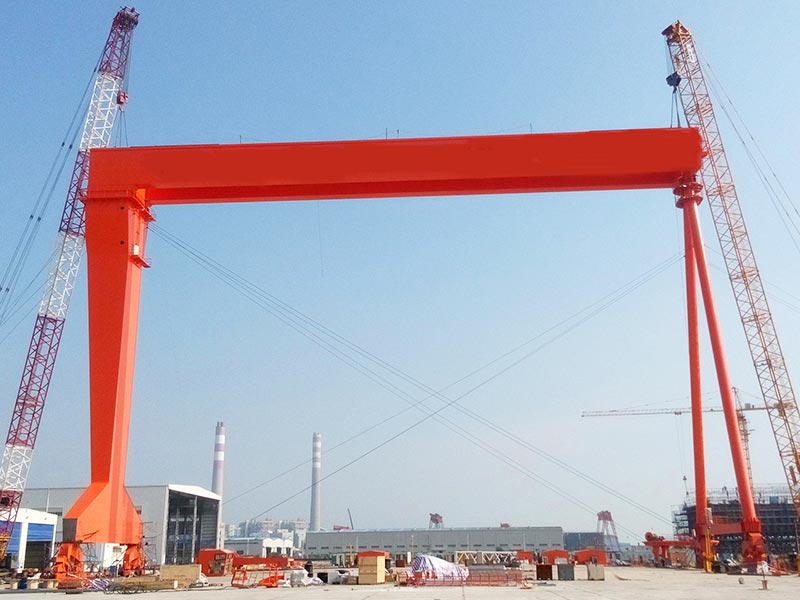
Low headroom double-girder overhead cranes are widely used in fabrication workshops to maximize lifting height within limited building clearance. These cranes are commonly equipped with optimized trolley designs and compact hoisting arrangements to handle large structural blocks efficiently.
In many shipyards, gantry cranes are also deployed in assembly zones or semi-open fabrication areas to support flexible handling of oversized blocks that exceed the coverage or operational range of overhead cranes.
To ensure structural integrity during handling, specialized turning and flipping systems such as hydraulic turning beams and block rotators are used to reposition assemblies for multi-side welding operations.
Variable Frequency Drive (VFD) systems play a critical role in this stage by enabling anti-sway control, micro-speed inching, and smooth acceleration/deceleration. These functions are essential for precise alignment of welded structures and for minimizing internal stress during lifting and positioning operations.
Stage 3: Block Assembly & The Critical “Block Turn-Over”
This stage represents one of the most technically demanding operations in shipbuilding, where individual sub-assemblies are integrated into large three-dimensional hull blocks. These structures form major sections of the vessel such as double-bottoms, side shells, and partial deck units.
Material Handling Challenges
Due to welding-induced thermal distortion and structural complexity, hull blocks often require controlled re-orientation to enable down-hand welding, surface blasting, and coating operations. Depending on production requirements, blocks may undergo 180-degree turnover, 90-degree rotation, or precise repositioning.
These operations involve extremely high lifting loads, shifting centers of gravity, and significant risk of structural deformation if load distribution is not properly controlled. Outdoor assembly conditions further introduce wind loads and stability challenges during rotation.
Technical Solutions
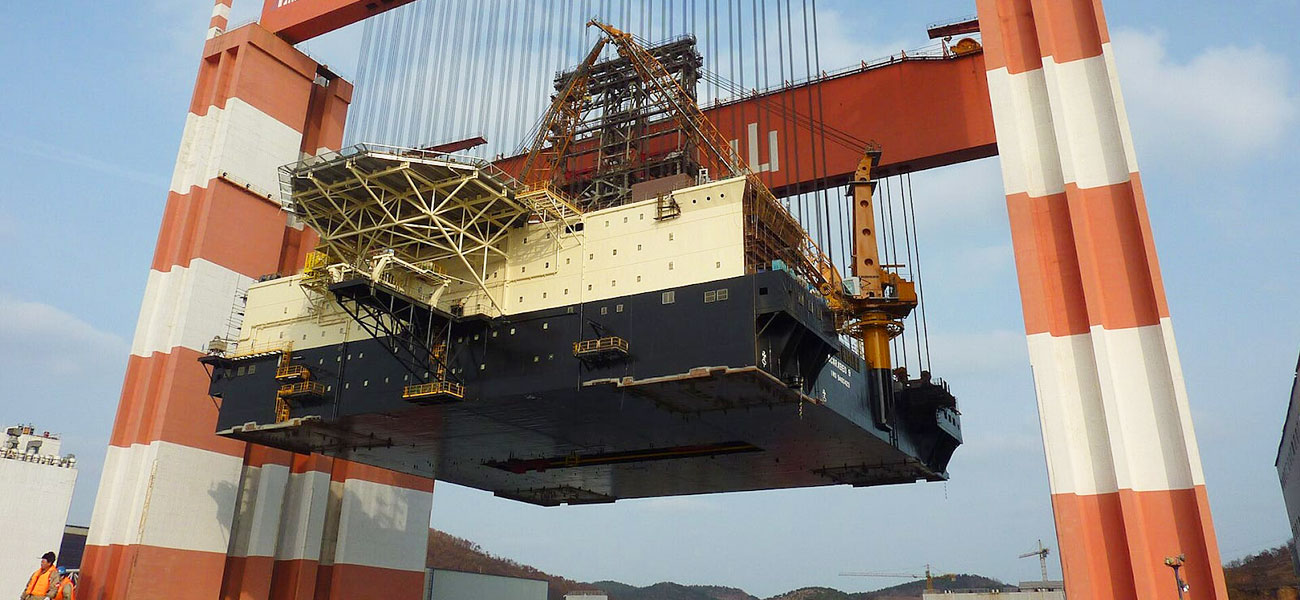
Large shipbuilding gantry cranes, commonly referred to as Goliath cranes, are the primary lifting equipment used in block assembly yards. These cranes are typically equipped with twin-trolley synchronized lifting systems, enabling precise control of multi-point lifting operations during block turnover.
To ensure structural safety, spreader beam systems are widely applied to distribute lifting forces evenly across multiple lifting points, reducing localized stress and preventing deformation of large hull structures.
In addition, hydraulic turning frames and controlled rotation systems are often used in combination with crane lifting to achieve stable and safe block turnover operations. These systems allow gradual and controlled rotation of hull blocks around a defined pivot point.
Stage 4: Dock Erection & Outfitting
During the dock erection phase, large pre-fabricated hull blocks are transported to dry docks or slipways and assembled into the final ship structure. In parallel, complex mechanical, electrical, and piping systems are installed inside the vessel, marking the transition from structural assembly to full ship completion.
Material Handling Challenges
This stage requires the precise alignment of multi-hundred-ton hull blocks under millimeter-level tolerances. Even minor deviations during block mating can affect overall hull geometry and structural integrity.
At the same time, all lifting operations take place in harsh coastal environments, where cranes are exposed to strong sea winds, high humidity, and continuous salt-mist corrosion. These conditions significantly increase operational risk and equipment wear.
Technical Solutions
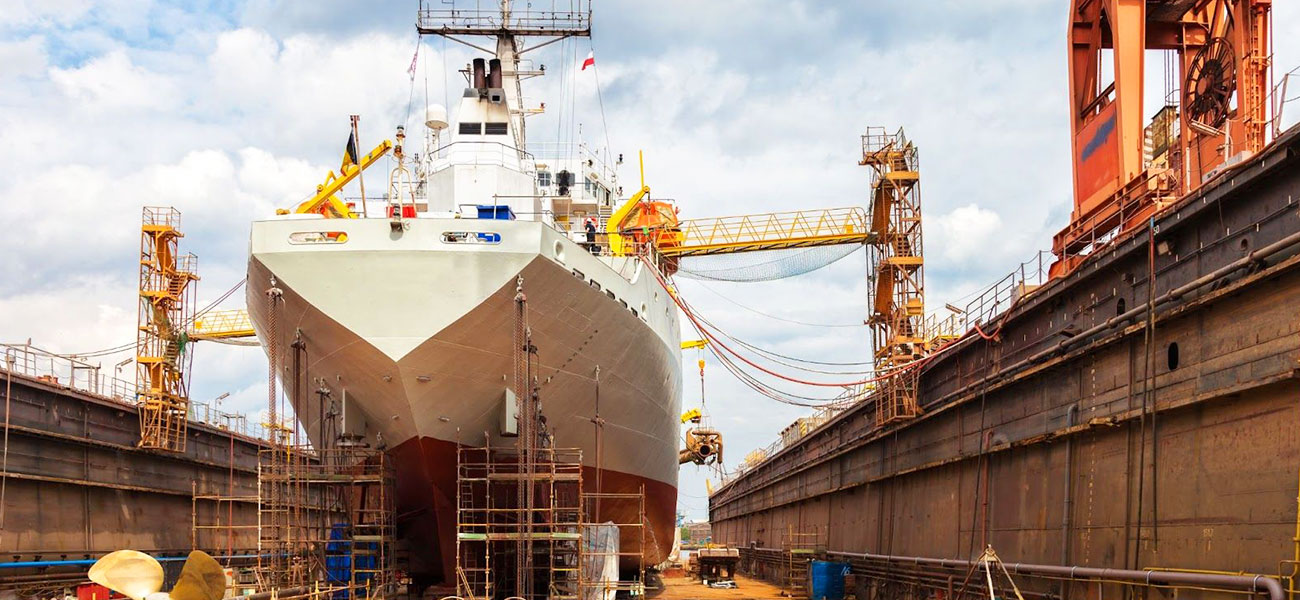
Primary Heavy Lifting System – Goliath / Dock Gantry Crane
Large gantry (Goliath) cranes form the backbone of dock erection activities. They are responsible for the main structural lifting operations, including hull block positioning, mating, and final assembly within the dry dock or slipway. These cranes typically feature:
- High-capacity twin-trolley hoisting systems
- Synchronized multi-point lifting capability
- Anti-sway control for wind-influenced loads
- Long-span coverage across the entire dock basin
Auxiliary Positioning & Outfitting System – Portal Slewing Cranes
Along dry docks, outfitting berths, and dockside platforms, portal slewing cranes are widely used for module installation and equipment positioning due to their wide working radius and rotational flexibility.
- Installation of piping modules, HVAC units, and electrical trays
- Lifting of auxiliary machinery such as pumps, valves, and generators
- Dock-to-vessel material transfer operations
- Precision positioning during outfitting and alignment work
Logistics & Yard Transfer System – RTG and Transport Equipment
RTG rubber tyred gantry cranes and heavy transport vehicles operate at the material flow level. Their main functions include:
- Transporting large modules from fabrication yard to dock area
- Staging hull blocks before erection
- Supporting just-in-time delivery of outfitting modules
- Flexible movement across outdoor yard zones
Precision Alignment & Control Systems
To ensure millimeter-level accuracy during hull assembly, shipyards integrate multiple positioning technologies across crane systems, including:
- Hydraulic jacking systems for fine elevation adjustment
- Laser alignment systems for hull block mating
- Load monitoring and synchronization control for multi-crane lifting
- Closed-loop anti-sway systems to compensate for wind and dynamic load movement
Stage 5: Vessel Launching & Fleet Maintenance
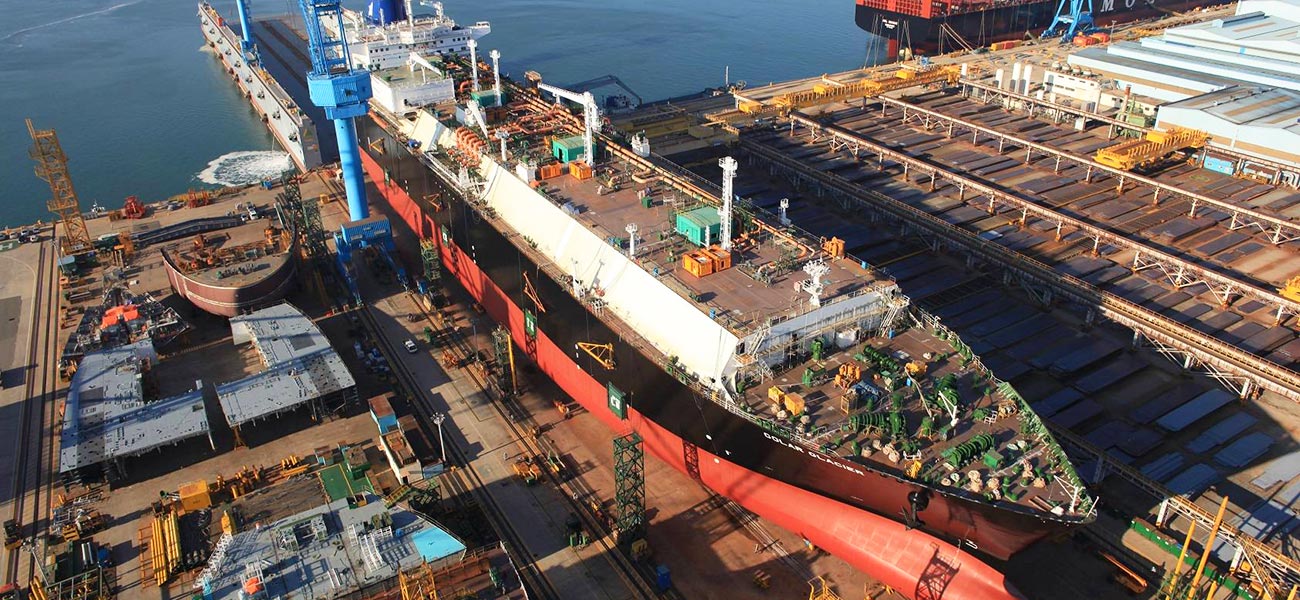
The final stage of shipbuilding marks the transition of a completed vessel from land-based construction to water operation. This phase includes vessel launching, water entry, and long-term fleet maintenance. Unlike earlier fabrication stages that rely on fixed heavy gantry systems, this phase is defined by high-mobility lifting systems and marine transfer infrastructure designed to handle fully assembled, outfitting-complete vessels.
Depending on ship size and yard configuration, launching methods may include dry dock flooding, slipway launching, or vertical lifting systems.
Material Handling Challenges
At this stage, vessels are fully assembled and outfitted, making them highly sensitive to structural stress. The main challenge is ensuring uniform hull load distribution during lifting to avoid deformation, cracking, or damage to finished surfaces and onboard systems.
In addition, shipyards operate under space-constrained and dynamic yard conditions, requiring equipment to maneuver large vessels safely without fixed rail systems. Environmental factors such as wind, humidity, and salt exposure further increase operational risk during launching and transfer operations.
Technical Solutions
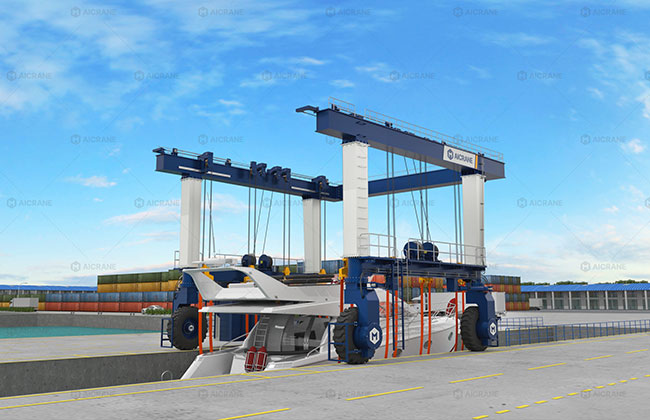
Mobile Lifting System – Boat Travel Lift (Small to Medium Vessels)
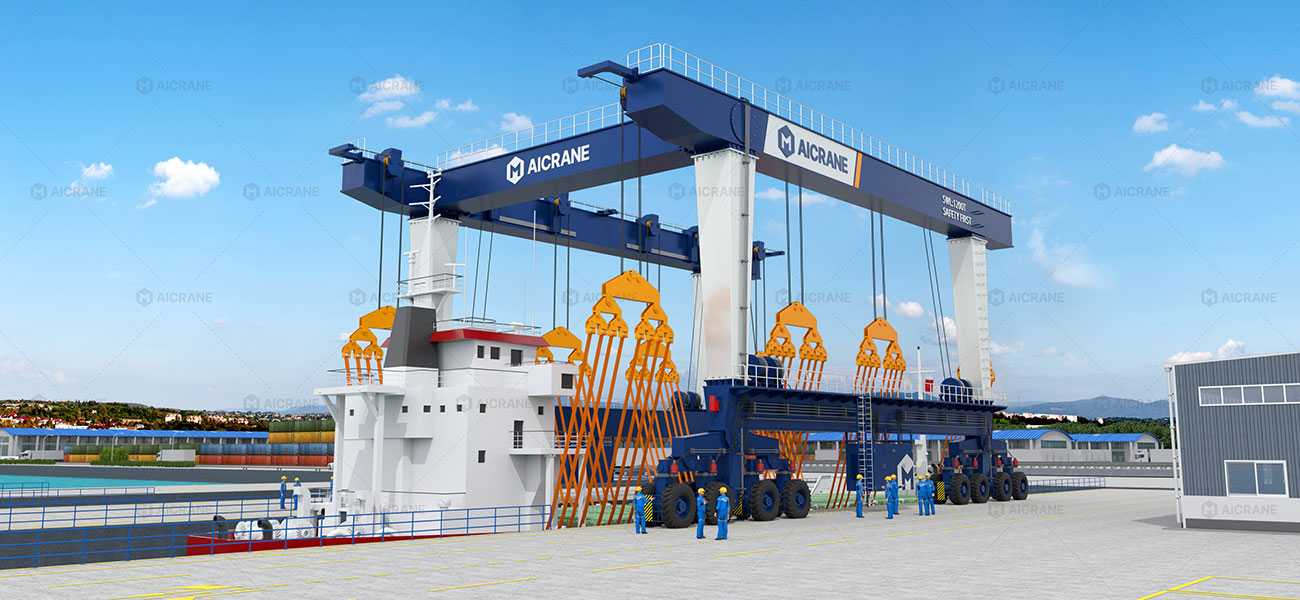
Boat travel lifts or mobile boat hoists are widely used for launching, retrieving, and transporting yachts, patrol boats, and fishing vessels. They provide uniform hull load distribution using adjustable slings, ensuring safe handling of finished vessels during lifting and transfer operations.
Key functions include:
- vessel launching and retrieval
- dry-docking for maintenance
- short-distance yard transport
Controlled Launching System – Winch-Based Slipway Operations
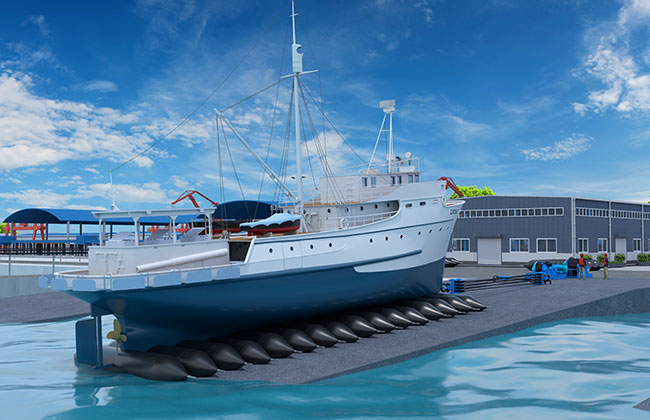
In slipway-based shipyards, slipway winch systems are used to control vessel movement during launching and retrieval. They regulate descent speed, provide traction force, and ensure stable alignment during entry into water.
Typical functions include:
- controlled vessel lowering into water
- traction support during slipway launching
- mooring and positioning assistance
Fixed Launching & Dry Dock Systems – Large Vessel Infrastructure
For larger commercial vessels, shipyards rely on fixed infrastructure systems such as ship lift platforms, dry docks, and slipway launching systems.
These systems enable:
- vertical lifting and transfer of large vessels
- controlled flooding for buoyancy-based launching
- gravity-assisted slipway launching operations
Summary: Recommended Handling Solutions by Shipbuilding Stage
To help identify suitable lifting configurations across different production stages, the following matrix maps typical equipment solutions to each phase of shipbuilding:
| Shipbuilding Stage | Main Operations | Recommended Handling Solutions | Key Functional Focus |
|---|---|---|---|
| Stage 1: Steel Cutting & Material Preparation | Plate handling, blasting, CNC feeding | Overhead cranes (A5–A8), electromagnetic/vacuum lifting systems, gantry cranes, forklifts | High-frequency handling, fast material flow, CNC precision feeding, surface protection |
| Stage 2: Sub-Assembly & Fabrication | Panel welding, stiffener assembly, block pre-assembly | Double girder overhead cranes, gantry cranes (auxiliary zones), jib cranes, turning devices, VFD control systems | Precision assembly, deformation control, multi-point lifting, welding accessibility |
| Stage 3: Block Assembly & Turnover | Hull block integration, 90°/180° turning, pre-erection | Goliath cranes, synchronized multi-crane systems, spreader beams, hydraulic turning frames | Heavy lifting, controlled rotation, load balancing, structural integrity protection |
| Stage 4: Dock Erection & Outfitting | Block mating, engine installation, piping & system integration | Goliath cranes, laser alignment systems, hydraulic jacking systems, overhead cranes, jib cranes, RTG, transport systems | Millimeter-level alignment, heavy block integration, precision outfitting, multi-system coordination |
| Stage 5: Vessel Launching & Fleet Maintenance | Vessel launching, dry docking, retrieval, maintenance | Boat travel lifts, ship lift platforms, slipway winch systems, rubber tyred gantry cranes | Safe vessel transfer, uniform hull load distribution, controlled launching, lifecycle maintenance |
Please Note:
Lifting configurations in shipbuilding are highly project-specific and cannot follow a one-size-fits-all standard. The solutions presented above represent typical and widely adopted shipyard practices based on general engineering applications.
In actual projects, final equipment selection depends on multiple technical factors, including workshop layout, lifting capacity requirements, indoor or outdoor operating conditions, dock or yard dimensions, and ground bearing capacity.
Smart & Digitalized Shipyards: Empowering the Future of Green and Efficient Shipbuilding
In the era of Industry 4.0 and Digital Twin technology, material handling equipment is no longer just isolated mechanical machinery. Today, cranes act as the critical data nodes within a shipyard’s intelligent logistics network. By integrating advanced sensing technologies, IoT (Internet of Things), and smart control algorithms into crane engineering, we enable global shipyards to transition from experience-based management to data-driven decision-making.
5G + IoT and Remote Intelligent O&M Systems
Traditional crane maintenance relies heavily on periodic manual inspections. Unexpected equipment breakdowns create massive bottlenecks, halting the entire production line and incurring staggering downtime costs.
- Condition Monitoring & Predictive Maintenance: Heavy cranes are fully deployed with industrial-grade sensors that capture real-time data on motor temperature, brake wear, gearbox vibration, wire rope tension, and structural stress.
- Proactive Health Management: This asset data is uploaded via 5G or high-reliability shipyard LANs to a cloud-based digital platform. By utilizing big data algorithms to analyze fatigue life, the system automatically issues alerts before components fail, shifting maintenance from reactive to predictive and reducing unplanned downtime by over 30%.
- Global Remote Diagnostics: No matter where your shipyard is located, our engineers can access equipment via digital interfaces to provide online troubleshooting, software updates, and technical support, drastically shortening post-sale response times.
Intelligent Anti-Collision, Safety Fencing, and Multi-Crane Scheduling
In busy dry docks, outfitting quays, or grand assembly yards, multiple massive gantry cranes, portal slewing cranes, and RTGs frequently operate within overlapping zones, presenting extreme collision risks.
- 3D LiDAR & AI Vision Safety Fencing: Crane trolleys and long-travel mechanisms are equipped with high-precision LiDAR and AI vision cameras. These sensors continuously scan travel paths for dynamic obstacles, personnel, and adjacent cranes, automatically defining “Safe, Warning, and Emergency Braking Zones.”
- Multi-Crane Coordinated Dispatching (Anti-Collision System): When multiple cranes collaborate to lift a single, ultra-heavy hull block, or when they cross paths on shared rails, the intelligent control system synchronizes positioning, speed, and load data in real time via wireless mesh networks. Central algorithms dynamically adjust travel trajectories to ensure flawless automated evasion and flawless tandem operation.
Digital Twin & Seamless MES Integration
A primary pain point in modular shipbuilding is the disconnect between physical material flow and digital information flow. Smart lifting equipment is the key to breaking down these information silos.
- Automated Hoisting Data Capture: The intelligent shipyard cranes feature integrated high-precision weighing systems and 3D spatial positioning modules (utilizing GNSS/GPS, laser tracking, or absolute encoders). Every single lift automatically captures the block’s exact weight, center of gravity, and current coordinates.
- Closed-Loop MES/ERP Integration: This granular logistics data is fed directly into the shipyard’s Manufacturing Execution System (MES). From the central control tower, management can see exactly when a specific hull block was transferred to the erection zone, achieving fully transparent, digital asset management across the facility.
Fully & Semi-Autonomous Crane Operations
For repetitive, labor-intensive material handling and mid-process transport, autonomous shipyard lifting solutions free up critical manpower while ensuring continuous productivity.
- Automated Workshop Feeding: In steel cutting and processing shops, the overhead crane receives direct instructions from the MES. It automatically travels to the designated storage bay, utilizes its electromagnetic or vacuum lifters to grab the exact steel plate required, navigates around obstacles, and feeds the CNC cutting line without manual intervention.
- One-Key Precision Positioning: In high-altitude, blind-spot, or long-distance lifting scenarios, operators simply enter the destination coordinates into a ground station or remote console. The crane relies on closed-loop feedback and Variable Frequency Drives (VFD) to travel autonomously and position massive blocks with millimeter-level accuracy.
Partnering with Aicrane for Shipyard Efficiency
Material handling in shipbuilding is not a series of isolated lifts; it is a continuous, interconnected value chain. Optimizing efficiency at every stage – from the first steel cut to the final splash of a vessel launch – requires a deep understanding of shipyard workflows and heavy engineering.
At Aicrane, we specialize in designing and manufacturing high-performance, marine-grade lifting solutions tailored to the rigorous demands of the global shipbuilding and repair industry. From heavy-duty workshop overhead cranes to multi-hook shipbuilding gantries and mobile boat hoists, our equipment is built to elevate your yard’s productivity and safety standards. Contact our marine lifting experts today to discuss your next shipyard upgrade project.