


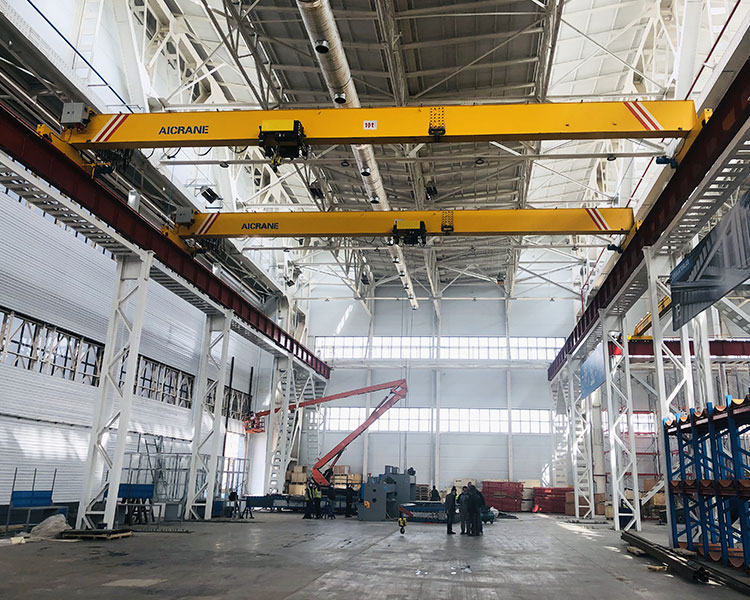
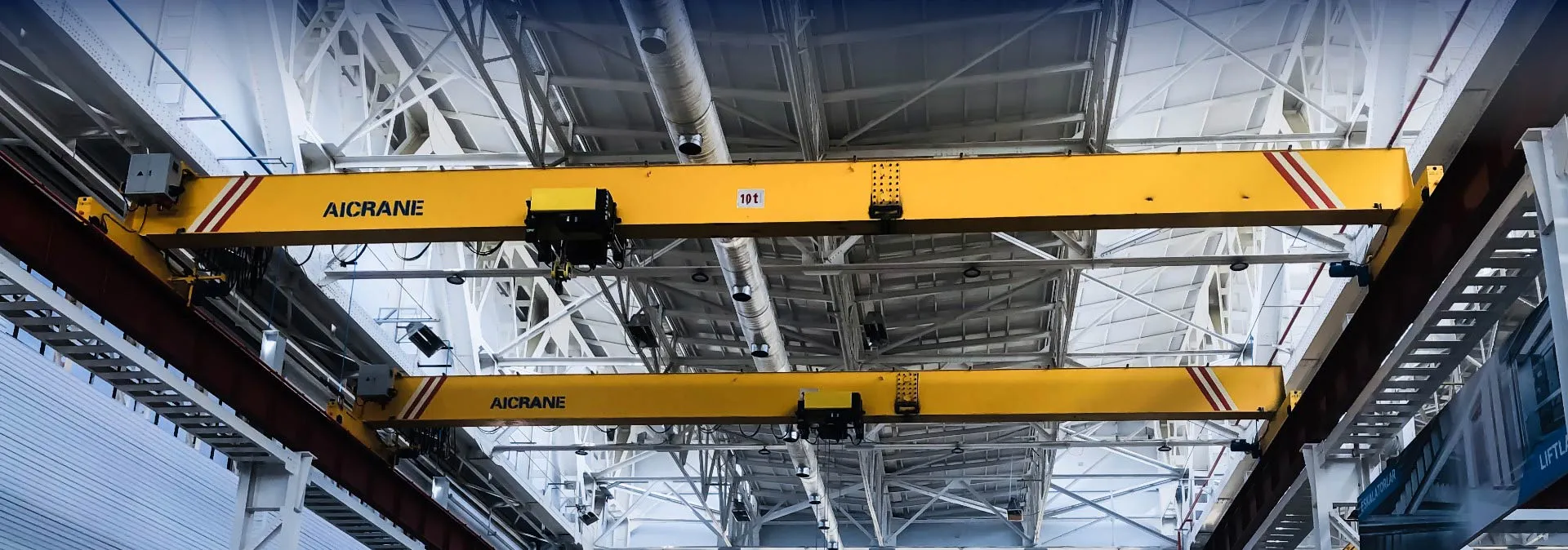
A Single Girder Overhead Crane is a highly efficient, cost-effective lifting solution engineered for light to medium-duty material handling. This system typically handles 5t to 20t loads while utilizing an optimized lightweight design to minimize structural stress on your facility. By balancing high-strength engineering with space-saving agility, it serves as the ideal investment for maximizing workshop headroom and operational productivity across a wide range of industrial environments.
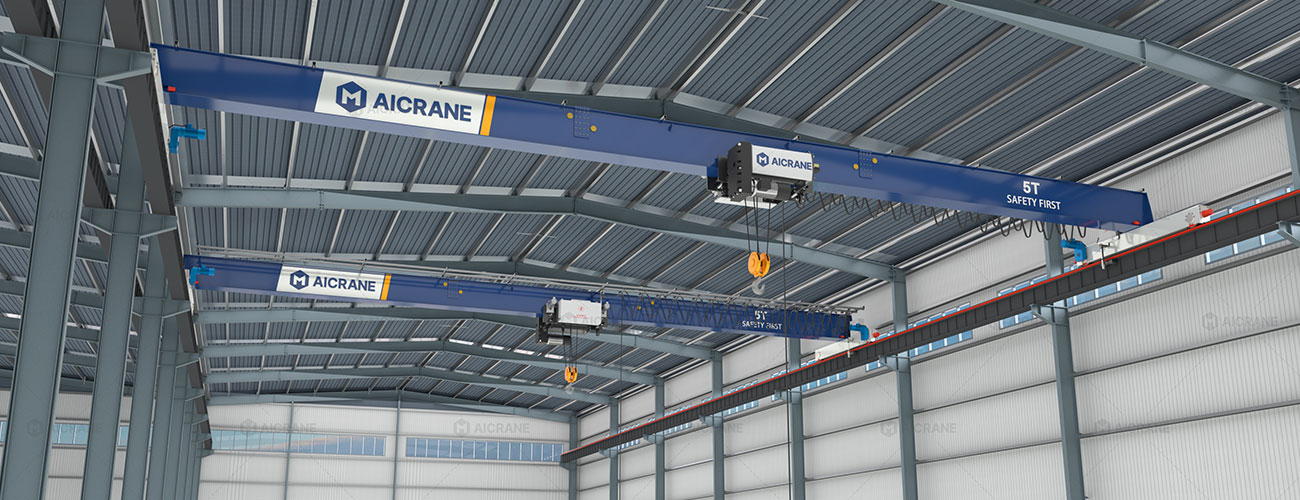
Which Single Girder Crane Suits Your Needs? Explore the Different Types
Single girder overhead cranes are far from “one-size-fits-all.” Depending on your site conditions, lifting frequency, and environmental hazards, choosing the correct configuration is critical for operational safety and long-term ROI. Below are the primary overhead crane models used in various industrial applications.
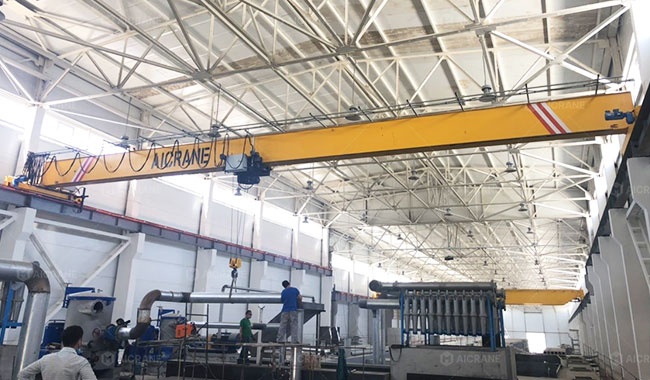
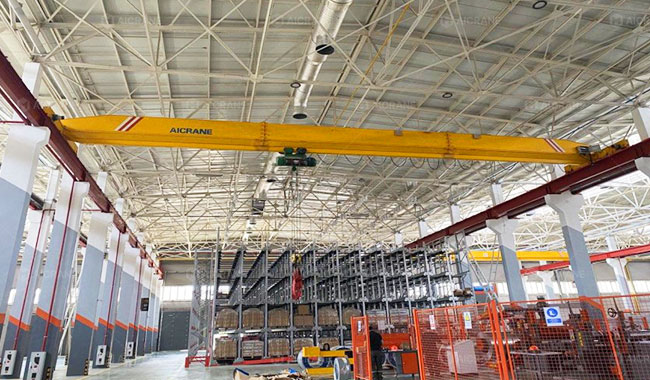
AQ-HD European Standard Single Girder Bridge Crane
The Professional Choice for Precision & Space Efficiency
- Technical Standard: Built to FEM/DIN standards with frequency conversion (VFD) as standard.
- The “Site” Advantage: Features a compact design. By minimizing the distance between the hook and the ceiling, it maximizes your effective lifting height – crucial for workshops with height constraints.
- Best For: High-precision manufacturing, automotive assembly, and high-frequency (A5) production lines.
AQ-LD Standard Single Beam Crane
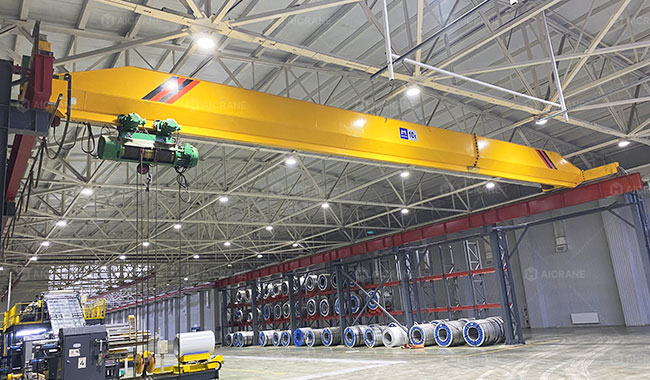
The Universal Workhorse for General Material Handling
- Technical Standard: A robust GB-standard crane equipped with a traditional CD/MD model electric wire rope hoist.
- The “Site” Advantage: Offers the most cost-effective initial investment. Its modular design and universal components ensure that maintenance is simple and spare parts are easily sourced worldwide.
- Best For: General warehousing, standard assembly lines, and light-to-medium duty (A3-A4) lifting.
AQ-LB Explosion Proof Single Girder Crane
Specialized Safety for Hazardous Environments
- Technical Feature: Engineering with Ex-rated anti-spark treatments on motors, control boxes, and wheels.
- The “Site” Advantage: Eliminates the risk of ignition in volatile atmospheres, ensuring compliance with strict safety regulations.
- Best For: Chemical processing plants, oil and gas facilities, and industrial painting workshops.
AQ-LX Underslung / Suspension Single Girder Crane
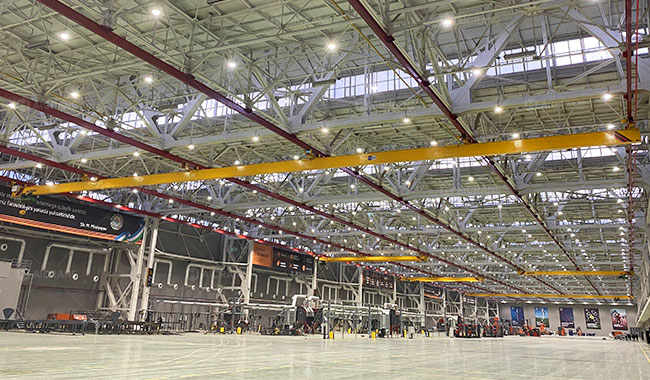
Maximizing Floor Space with Ceiling-Mounted Design
- Technical Feature: The runway tracks are mounted directly to the roof structure, removing the need for support columns.
- The “Site” Advantage: Provides zero obstruction on the factory floor. The single beam underslung crane is the ideal solution for sites where forklifts or other ground traffic require an entirely clear path.
- Best For: Workshops with limited floor space but strong roof structures.

AQ-LDY Metallurgical Single Beam Crane
Engineered for the Heat of the Foundry
- Technical Feature: Features specialized thermal insulation, high-temperature resistant ropes, and double-braking systems.
- The “Site” Advantage: Designed to maintain structural integrity while transporting molten metal or operating near furnaces.
- Best For: Steel mills, foundries, and heavy-duty thermal processing sites.

AQ-LDZ Grab Single Girder Bridge Crane
The High-Efficiency Solution for Bulk Cargo
- Technical Feature: Equipped with a specialized grab bucket (hydraulic or mechanical) instead of a standard hook.
- The “Site” Advantage: Optimized for continuous handling of loose materials, reducing cycle times and manual labor.
- Best For: Handling sand, coal, scrap metal, and industrial waste.
Model Comparison Matrix
Use the table below to quickly identify which model aligns with your technical requirements.
| Model Type | Design Features | Duty Class | Primary Site Benefit | Best Application |
|---|---|---|---|---|
| AQ-HD | FEM/DIN (Euro) | A5 | Max Lifting Height | Precision Manufacturing |
| AQ-LD | ISO/National | A3-A4 | Affordable / Reliable | General Warehousing |
| AQ-LX | Suspension | A3-A4 | Clear Floor Space | Tight Layouts |
| AQ-LB | Explosion-Proof | A3-A4 | Spark-Free Safety | Chemical & Gas |
| AQ-LDY | Metallurgical | A6 | Heat Resistance | Foundries & Mills |
| AQ-LDZ | Grab Bucket | A3-A4 | Bulk Efficiency | Waste & Raw Materials |
Selecting the right model is the foundation, but the specific performance data – such as load capacity, span length, lifting height, and duty cycles – defines the long-term efficiency of your operations.
Explore the detailed Technical Specifications in the next section to see the exact capabilities of our single girder crane range and find the perfect match for your building’s structural requirements.
Single Girder Overhead Crane Specifications
| Model | Capacity | Span | Lifting Height | Lifting Speed | Hoist Running Speed | Crane Running Speed | Duty Class |
|---|---|---|---|---|---|---|---|
| AQ-HD | 5-20t | 7.5-28.5m | 6-18m | 0.8/5m/min | 2-20m/min | 3-30m/min | A5 |
| AQ-LD | 5-25t | 7.5–31.5m | 6-30m | 0.3-8m/min | 20m/min | 20m/min | A3-A4 |
| AQ-LB | 5-20t | 7.5–31.5m | 6-30m | 0.33-8m/min | 20m/min | 20m/min | A3-A4 |
| AQ-LX | 5-10t | 3-22.5m | 6-30m | 0.7-8m/min | 20m/min | 20m/min | A3-A4 |
| AQ-LDY | 5-10t | 7.5-31.5m | 6-20m | 1.75-8m/min | 20m/min | 20m/min | A6 |
| AQ-LDZ | 5-10t | 4.5-28.5m | 6-16m | 14-16m/min | 20m/min | 20m/min | A3-A4 |
Understanding the Key Performance Indicators
To help you make an informed decision, our engineers have highlighted why these specific parameters matter for your workshop efficiency:
Duty Class (A3 to A6) – Matching Your Workload
The Duty Class defines how many hours a day the crane can operate and under what load intensity.
- A3-A4: Ideal for intermittent use, such as maintenance workshops or general storage.
- A5-A6: Engineered for high-frequency production lines or harsh environments (like steel mills), ensuring structural longevity under continuous stress.
Variable vs. Fixed Speed Control
- AQ-HD Models are equipped with Frequency Conversion (VFD) as standard, allowing for a dual-speed range (0.8/5 m/min). This provides “soft starts” and precise positioning, which is critical for high-value loads.
- AQ-LD Models utilize fixed speeds for maximum cost-efficiency in standard material handling tasks.
Optimized Span & Lifting Height
Our cranes offer a maximum span of up to 31.5m and a lifting height of up to 30m. We provide customized adjustments to these dimensions to ensure the crane fits perfectly within your existing steel structure, eliminating the need for expensive building modifications.
These single girder overhead crane specifications provide the engineering baseline, but how do they perform in a busy machinery manufacturing plant or a low-clearance workshop? Move to the next section to see our Single Girder Crane Case Studies and learn how these technical parameters translate into operational efficiency across diverse global sites.
Powering Industries: Real-World Examples of Our Single Girder Cranes
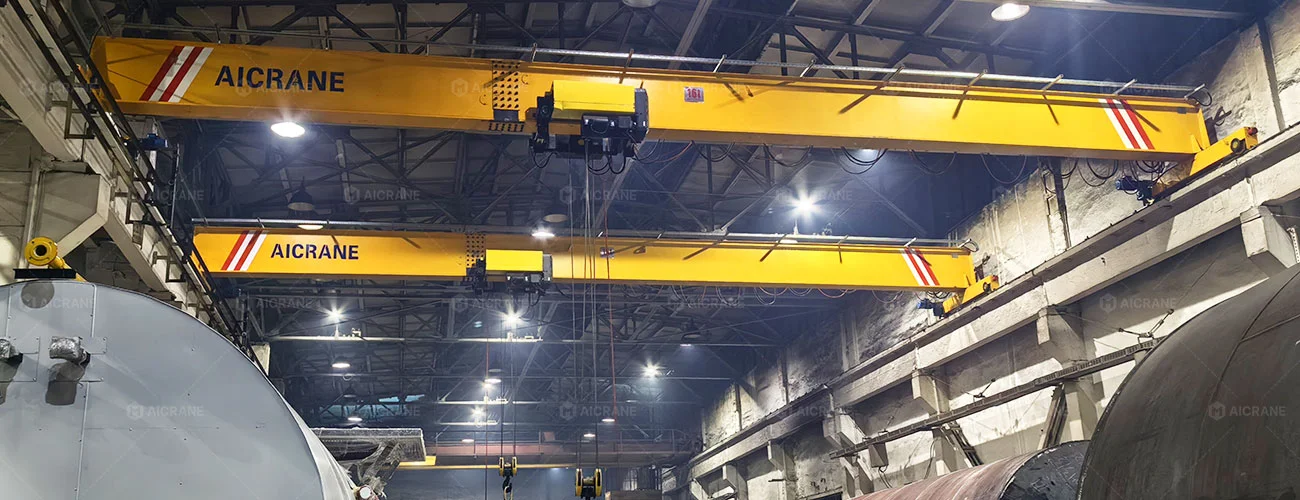
AQ-HD Single Girder Overhead Cranes for Heavy Machinery Assembly – Russia
Site Challenge: A heavy machinery plant faced the complex task of maneuvering large metal tanks and oversized components through a busy production line. The primary requirement was operational synchronization – moving bulky, high-value loads without “swinging” or abrupt stops that could delay the assembly schedule or damage the machinery.
The AICRANE Solution: We deployed a fleet of AQ-HD European Standard Overhead Cranes. The integration of Frequency Conversion (VFD) technology allowed the cranes to handle the metal tanks with millimeter precision, providing the “soft-start” and “soft-stop” functionality essential for machinery assembly.
Key Specs: 10t & 16t Capacity | 15m Span | 12m Lift Height | VFD Precision Control
Outcome: Eliminated production bottlenecks by reducing manual handling, ensuring that every heavy component reached the assembly station reliably and precisely on schedule.
Customer Feedback: “These cranes have greatly improved our production efficiency and safety. Heavy machinery components are now moved reliably and on schedule.” – Machinery Plant Manager
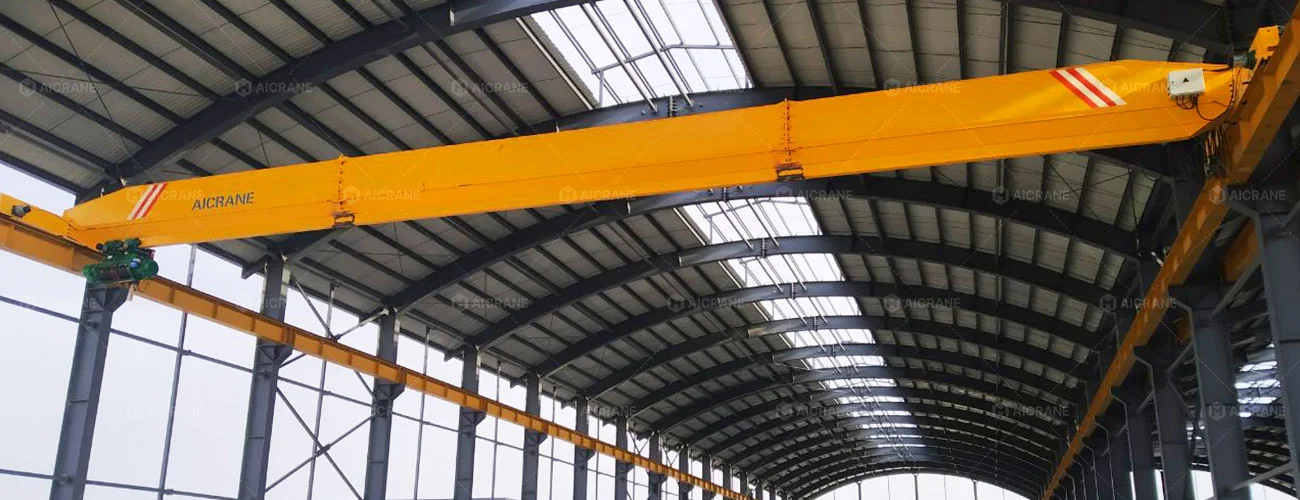
AQ-LD 10t Single Girder Bridge Crane for High-Efficiency Precast Yards – Uzbekistan
Site Challenge: A precast concrete facility needed to move heavy blocks and beams quickly. The priority was a reliable system that offered the best return on investment (ROI) and could be installed without modifying the existing factory pillars.
The AICRANE Solution: We supplied multiple AQ-LD 10 Ton Single Girder Overhead Cranes. This model was chosen for its excellent strength-to-weight ratio, allowing for a fast and cost-effective installation using the client’s current infrastructure.
Key Specs: 19m Span | 8m Lift Height | A4 Duty Class
Outcome: Production speed increased by 25%, enabling the client to meet the delivery timeline for a major infrastructure project.
Customer Feedback: “The crane allows us to handle large concrete elements with precision, significantly boosting our production efficiency.” – Precast Plant Supervisor
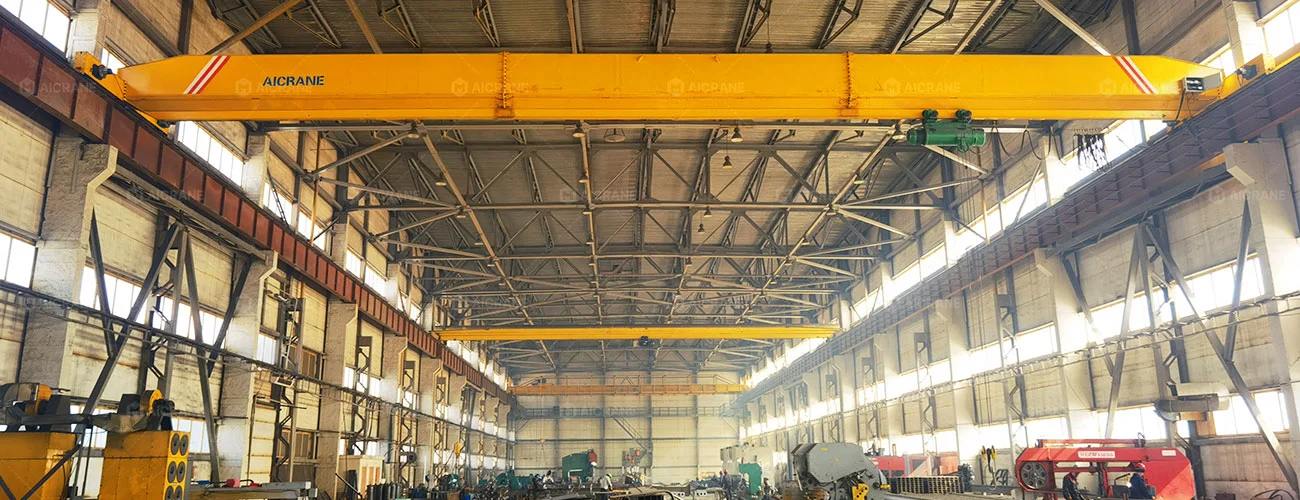
AQ-LD 10t Single Girder Overhead Crane for Heavy Steel Handling – Kazakhstan
Site Challenge: The plant needed to transport long steel pipes and columns safely. The goal was to find a durable yet economical lifting solution that required minimal maintenance.
The AICRANE Solution: We installed AQ-LD 10-ton Single Girder Bridge Cranes. The system was optimized for long-distance transport within the workshop, providing a stable and reliable platform for meeting tight production deadlines.
Key Specs: 18m Span | 13m Lift Height
Outcome: Operations ran smoothly with zero downtime, significantly improving the safety of heavy component movement.
Customer Feedback: “The crane makes handling heavy steel components much safer and more efficient, helping us meet tight deadlines.” – Metal Fabrication Manager
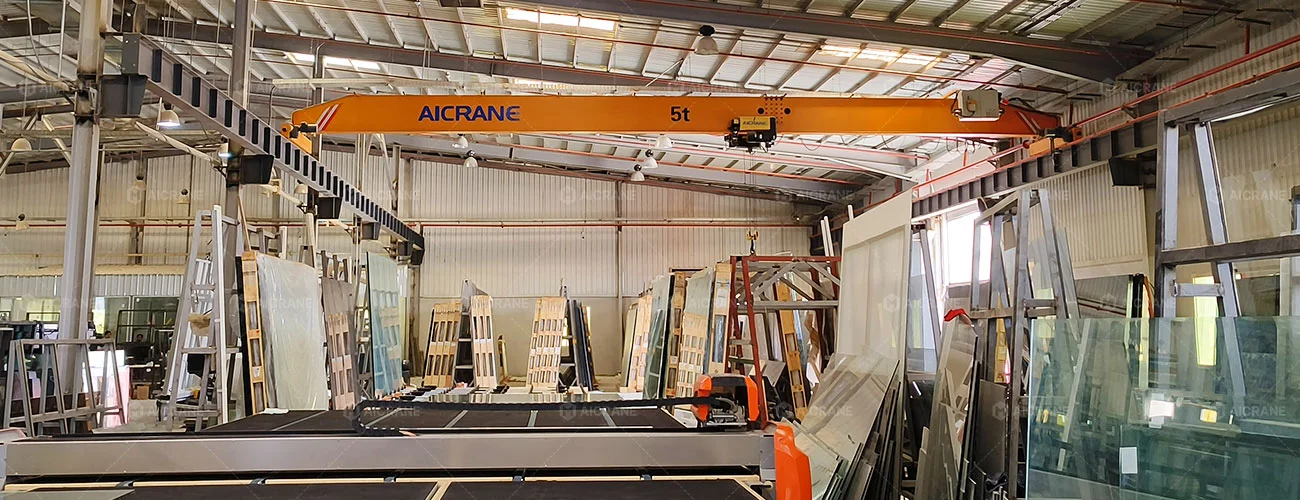
AQ-HD 5t Single Girder Overhead Crane for Precision Glass Handling – Saudi Arabia
Site Challenge: The facility handled large-format, fragile glass sheets. The primary risk was vibration and jerky movements during startup and braking, which caused high breakage rates.
The AICRANE Solution: We installed the AQ-HD European Standard 5 Ton Single Girder Overhead Crane. Unlike traditional models, the AQ-HD features Frequency Conversion (VFD), providing the stepless speed control necessary for ultra-smooth acceleration and millimeter-precision positioning.
Key Specs: 15m Span | 6m Lift Height | VFD Precision Control | FEM/DIN Standard
Outcome: A 40% reduction in glass breakage and significantly smoother production flow.
Customer Feedback: “This crane allows us to handle delicate glass products safely and efficiently, reducing breakage significantly.” – Glass Production Manager
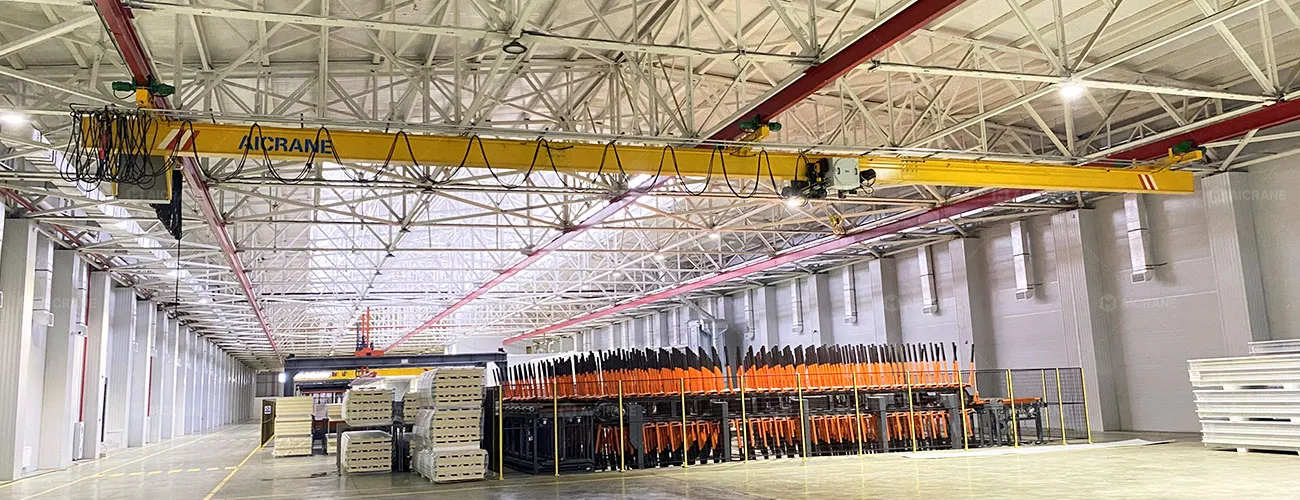
AQ-LXB Single Girder Underhung Crane for Building Materials – Uzbekistan
Site Challenge: The production of specific building materials involved volatile dust and gases, creating a high-risk environment where a single spark from a standard motor could lead to disaster.
The AICRANE Solution: Deployed the AQ-LXB 2t Explosion-proof Underhung Crane. This specialized system uses Ex-rated spark-free components and an underhung design that attaches directly to the roof structure, bypassing the need for floor columns in a crowded hazardous zone.
Key Specs: 1+11+11+1m Multi-span | 6.5m Lift Height | Ex-rated Safety | Underhung Design
Outcome: Fully compliant with regional safety regulations, providing a 100% spark-free lifting environment.
Customer Feedback: “The crane provides peace of mind and allows us to manage building materials safely and effectively.” – Building Materials Plant Supervisor
Ready to Solve Your Site-Specific Challenges?
As demonstrated by our single girder overhead crane projects in Russia, Saudi Arabia, and beyond, every AICRANE installation is engineered to handle unique environmental and structural constraints. To help you transition from these real-world examples to your own facility’s requirements, we have developed the following Selection Guide to simplify your decision-making process.
Selection Guide: Finding Your Ideal Single Girder Electric Overhead Crane
Selecting the right single girder overhead bridge crane is about more than just lifting weight – it’s about matching equipment to your specific facility and production goals. Use this 4-step framework to define a solution that maximizes safety, space, and long-term ROI.
Step 1: Define Your Capacity, Span, and Lifting Height
Before choosing a model, you must determine the fundamental technical parameters that will dictate the crane’s structural size and lifting power.
- Load Capacity: Single girder systems typically range from 5t to 25t.
- Pro Tip: For loads consistently exceeding 20t with high duty cycles, our engineers may recommend a double girder crane to ensure long-term girder rigidity.
- Material Type: What are you lifting? Precision handling for glass or engines requires VFD (Variable Frequency Drive) for smooth, stepless control. Conversely, hazardous materials (such as liquid metal or chemicals) necessitate specialized hardening and safety configurations, such as our AQ-LDY or AQ-LB models.
- Span & Lifting Height: the space
- Span: The distance between runway rails. Wider spans require reinforced bridge box-girders to prevent deflection.
- Lifting Height: Measured from the floor to the hook’s highest point. This determines the required wire rope drum size and impacts the factory’s vertical clearance.
Step 2: Assess Workshop Space and Structural Clearance
Once the basic specs are set, the crane must be matched to your building’s specific dimensions to ensure maximum lifting height while minimizing the need for costly structural modifications.
- Top-Running (AQ-LD/AQ-HD): The top running crane is a standard choice for most factories. It sits on top of runway beams, offering maximum stability for capacities up to 25t.
- Underhung/Suspension (AQ-LX): Best for facilities with restricted floor space. By hanging from the roof trusses, it eliminates the need for ground columns, reclaiming 100% of the floor area.
- Low-Headroom Design: Specifically engineered for low-ceiling workshops. The compact hoist design allows the hook to travel higher, gaining more effective lift compared to standard models.
Step 3: Match Duty Class to Work Intensity
The Duty Class (A3-A6) determines the crane’s fatigue life. Choosing the right class ensures your equipment survives its intended operational stress.
- A3 (Light Duty) – Intermittent Use: Ideal for maintenance workshops, assembly stations, or warehouses where the crane is used for 1–4 hours per day. Our AQ-LD Standard model offers the most economical solution for these light-cycle environments.
- A4 (Intermediate Duty) – Standard Production: The most common choice for general manufacturing and machine shops operating 8–10 hours per day. Both AQ-LD and AQ-HD models provide the necessary durability for these consistent, mid-range workloads.
- A5 (Heavy Duty) – Intensive Operation: Engineered for high-frequency use in busy production halls, steel fabrication plants, or precast concrete yards operating 12-16 hours per day. Our AQ-HD European Standard single girder crane is the preferred choice, featuring heavy-duty gearboxes and motors designed for continuous stress.
Step 4: Control Strategy & Safety Hardening
The final step ensures the crane is protected against its environment and provides the necessary operator precision:
- VFD Precision Control: Standard on AQ-HD. It enables “Soft-Start & Soft-Stop,” reducing load swing by up to 90% – essential for precision assembly.
- Explosion-Proof (AQ-LB): For volatile environments (ExdIIBT4/CT4), featuring spark-proof wheels and motors.
- Metallurgical (AQ-LDY): Includes thermal insulation and double-brake redundancy for high-heat foundry operations.
- Outdoor Protection: Features IP55/IP65 weatherproofing and anti-corrosion coating for harsh climates.

Ready to Design Your Single Girder Crane Solution?
To provide an accurate single girder overhead crane AutoCAD drawing and quotation, please share your requirements:
- Load Capacity: t
- Span: m
- Lifting Height: m
- Material & Environment:
Single Girder Overhead Crane Pricing Guide
The cost of a single girder overhead crane is determined by its configuration, components, and site-specific engineering. While prices vary based on market steel rates, this breakdown provides a clear understanding of the investment required for your facility.
Estimated Price Ranges for Single Girder Overhead Cranes
Note: These are base estimates for equipment only. Actual quotes depend on load capacity, span, lifting height, and customized features.
- AQ-LD Series (5-20 Ton): Typically ranges from $3,900 to $15,400+. This is the most cost-effective solution for general manufacturing and light-duty lifting.
- AQ-HD Series (5-20 Ton): Typically ranges from $7,600 to $30,800+. The higher price reflects the premium VFD technology, compact low-headroom design, and FEM/DIN standard components.
- AQ-LX Series (5-10 Ton): Typically ranges from $3,500 to $11,200+, depending on the complexity of the roof suspension system.
Key Factors Influencing Single Girder Overhead Crane Cost
When requesting a quote, four main factors will influence the final price of your single girder system:
- Span and Capacity: As the span increases, the box-girder requires more steel reinforcement to prevent deflection. Similarly, moving from 5 tons to 20 tons requires a more robust hoist and motor system.
- Duty Class (A3 vs. A5): Moving from A3 to A5 (Heavy Duty) involves higher-grade motors, hardened gearboxes, and reinforced structures, which increases the initial investment but lowers long-term maintenance costs.
- Control Systems (VFD vs. Contactor): Integrating Variable Frequency Drives (VFD) for precision control adds to the initial cost but protects your load and extends the crane’s mechanical lifespan.
- Freight and Installation: Shipping costs are influenced by the distance to your site (e.g., Russia, Saudi Arabia, or Nigeria). Professional installation and on-site load testing are also critical components of the total project budget.
Comparing Initial Cost vs. Total ROI
While the AQ-LD offers low entry price, the AQ-HD European Standard often provides a higher Return on Investment (ROI) for intensive operations. The European design reduces energy consumption, requires fewer spare parts, and maximizes factory space, potentially saving thousands in operational costs over 10-15 years.
The price of a single girder overhead crane is only one part of your facility’s total investment. Often, the most significant cost savings come from optimizing the steel structure workshop and the crane system together.
Instead of managing multiple suppliers and risking structural mismatches, many of our clients choose an AICRANE Turnkey EPC Solution. By designing the building and the lifting system as a single integrated unit, we can reduce steel waste, shorten installation timelines, and lower your overall project budget.
Turnkey EPC Solutions: Single Girder Cranes and Steel Structure Workshops
Choosing an AICRANE EPC (Engineering, Procurement, and Construction) partner ensures that your steel structure workshop is perfectly synchronized with your single beam overhead crane requirements from day one.
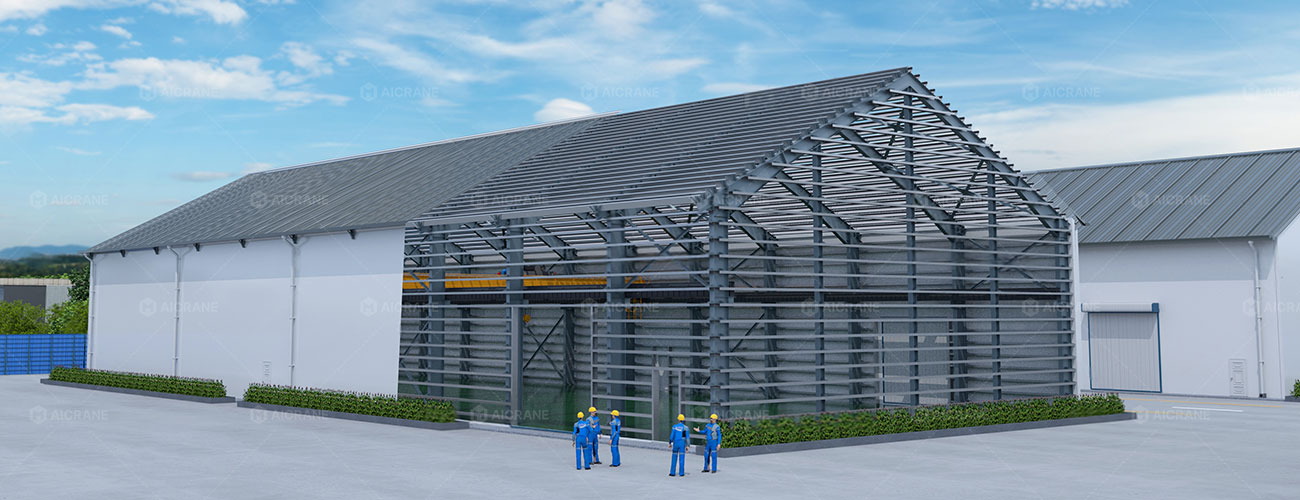
Unified Structural Engineering & Load Calculation
In a standard project, the single girder overhead crane supplier and building contractor often work in isolation, leading to “over-engineering” or costly site modifications. Our EPC approach integrates:
- Precision Column Loading: We calculate the exact wheel loads of your single girder crane to design the most efficient steel columns and foundations, preventing unnecessary steel consumption.
- Vertical Clearance Optimization: We align the roof truss height with the crane’s top clearance. This ensures you get the maximum lifting height without building an unnecessarily tall workshop, saving on both material and future HVAC costs.
Streamlined Project Management & Logistics
Managing a turnkey project significantly reduces the complexity for your procurement and site teams:
- Single Point of Contact: From the initial AutoCAD site layout to the final load testing of the single beam overhead crane, you deal with one dedicated engineering team.
- Synchronized Delivery: We coordinate the shipping of steel components and crane parts to ensure materials arrive in the correct sequence. This prevents site congestion and ensures installation begins the moment the foundations are ready.
Total Cost Efficiency & Risk Mitigation
By sourcing the steel structure and the single girder overhead crane from a single provider, you eliminate the “hidden costs” of industrial construction:
- Bulk Material Advantage: Benefit from lower costs on high-grade structural steel through our integrated supply chain.
- Zero Compatibility Issues: We guarantee that runway beams, rail alignments, and electrical busbars are 100% compatible with your crane, eliminating expensive on-site rework.
Decision Strategy: Single VS. Double Girder Overhead Crane
“Double is not always better.” For 90% small to medium-sized industrial facilities, a single girder overhead crane is the more strategic financial and operational choice than a double girder crane.
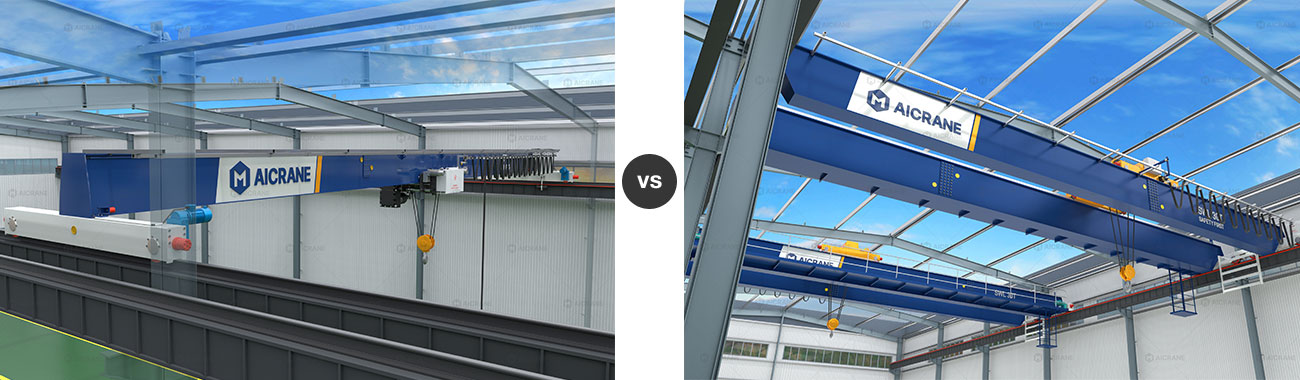
The Three “Savings” of Single Girder Systems:
Structural SavingsBeing significantly lighter, it exerts lower wheel loads. In an EPC project, this allows for lighter steel columns and foundations, reducing total building costs by 15-20%.
Vertical SavingsWhen paired with our low headroom electric hoist, a single girder crane minimizes headroom. This gains you more effective lifting height in low-ceiling workshops.
Operational SavingsWith fewer mechanical parts and a modular design, installation is 30% faster and long-term maintenance is simplified.
Quick Comparison: Which One Fits Your Project?
| Feature | Single Girder | Double Girder |
|---|---|---|
| Lifting Capacity | Best for 5t to 20t. | Required for loads exceeding 20t or 25t. |
| Span Limits | Optimal for spans up to 31.5m. | Engineered for longer spans. |
| Initial Price | Low. 30%+ more affordable. | High. Due to double the steel and dual rails. |
| Duty Class | A3 to A5 (Light to Medium) | A3 to A8 (Severe 24/7) |
| Building Cost | Minimized (Lighter Steel) | High (Reinforced Structure) |
The single girder overhead crane is your best investment if:
- Your maximum load is under 20 or 25 tons.
- You want to minimize building costs for your steel structure workshop.
- You don’t need continuous 24/7 operation at A6+ duty cycles.
- Your workshop has limited headroom and you need every centimeter of vertical lift.
Structural Engineering: The Core Components of a Single Girder Overhead Crane
Once you have identified the single girder overhead crane as your optimal configuration, the focus shifts to the mechanical precision that ensures a 20+ year service life. At AICRANE, we build this reliability into four core structural pillars:
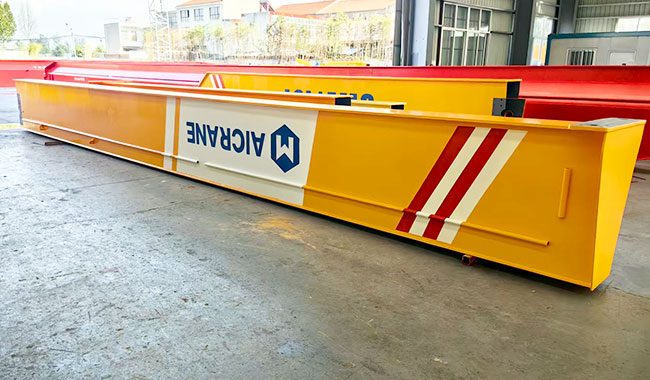
The Bridge Girder (Structural Rigidity)
The “backbone” of the crane is engineered to handle dynamic loads with zero structural fatigue.
- Box-Girder Design: We use high-grade Q235B or Q345B steel, processed via CNC underwater plasma cutting and automated submerged arc welding.
- Minimal Deflection: Our girders are designed to strict ISO standards (typically 1/700 – 1/800 span deflection), ensuring the bridge remains rigid even under maximum 20t loads.
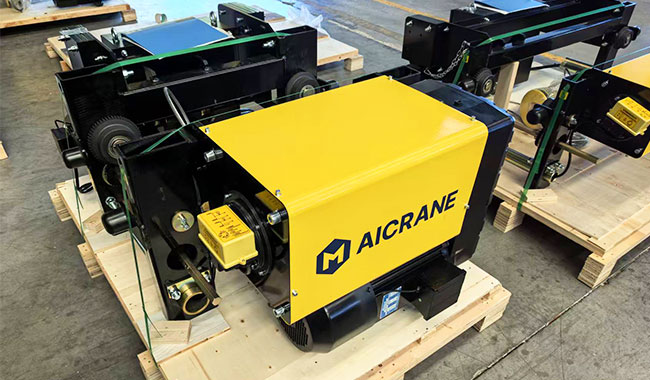
The Hoisting Unit (The Precision Heart)
Depending on your duty class (A3–A5), we provide two distinct hoisting technologies:
- ND European Series: Features a compact design with stepless VFD control. It is the gold standard for precision assembly and quiet operation.
- CD/MD Standard Series: A robust, cost-effective solution for general manufacturing, known for its high interchangeability of spare parts.
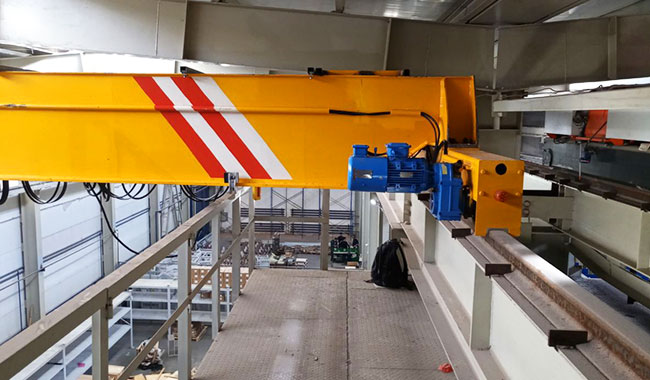
End Carriages & Drive Units (Fluid Movement)
Smooth travel is critical to prevent “crane skewing” and premature wheel wear.
- Forged Wheels: Our wheels are 45# steel forged and heat-treated for superior hardness, rolling on high-performance bearings.
- Soft-Start Motors: Standard on all AICRANE models, these motors prevent jerking during startup, protecting the gearboxes and your workshop’s runway beams.
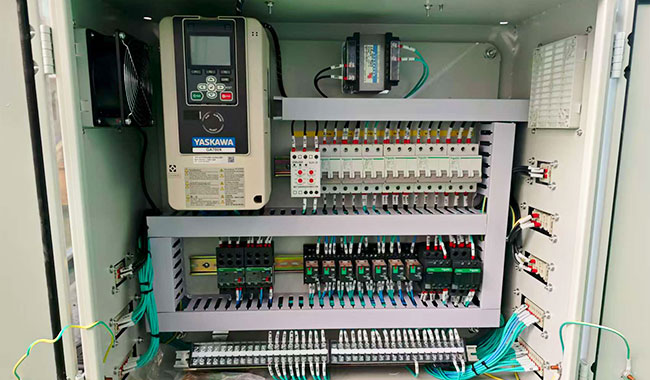
Smart Control Suite (The Brain)
We integrate modern digital features to turn your crane into a smart asset:
- IoT Remote Diagnostics: Real-time monitoring of motor temperature, load cycles, and brake wear via your mobile device.
- Safety Hardening: Standard inclusion of overload limiters, cross-limit switches, and emergency-off protection.
Streamlined Installation and Commissioning of Your Single Girder Overhead Crane
Superior structural engineering is the foundation of a high-performance crane, but its true value is realized through flawless on-site execution. Because our single girder overhead crane utilizes a modular structural design, the transition from factory to your facility is transformed from a complex construction task into a streamlined assembly.
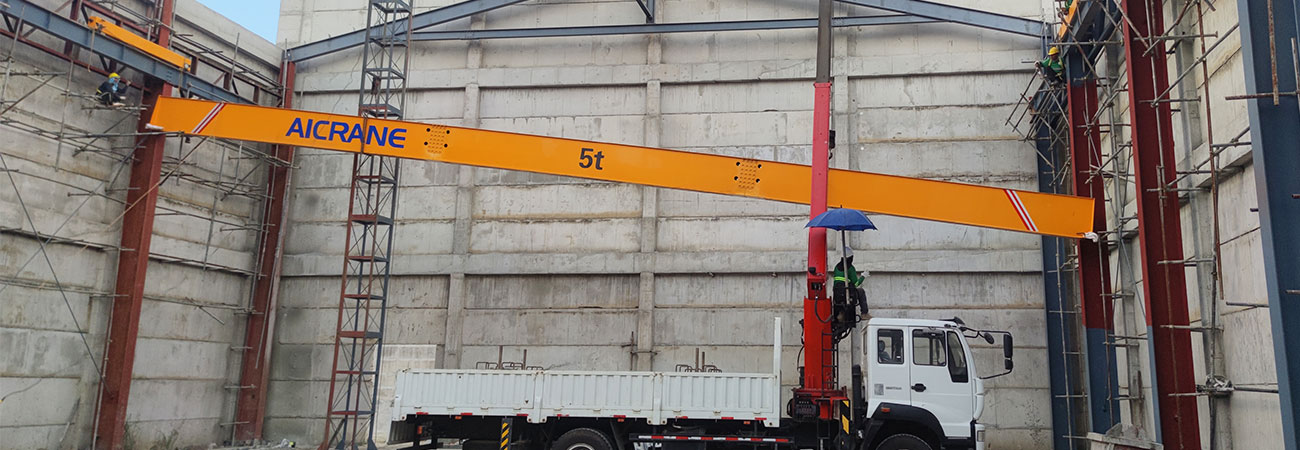
Pre-Installation Site Verification
Before the equipment arrives at your site, our engineering team coordinates with your team to ensure 100% infrastructure compatibility:
- Rail Alignment Precision: We use laser theodolites to verify the span and levelness of the runway beams, preventing premature wheel wear on your single beam bridge crane.
- Power Infrastructure: We confirm the placement of the busbar system to ensure a seamless electrical connection with the crane’s control cabinet.
Modular On-Site Assembly
Our factory-prefabricated components turn complex engineering into efficient site assembly:
- Plug-and-Play Wiring: All electrical circuits are pre-installed with aviation-grade plugs, virtually eliminating the risk of on-site wiring errors.
- High-Strength Bolted Connections: The main bridge girder and end carriages are joined using high-strength bolts rather than extensive site welding, maintaining structural integrity while accelerating the timeline.
Rigorous Commissioning & Certified Load Testing
Safety is the final “red line” before your single girder overhead crane is handed over for production:
- Static Load Test (125% Rated Capacity): We verify the structural rigidity and maximum deflection limits of the main bridge girder.
- Dynamic Load Test (110% Rated Capacity): This tests the braking performance and travel stability of the hoisting and cross-travel mechanisms under load.
- Safety Calibration: Our technicians calibrate the overload limiters, anti-collision sensors, and IoT remote monitoring systems to ensure immediate response to any operational hazard.
Flexible Global Installation Support
We offer tailored support levels based on your project’s technical requirements:
- On-Site Supervision: Our senior engineers can be dispatched to your project site to lead the installation and provide comprehensive operator training.
- Remote Technical Guidance: For cost-sensitive projects, we offer online installation guidance, high-definition video support, and installation manuals to guide your local team through a successful deployment.
Proper installation not only enhances the crane’s performance but also minimizes the risks associated with its operation. You can also watch our detailed single girder crane installation video to see the process step by step.
Frequently Asked Questions: Single Girder Overhead Crane
How long does a single girder overhead crane last?
Can the single girder bridge crane operate in extreme cold climates like Russia?
How does the single beam bridge crane handle high-temperature environments like Saudi Arabia?
Is it difficult to source single beam overhead crane spare parts locally?
What are the hidden costs of a single girder overhead crane purchase?
Do your single girder cranes comply with international safety standards?
How do you handle site conditions with limited power stability?
At AICRANE, we specialize in single girder overhead crane systems that maximize your operational space and adapt to the most demanding facility constraints. Let our engineers design a high-performance lifting asset that ensures your production remains efficient and reliable for decades to come.