


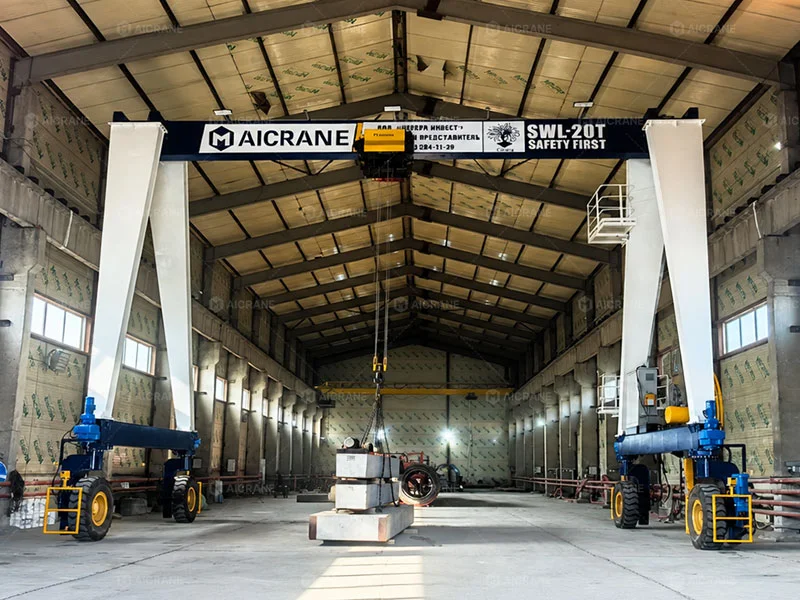
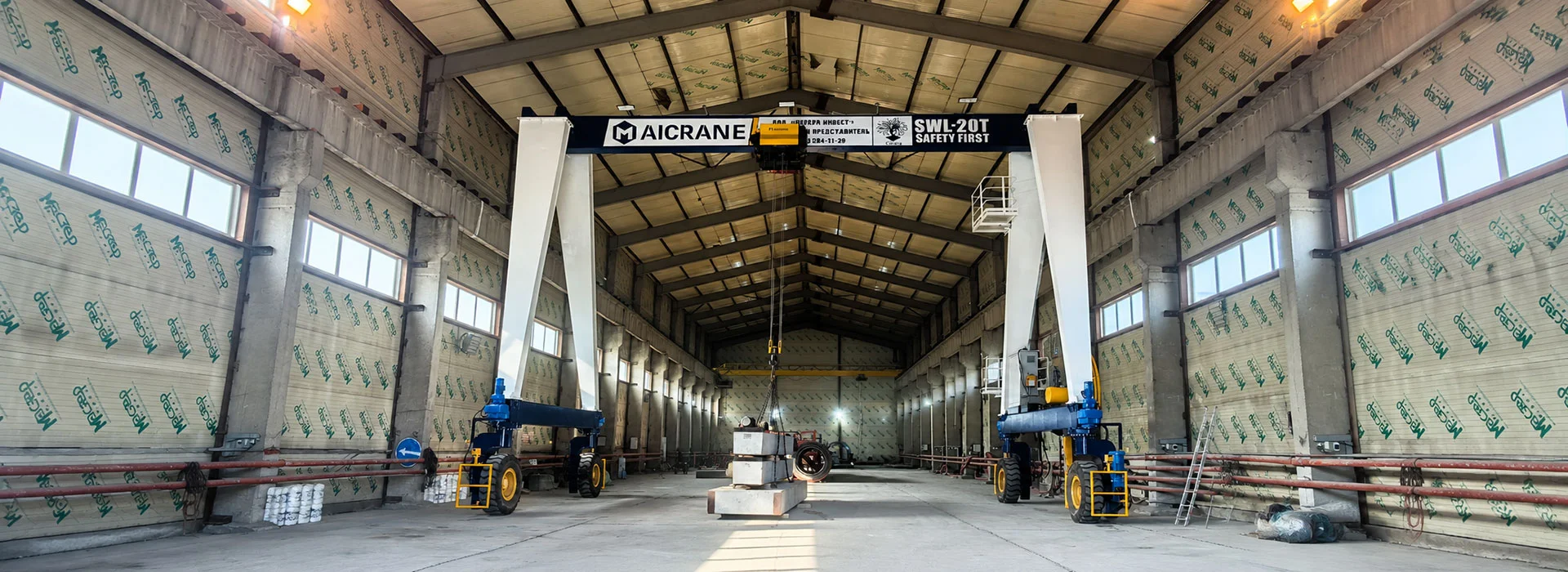
An indoor gantry crane is designed for factories, warehouses, and workshops that require reliable lifting without installing permanent runway systems. Operating independently of the building structure, these cranes offer a practical solution for facilities with limited structural capacity, leased buildings, or projects requiring greater operational flexibility.
Common Lifting Challenges Solved by Indoor Gantry Cranes
Indoor gantry cranes are often selected in industrial facilities not only for lifting capacity, but because they address practical constraints commonly found in factories, warehouses, and maintenance workshops. These challenges are typically related to building structure, installation conditions, and production flexibility.
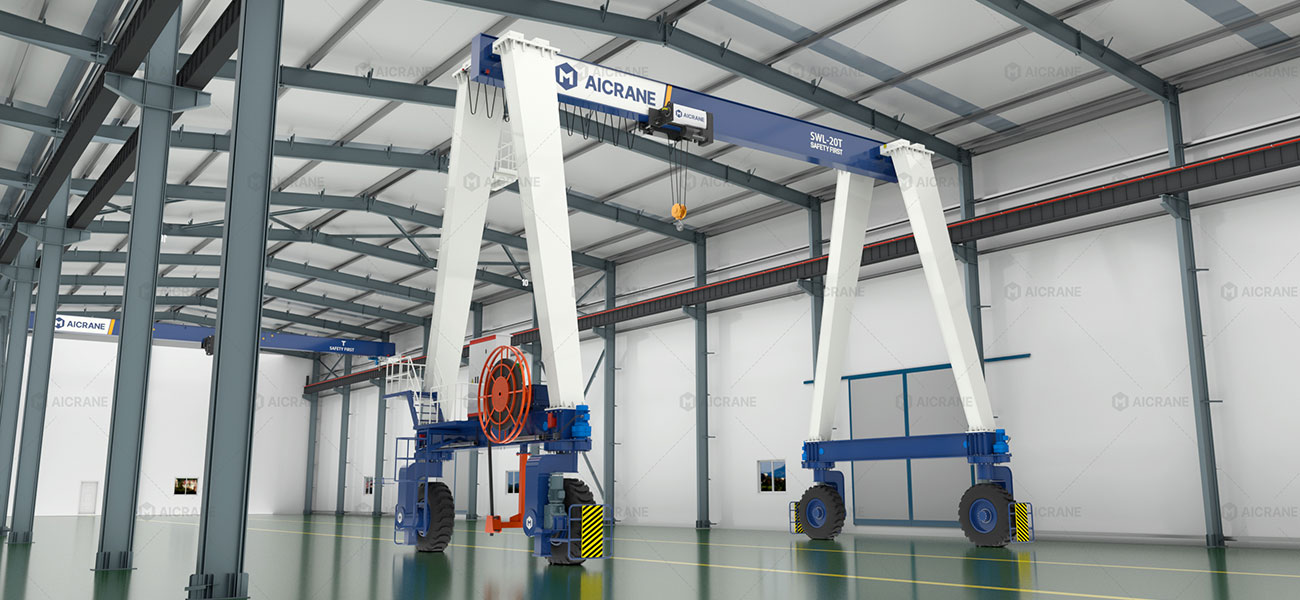
Challenge 1: Limited Building Height or Structural Capacity
Many existing workshops were not originally designed to support overhead crane runway beams. Low ceiling heights or insufficient structural strength can make installing a bridge crane difficult, expensive, or even impractical.
How an Indoor Gantry Crane Helps
Indoor gantry cranes operate independently of the building structure and do not rely on runway beams or roof-mounted support systems. They can be installed directly on the workshop floor, making them suitable for facilities where structural reinforcement is not feasible.
Before selecting the crane, the available headroom, floor load capacity, and required lifting height should be evaluated to ensure the system fits the existing facility.
Challenge 2: Lifting Heavy Loads Across Multiple Workstations
In many fabrication shops, assembly plants, and maintenance workshops, lifting tasks are distributed across different working areas rather than concentrated in a single fixed point. Providing separate lifting equipment for each zone increases both investment and operational complexity.
How an Indoor Gantry Crane Helps
An indoor mobile gantry crane can be repositioned within the workshop to serve different lifting points as needed. This allows a single crane system to support multiple working areas, improving overall material handling efficiency and reducing redundant lifting equipment.
This solution is especially suitable for workshops where production layouts or lifting locations change over time.
Challenge 3: High Installation Costs for Permanent Crane Systems
Installing a fixed overhead crane typically involves structural steel work, runway beam installation, and potential production downtime during construction. These requirements can significantly extend project timelines and increase total investment.
How an Indoor Gantry Crane Helps
Indoor gantry crane systems require comparatively limited structural modification and can often be installed in a shorter timeframe. This helps reduce construction workload and allows production activities to resume with minimal interruption.
When comparing indoor lifting solutions, it is worth considering the total project cost, including structural work, installation time, and production downtime – not just the equipment price.
Challenge 4: Need a Crane Without Modifying the Existing Building
Many industrial facilities operate in leased buildings or older workshops where structural modifications are restricted or not economically justified. In such cases, permanent crane installation may not align with long-term operational flexibility.
How an Indoor Gantry Crane Helps
The crane structure is designed as a freestanding system, allowing installation without altering the existing building framework. This makes it suitable for temporary facilities, leased workshops, or production environments where equipment relocation may be required in the future.
A modular crane design can also simplify future relocation or workshop layout changes if production requirements evolve.
Based on these common challenges, indoor gantry cranes provide a flexible lifting solution that can be configured in different structural types to suit varying workshop conditions, load requirements, and operational needs.
Types of Indoor Gantry Cranes for Industrial Facilities
Rubber Tyred Indoor Gantry Crane (Mobile Type)
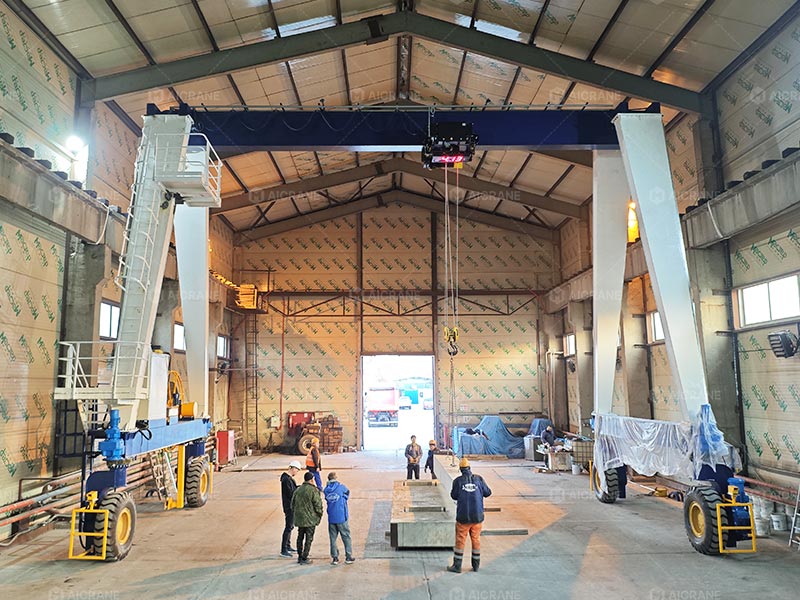
The rubber tyred gantry crane is a mobile lifting system designed for flexible material handling within indoor environments.
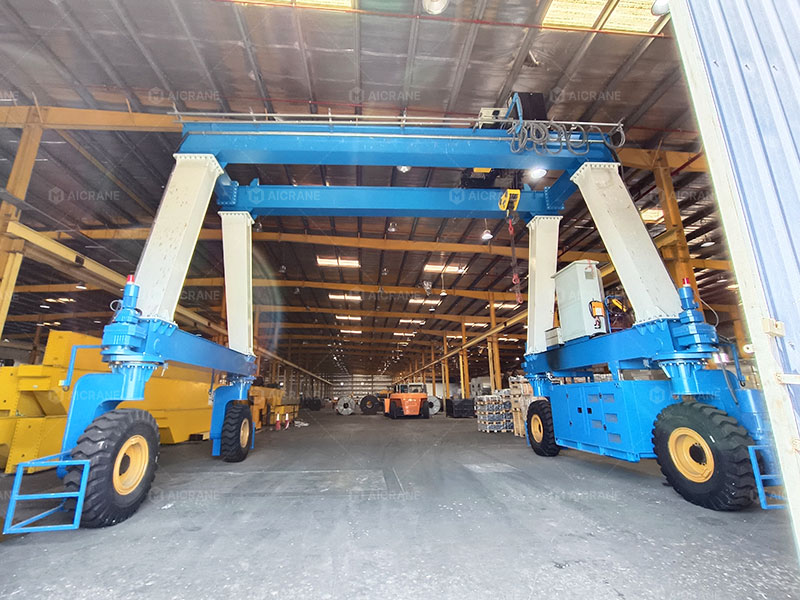
Specifications:
- Load capacity: 5-500t (Customizable)
- Span: 5-35m (Customizable)
- Lifting height: 6-18m (Customizable)
- Work duty: A3-A5
Structural Features:
- Rubber-tyred wheels for floor-based movement
- No fixed runway or rail system required
- Adjustable positioning within the workshop
Typical Applications:
- Multi-zone manufacturing facilities
- Workshops with flexible production layouts
- Material transfer between different work areas
- Indoor logistics and handling operations
Double Girder Indoor Gantry Crane
The double girder gantry crane is designed for heavy-duty indoor lifting operations requiring higher capacity and stable performance.
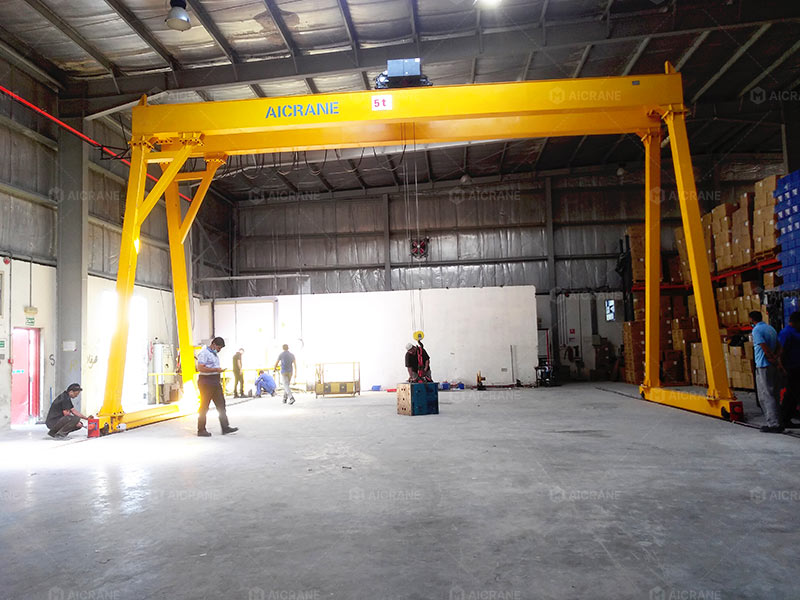
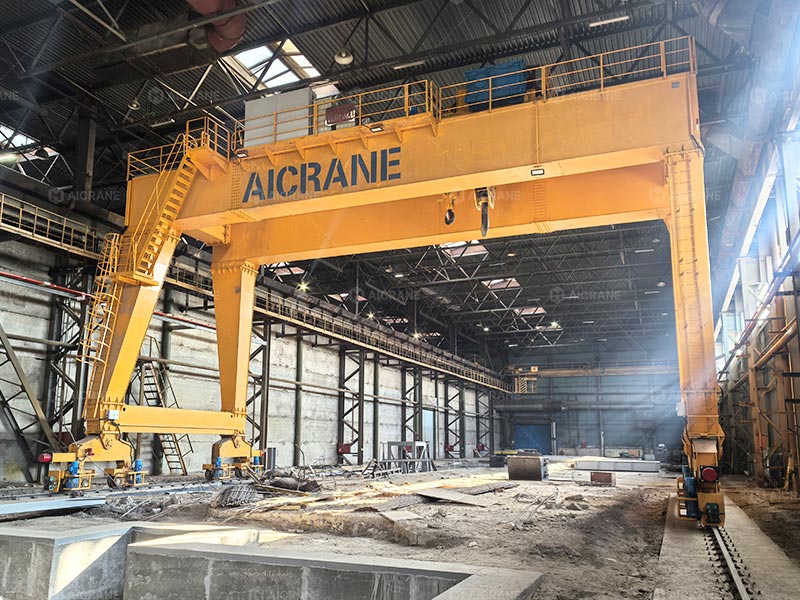
Specifications:
- Load capacity: 5-500t (Customizable)
- Span: 18-35m (Customizable)
- Lifting height: 6-18m (Customizable)
- Work duty: A3-A7
Structural Features:
- Two parallel main girders forming a rigid structure
- Hoist trolley runs on top of the girders
- Designed to support higher lifting height and larger spans
Typical Applications:
- Heavy machinery manufacturing
- Steel fabrication workshops
- Power equipment handling
- Large-scale industrial assembly operations
Single Girder Indoor Gantry Crane
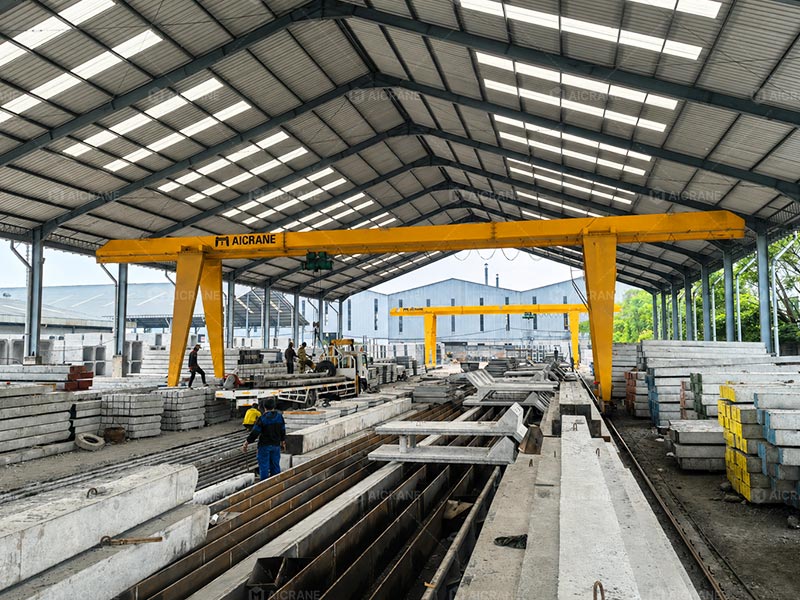
The single girder gantry crane is a light to medium-duty lifting solution commonly used for general workshop and warehouse operations.
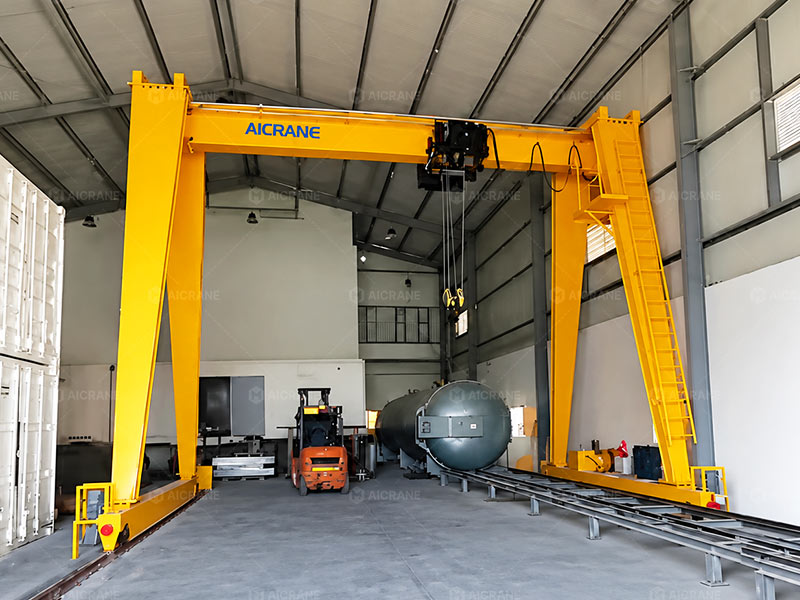
Specifications:
- Load capacity: 5-20t (Customizable)
- Span: 8-35m (Customizable)
- Lifting height: 6-12m (Customizable)
- Work duty: A5
Structural Features:
- Single main beam supported by two A-frame legs
- Electric hoist operates along the lower flange of the girder
- Compact structure suitable for standard workshop layouts
Typical Applications:
- General manufacturing operations
- Equipment assembly processes
- Warehouse material handling
- Maintenance and repair workshops
Semi Gantry Indoor Crane
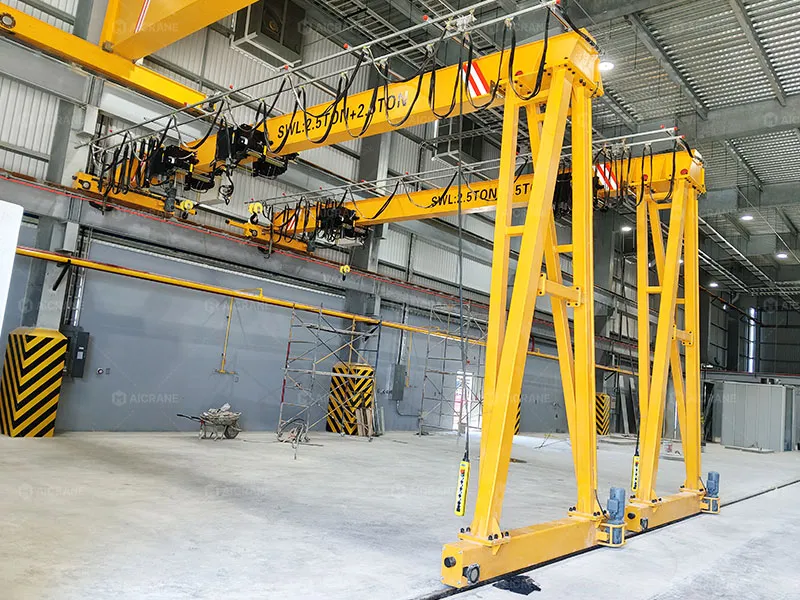
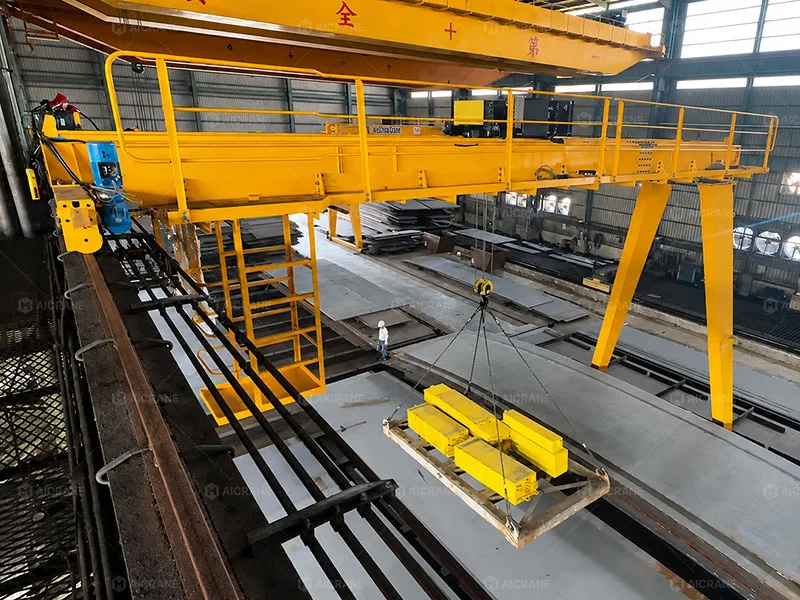
The indoor semi gantry crane is a hybrid lifting system that combines floor-supported and building-supported structures.
Specifications:
- Load capacity: 5-32t (Customizable)
- Span: 12-30m (Customizable)
- Lifting height: 6-12m (Customizable)
- Work duty: A3-A6
Structural Features:
- One side supported by runway beam or building structure
- The other side supported by floor-mounted legs
- Partial-span lifting configuration
Typical Applications:
- Workshops with partial structural support availability
- Production areas with limited floor space
- Facilities requiring localized lifting coverage
- Industrial environments with existing partial crane infrastructure
Summary: Indoor Gantry Crane Selection Guide
| Type | Typical Use Conditions | Key Strength | Selection Factors |
|---|---|---|---|
| Single Girder | Light to medium-duty lifting in standard workshops | Simple structure and cost-efficient solution | Suitable when load requirements are moderate and budget control is important |
| Double Girder | Heavy-duty industrial applications with high lifting frequency | High stability and greater lifting capacity | Suitable when higher load capacity and lifting height are required |
| Rubber Tyred (Mobile Type) | Workshops with multiple working areas or changing layouts | Flexible movement without fixed runway system | Suitable when lifting tasks need to be performed across different zones |
| Semi Gantry | Workshops with partial structural support or space limitations | Hybrid structure using both floor and building support | Suitable when only one side of the workshop can support a runway beam |
To better understand how each type performs in real applications, the following cases show typical indoor gantry crane solutions used in actual industrial facilities.
Indoor Gantry Crane Projects for Different Applications
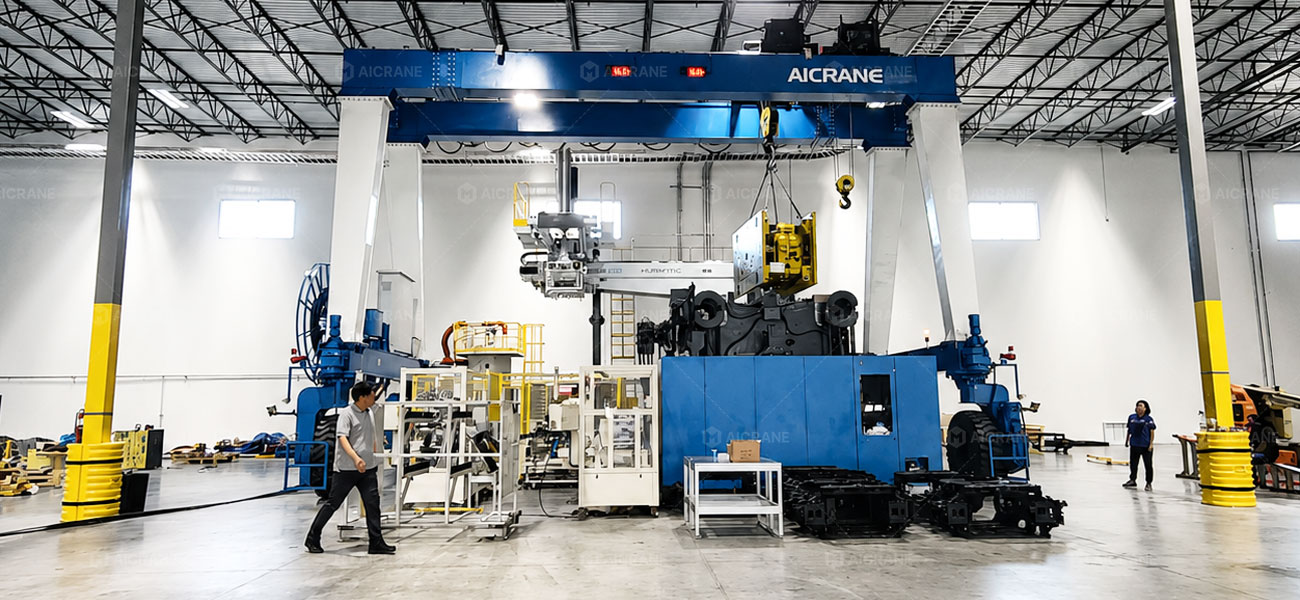
32/20 Ton Rubber Tyred Indoor Gantry Crane for an Automotive Manufacturing Facility in the USA
Project Overview
Automotive component manufacturing facility in the USA requiring heavy injection mold handling, positioning, and transfer within the production workshop.
Customer Requirements
The customer operated in a leased manufacturing facility where permanent structural modifications and runway beam installation were not permitted. Large injection molds also required stable lifting and controlled rotation during installation and maintenance.
Our Solution
A customized 32/20-ton rubber tyred indoor gantry crane with an 11.7 m span and 7.7 m lifting height was supplied for the project. Operating directly on the existing concrete floor without fixed rails, the crane was equipped with a dual-hoist system to provide stable lifting and precise mold rotation.
Operational Results
The crane was installed without permanent modifications to the building, meeting the facility’s installation requirements while avoiding additional infrastructure work. The mobile design improved workshop flexibility, and the dual-hoist configuration enhanced the efficiency and safety of injection mold handling.
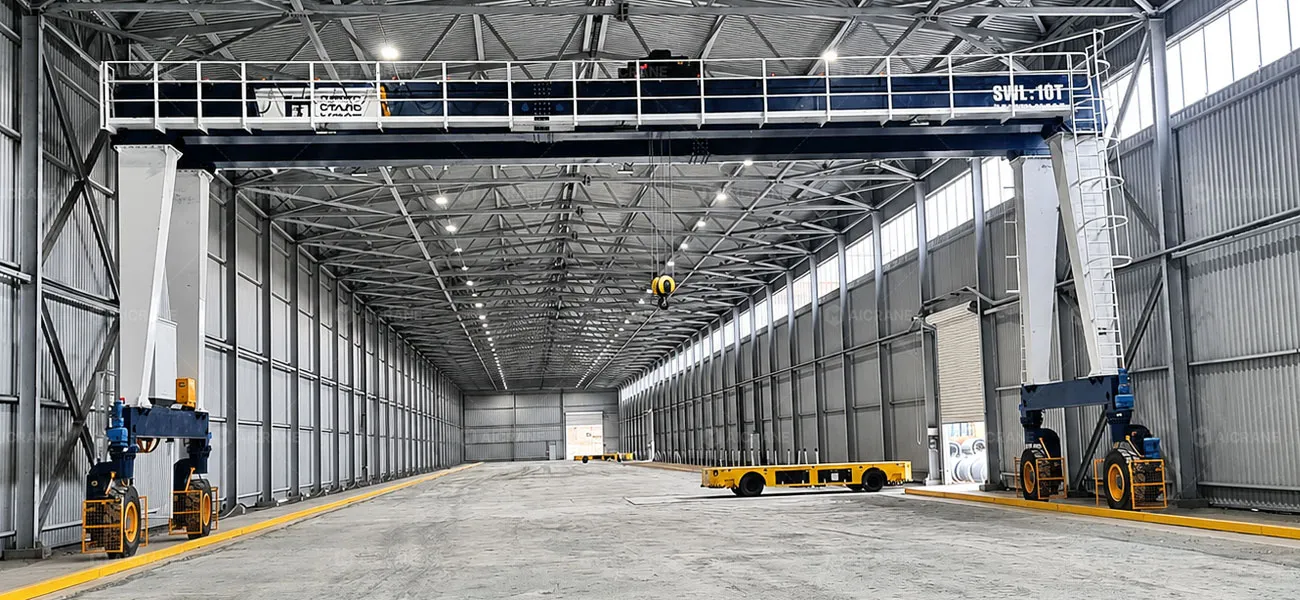
10 Ton Rubber Tyred Indoor Gantry Crane for a Steel Coil Storage Warehouse in Russia
Project Overview
Supplied to a Russian manufacturer of steel coils, steel plates, and other metal products. The crane is installed in a newly constructed indoor storage warehouse for handling and transferring steel coils during daily warehouse operations.
Customer Requirements
As the warehouse was being built from the ground up, the customer wanted to maximize usable storage space while keeping construction costs under control. The lifting system also needed to travel close to the side wall to optimize the warehouse layout, but the customer preferred to avoid installing a fixed rail system.
Our Solution
A 10-ton double girder rubber tyred indoor gantry crane was selected to meet these requirements. Designed for rail-free operation, the crane travels directly on the warehouse floor and is powered by a cable reel system for stable and reliable operation. The span was customized to match the full width of the building, allowing the crane to operate close to the wall and maximize the available storage area.
Operational Results
The customer achieved efficient indoor steel coil handling without investing in runway beams or rail infrastructure. The wall-side travel design increased usable warehouse space, while the customized crane span and double girder structure provided stable lifting performance for daily material handling.
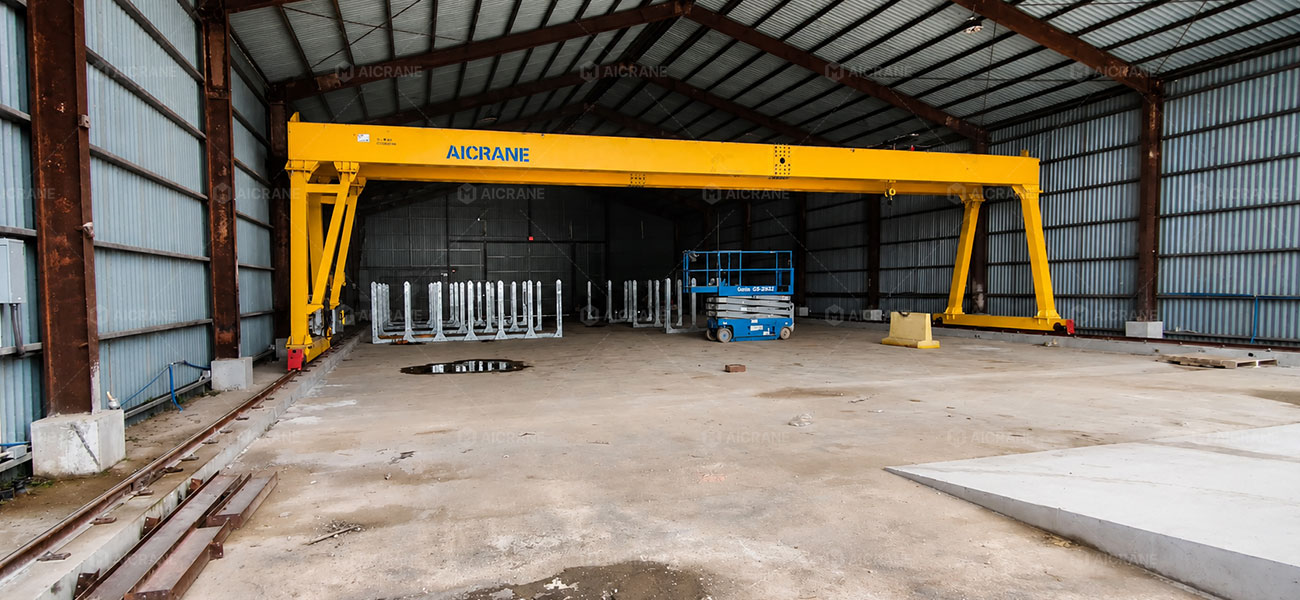
5 Ton Double Girder Indoor Gantry Crane for a Structural Steel Fabrication Facility in Guam, USA
Project Overview:
Installed in an indoor warehouse at a structural steel fabrication facility in Guam, USA. The crane is used to lift and transport prefabricated Steel components and production accessories required for daily manufacturing operations.
Customer Requirements:
The warehouse offered limited headroom and working space, requiring a lifting system that could accommodate heavy components without affecting the existing storage and production layout. The customer also required reliable performance to support frequent material handling throughout the workday.
Our Solution
A 5-ton double girder indoor gantry crane with a 16.4-meter span and a lifting height of 4.415 meters was designed to match the warehouse dimensions. Rated for A5 duty, the crane provides stable lifting performance for regular production while making full use of the available indoor space.
Operational Results
The customized indoor gantry crane layout enabled efficient handling of steel components within the warehouse while maintaining clear working and storage areas. By matching the crane dimensions to the building, the customer achieved reliable material handling without compromising the facility’s operational layout.
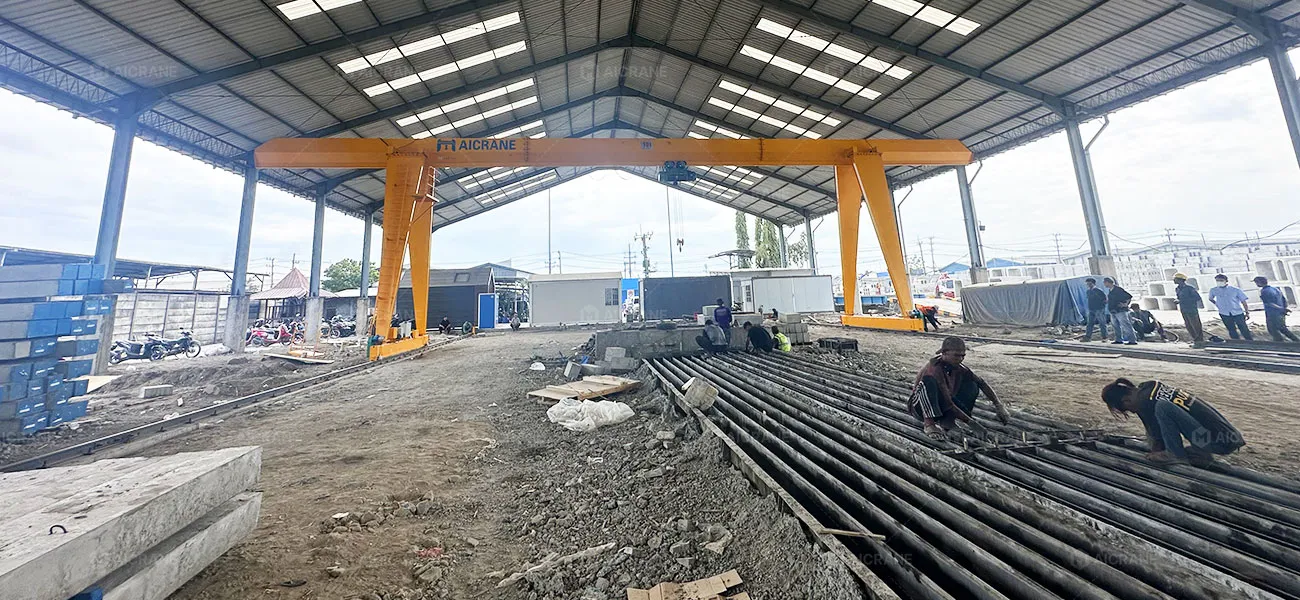
10 Ton Single Girder Indoor Gantry Crane for a Precast Concrete Production Facility in Indonesia
Project Overview
Installed at a precast concrete manufacturing facility in Indonesia, the crane is used to lift finished concrete slabs and precast elements from long-line casting beds and transport them to the storage area within a semi-open production workshop.
Customer Requirements
The production process involves continuous handling of heavy precast components along multiple casting lines. The customer required a practical lifting solution that could operate reliably in a dusty production environment while keeping workshop construction costs under control.
Solution
A 10 ton single girder indoor gantry crane with an 18.9 m span, 5.4 m lifting height, and A3 duty classification was configured to match the casting line layout. Running on floor-mounted rails, the crane provides full coverage of the production area without relying on building-mounted runway beams. Dust-resistant protection was applied to key electrical and drive components to support reliable operation in concrete production conditions.
Operational Results
The crane streamlines the transfer of precast elements from the casting beds to the storage area, supporting efficient production flow throughout the workshop. Its freestanding configuration also reduced building infrastructure requirements, making it well suited for the customer’s production facility.
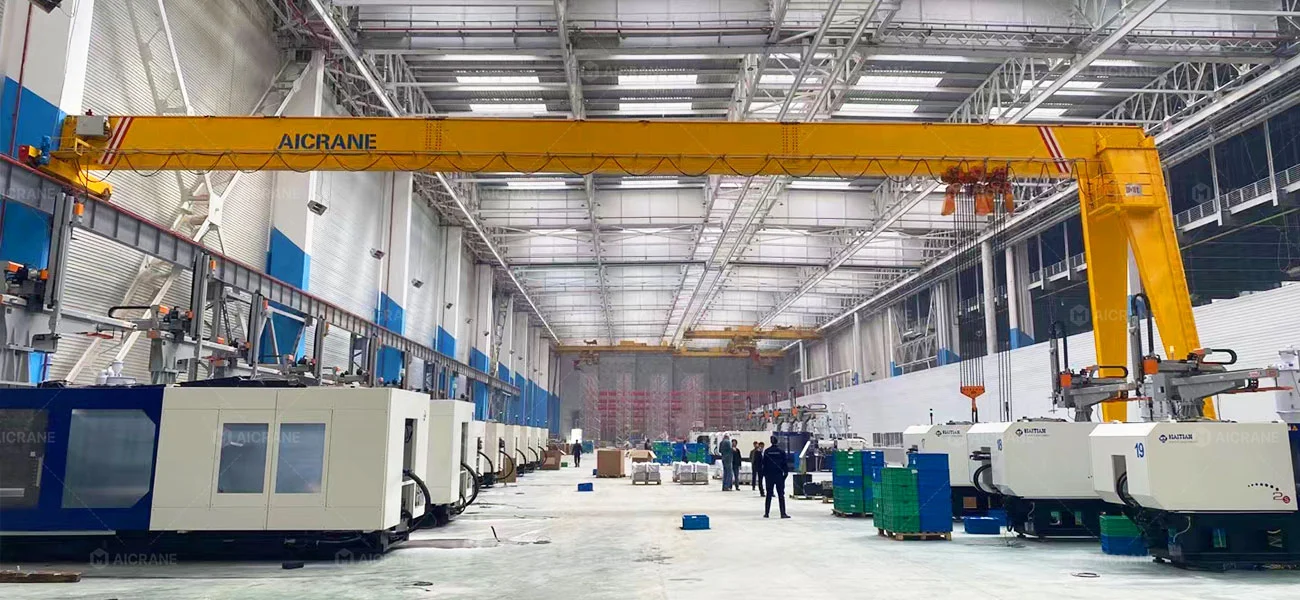
20+10 Ton Indoor Semi Gantry Crane for an Injection Molding Workshop in Uzbekistan
Project Overview
Installed at a large plastic injection molding plant in Uzbekistan to support mold handling, equipment maintenance, and material transportation between multiple production lines.
Customer Requirements
The workshop features a long production layout with multiple injection molding machines arranged in parallel. The customer required a lifting system capable of handling frequent mold changes while maintaining clear access for forklifts and material transport along the factory aisles. At the same time, the crane needed to provide sufficient lifting capacity and coverage without occupying excessive floor space.
Our Solution
A customized 20+10 ton semi gantry crane was designed to suit the workshop structure. By utilizing the building runway on one side and floor-supported legs on the other, the crane reduced the floor area occupied by the lifting system while preserving access to the production aisles. With a 34 m span, 8.72 m lifting height, and A5 duty classification, the crane is well suited for frequent mold handling. A dual-hook configuration also allows large molds to be lifted, positioned, and rotated with greater control during installation and maintenance.
Operational Results
The semi gantry configuration improved space utilization within the workshop while maintaining efficient traffic flow for forklifts and other material handling equipment. The crane supports frequent mold replacement and maintenance activities with stable lifting performance, helping reduce production interruptions during equipment changeovers.
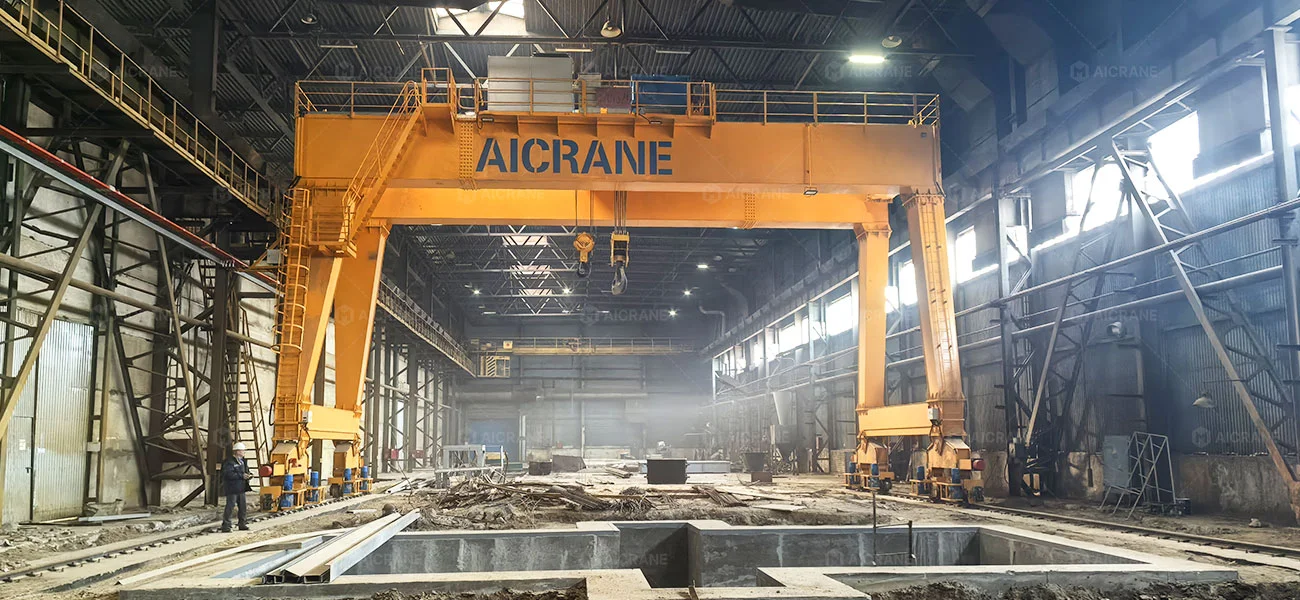
120 Ton Double Girder Indoor Gantry Crane for a Heavy Machinery Manufacturing Plant in Russia
Project Overview
A 120 ton double girder gantry crane was installed in a heavy machinery manufacturing facility in Russia to support the assembly and handling of large mining and construction equipment components.
Customer Requirements
The production workshop required high-capacity lifting for oversized components while operating within a building that offered limited headroom. The customer needed to maximize the available hook height without extensive modifications to the existing workshop structure.
Solution
A customized double girder indoor gantry crane was designed with a top-running open winch trolley positioned between the two girders to maximize lifting height under the low-roof building. Operating on floor-mounted rails, the crane provides a 120 ton lifting capacity while distributing wheel loads independently of the building structure. The main and auxiliary hooks support accurate positioning during equipment assembly.
Operational Results
The customized crane configuration enabled reliable handling of heavy machinery components within the building’s height limitations. By maximizing hook clearance while maintaining stable lifting performance, the crane supports efficient assembly operations in a demanding manufacturing environment.
How to Choose the Right Indoor Gantry Crane for Your Facility
Selecting an indoor gantry crane involves more than choosing a lifting capacity. Building dimensions, production processes, load characteristics, and future operational plans all influence the most suitable crane configuration. Evaluating these factors early helps ensure the crane meets both current production requirements and future expansion needs.
Evaluate Your Building Structure
The building itself often determines which type of gantry crane is most suitable.
Consider questions such as:
- Is there sufficient headroom for the required lifting height?
- Can the existing floor support the crane and the maximum load?
- Is there enough width for the required span?
- Are runway beams available, or is a freestanding gantry crane more practical?
For existing workshops or leased facilities where structural modifications are limited, self-supporting gantry cranes are often a practical solution.
Understand Your Load Characteristics
The weight of the load is only one part of the selection process.
You should also consider:
- Maximum and typical lifting capacity
- Load dimensions and center of gravity
- Whether loads need to be rotated or precisely positioned
- Lifting frequency throughout the workday
For example, handling steel coils, concrete panels, and injection molds may require different crane configurations, hoists, or lifting attachments even when the rated capacity is similar.
Match the Crane to Your Production Process
The way materials move through your facility directly affects crane selection.
Typical questions include:
- Is lifting concentrated at one workstation or across multiple work areas?
- Does the crane need to travel frequently throughout the workshop?
- Will forklifts or other vehicles share the same working area?
- Is the crane used for continuous production or occasional maintenance?
Matching the crane layout to the production workflow helps improve operating efficiency and reduces unnecessary material handling.
Consider the Working Environment
Indoor operating conditions vary significantly between industries.
Depending on the application, the crane may require:
- Dust-resistant electrical components for cement or precast concrete production
- Corrosion protection for humid environments
- Compact dimensions for facilities with limited headroom
- Low-noise operation for maintenance or assembly workshops
Selecting features based on the actual working environment can improve long-term reliability and reduce maintenance requirements.
Plan for Future Expansion
Many facilities expand production over time.
When selecting a crane, consider whether you may need to:
- Increase production capacity
- Rearrange workshop layouts
- Relocate the crane to another building
- Add additional lifting equipment in the future
Choosing a crane with appropriate flexibility today can reduce future modification costs.
Need Help Choosing the Right Indoor Gantry Crane?
Every facility has unique lifting requirements. Share your project details with our engineering team, and we’ll help you determine the most suitable crane type, capacity, and configuration for your application.
Frequently Asked Questions About Indoor Gantry Cranes
Can an indoor gantry crane replace an overhead crane?
How much headroom is required for an indoor gantry crane?
What floor conditions are required for indoor gantry cranes?
What lifting capacity is available for indoor gantry cranes?
Can an indoor gantry crane be installed in an existing building?
Can the indoor gantry crane be customized for my workshop?
Does an indoor gantry crane require rails?
Not always. The travel system depends on the crane type and application.
- Rubber tyred gantry cranes travel directly on the existing concrete floor without fixed rails, making them suitable for facilities that require mobility.
- Rail-mounted gantry cranes operate on floor-installed rails and are commonly used for fixed production lines or repeated lifting paths.
- Semi gantry cranes combine a building-mounted runway on one side with floor support on the other, reducing floor obstruction while providing stable lifting.
The most suitable configuration depends on your workshop layout and production process.
Why Choose Aicrane for Your Indoor Gantry Crane Project
A successful indoor gantry crane project depends not only on the equipment itself, but also on selecting a solution that fits your building, production process, and long-term operating requirements. Aicrane team supports customers throughout the project, from technical evaluation to installation and after-sales service.

Customized Engineering for Your Facility
Every project begins with a review of the facility layout, lifting requirements, available headroom, floor conditions, and production flow. Based on these factors, we recommend appropriate crane dimensions, lifting capacity, travel configuration, and work duty rather than relying on standard models.
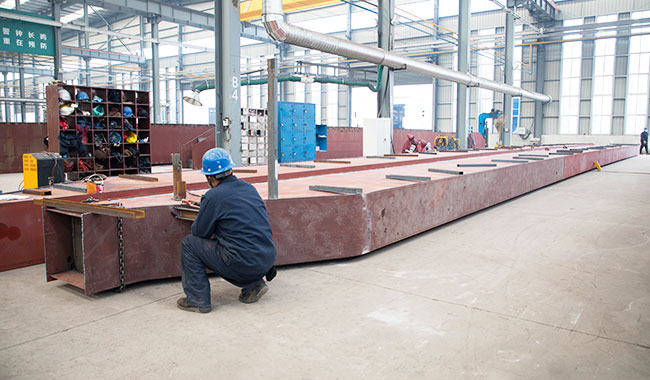
Manufacturing with Quality Control
Main structural components are fabricated using certified steel and inspected throughout production. Critical welds are subjected to non-destructive testing (NDT), while hoisting, travel, and electrical systems are tested before delivery to help ensure reliable on-site performance.
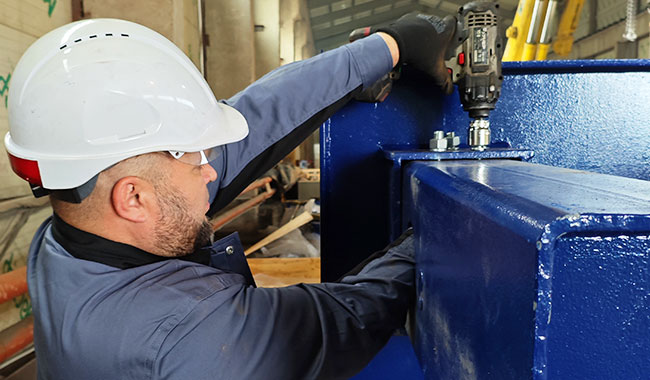
Installation Support from Start to Finish
We provide foundation drawings, installation guidance, commissioning assistance, and operator training to help customers complete installation efficiently. For selected projects, on-site technical support can also be arranged when required.
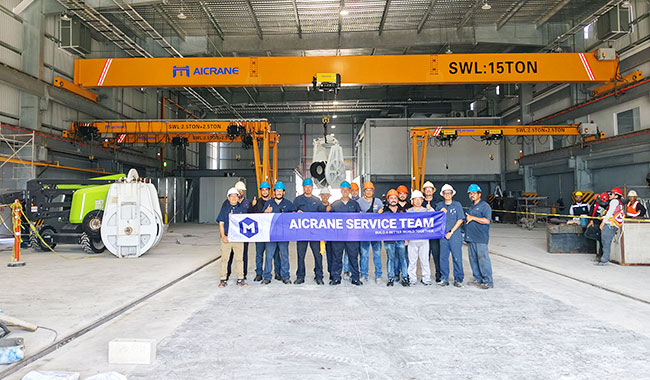
Long-Term Technical Support
After delivery, customers receive ongoing support for spare parts, maintenance recommendations, troubleshooting, and technical consultation throughout the crane’s service life.
Ready to Discuss Your Project?
Our engineers can help you evaluate your application and recommend an indoor gantry crane that matches your facility, lifting requirements, and production process.
Complete the inquiry form below, and we’ll get back to you with a customized solution and quotation.