


We offer a wide range of overhead crane for sale in Indonesia, from small capacity light duty cranes to large capacity heavy duty cranes, to meet different application and lifting requirements. Aicrane’s overhead crane products can meet the needs of all kinds of industries, and we can also tailor the crane system to suit your special lifting requirements.
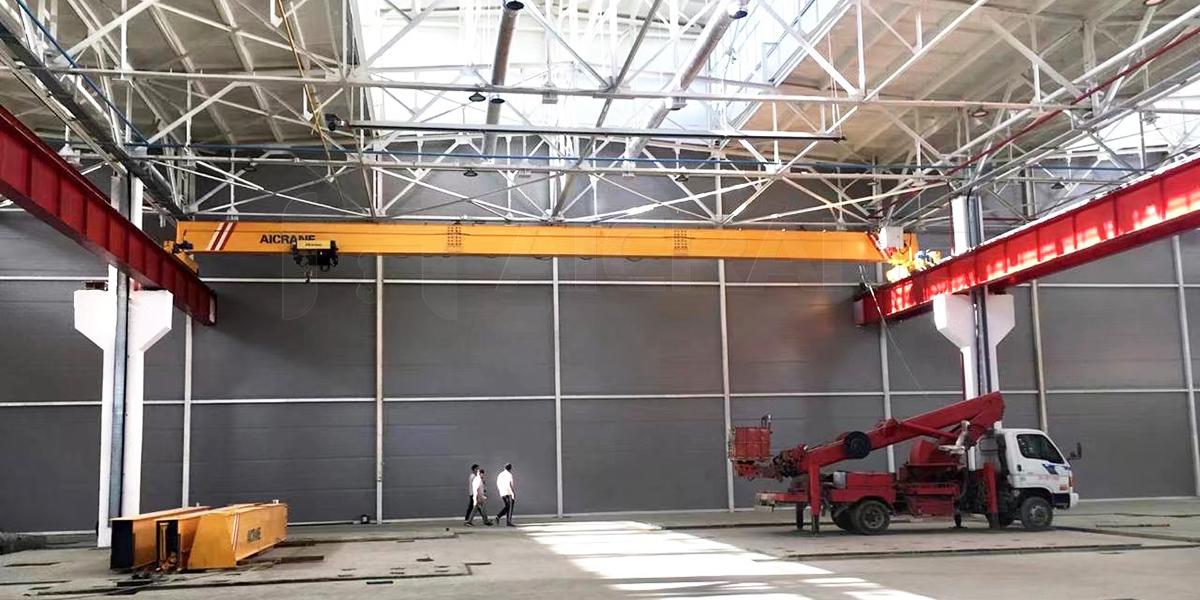 Aicrane Overhead Crane in Indonesia
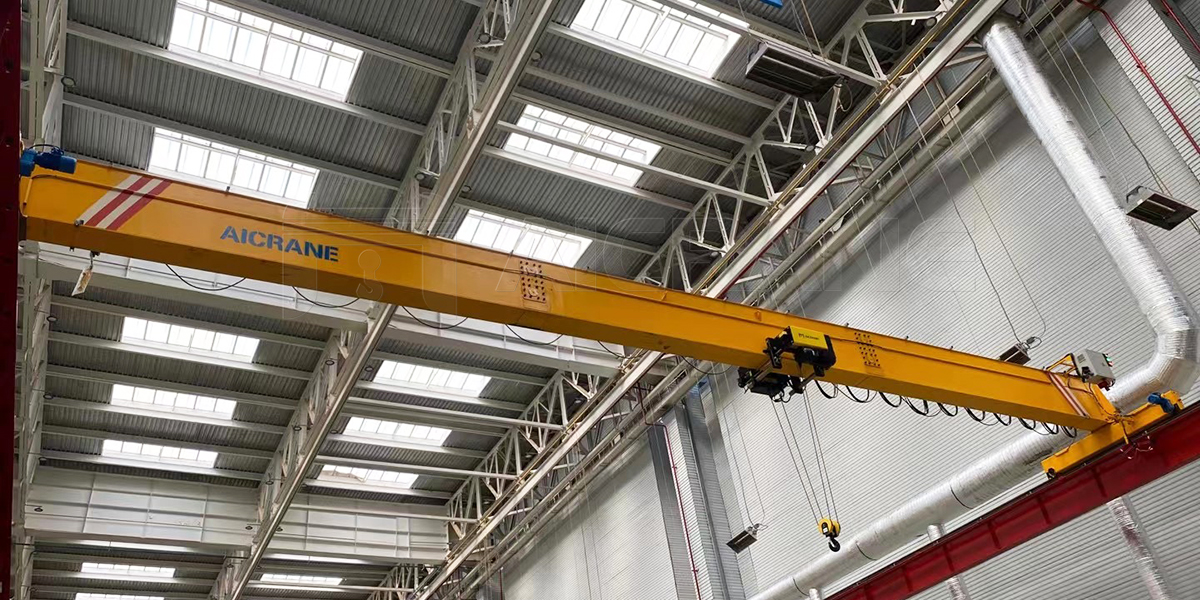
Popular Types of Overhead Cranes for Sale In Indonesia
Listed below are some of our hot selling overhead cranes in Indonesia, including AQ-LD single girder overhead crane, AQ-HD European single girder overhead crane, AQ-QD double girder overhead crane, AQ-LH hoist double girder overhead crane, and AQ-NLH European hoist double girder overhead crane.
Of course, we are more than that. There are also under running cranes, explosion proof cranes, grab overhead cranes, magnetic overhead cranes and metallurgy overhead cranes to suit varied needs of Indonesian customers. You can talk to our crane professionals to select a crane that best suits your business.
AQ-LD Single Girder Overhead Crane
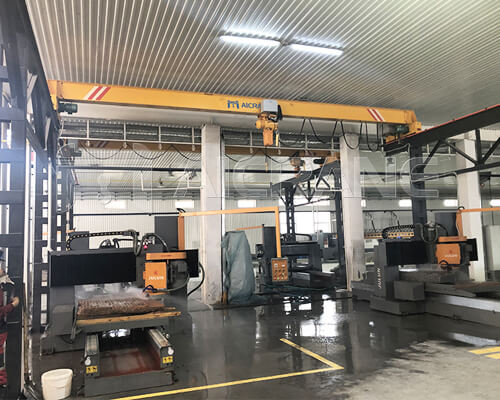
This overhead crane is suitable for many different industries. It is ideal for general manufacturing, maintenance, assembly and anywhere you need to lift up to 25 tons. The crane is designed and manufactured according to the national standard JB/T 1306-2008, used in conjunction with the electric hoist of CD1, MD1 models. The work duty of the crane is A3-A4.
AQ-LD electric single girder crane is widely used in different occasions such as factories, warehouses, stockyards, production workshops, etc. The use of this electric overhead crane can improve your work efficiency and safety, and also streamline your work flow.
- Load capacity: 1-25t
- Span: 7.5-31.5m
- Lifting height: 6-30m
- Lifting speed: 0.3-8m/min
- Hoist running speed: 20m/min
- Crane running speed: 20m/min
- Work duty: A3, A4
AQ-HD European Standard Overhead Crane
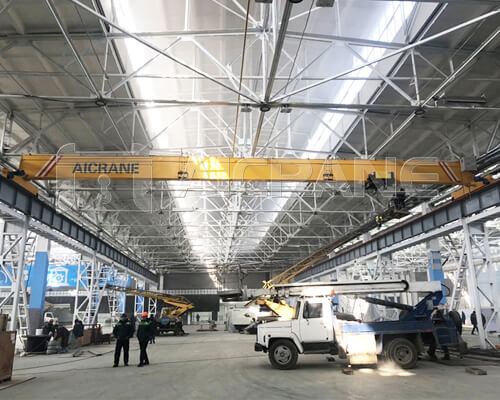
The European type single girder crane adopts a unique design concept, which has the characteristics of small size, light weight, compact structure and small wheel pressure. Compared with traditional cranes, the limit distance between the hook of the AQ-HD crane and the wall is smaller, the clearance height is the lower, and the lifting height is higher, which actually increases the working space of the existing plant.
European standard overhead crane configuration includes: ABM three-in-one lifting motor, ABB or SEW running motor, Schneider Electric and frequency converter, imported steel wire rope, etc.
- Load capacity: 1-20t
- Span: 7.5-28.5m
- Lifting height: 6-18m
- Lifting speed: 0.8/5m/min
- Hoist running speed: 2-20m/min
- Crane running speed: 3-30m/min
- Work duty: A5
AQ-QD Double Girder Overhead Crane
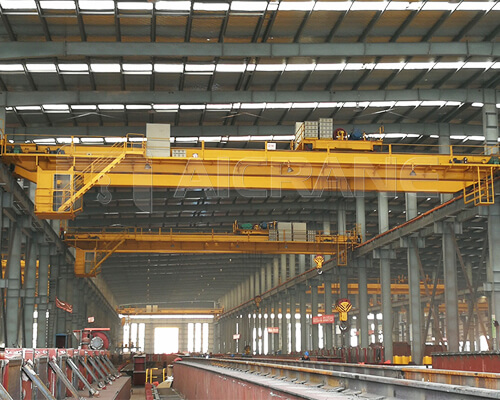
AQ-QD double girder hook overhead crane is a robust, reliable and highly efficient tool for lifting up to 450 tons. The crane is mainly composed of the bridge frame, hoist trolley, bridge running mechanism and electrical control system. The hoist trolley is equipped with a hoisting mechanism and trolley running mechanism, installed on the main beam of the bridge frame to run along the trolley track.
The double girder crane is important equipment to realize the mechanization and automation of the production process in modern industrial production and lifting and transportation.
- Load capacity: 5-450t
- Span: 10.5-31.5m
- Lifting height: 6-24m
- Lifting speed: 2.1-11.5m/min
- Trolley running speed: 27-40m/min
- Crane running speed: 42-75m/min
- Work duty: A3-A7
AQ-LH Hoist Overhead Crane
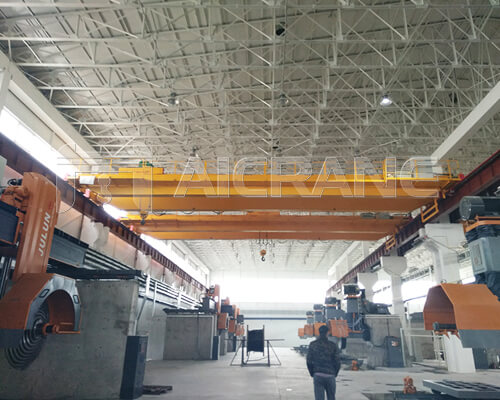
This hoist double girder bridge crane has the advantages of compact size, low building clearance, light weight and small wheel pressure, suitable for the transfer, assembly, maintenance, loading and unloading operations of mechanical processing workshops, auxiliary workshops of metallurgical plants, warehouses, stockyards, power stations, etc. It is also ideal for the production workshops in the light textile industry and the food industry.
This crane is designed for light duty and moderate service, the working environment temperature is -20-40℃, and it is forbidden to use in flammable, explosive and corrosive environment.
- Load capacity: 5-50t
- Span: 10.5-31.5 m
- Lifting height: 6-30m
- Lifting speed: 0.18-8m/min
- Trolley running speed: 20m/min
- Crane running speed: 20m/min
- Work duty: A3, A4
AQ-NLH European Type Hoist Bridge Crane
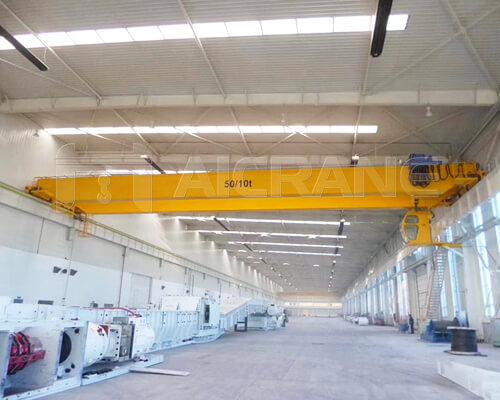
The European type double girder hoist crane uses ND wire rope electric hoist trolley, with lifting capacity from 5 tons to 80 tons. The European-style low headroom design makes the crane light weight, energy-saving and environmentally friendly, which improves the production efficiency and meets the needs of various working conditions or logistics transportation.
The crane takes derusting and shot blasting treatment, eliminating welding stress, and uses long-life epoxy zinc-rich paint to have better appearance and strong anti-corrosion performance. It can be equipped with lifting frequency conversion or double hoist according to customer needs.
- Load capacity: 5-80t
- Span: 10.5-31.5m
- Lifting height: 6-18m
- Lifting speed: 0.4-5m/min
- Trolley running speed: 2-20m/min
- Crane running speed: 3-30m/min
- Work duty: A5
Overhead Crane Projects in Indonesia
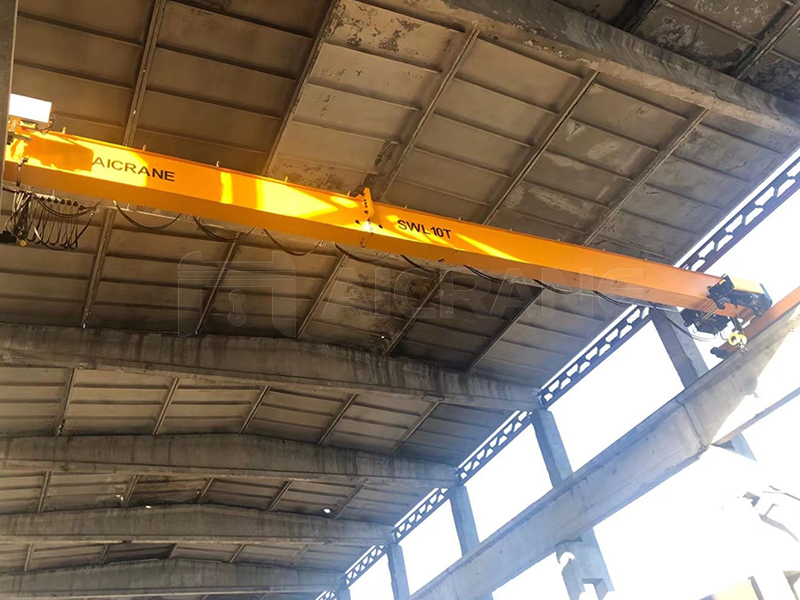
AQ-HD 10 Ton Overhead Crane in Indonesia
AQ-HD 10 ton overhead crane Indonesia is installed in an industrial plant for handling heavy loads. It is an European style overhead crane adopting frequency control design, so the impact is small, and accurate positioning can be achieved.

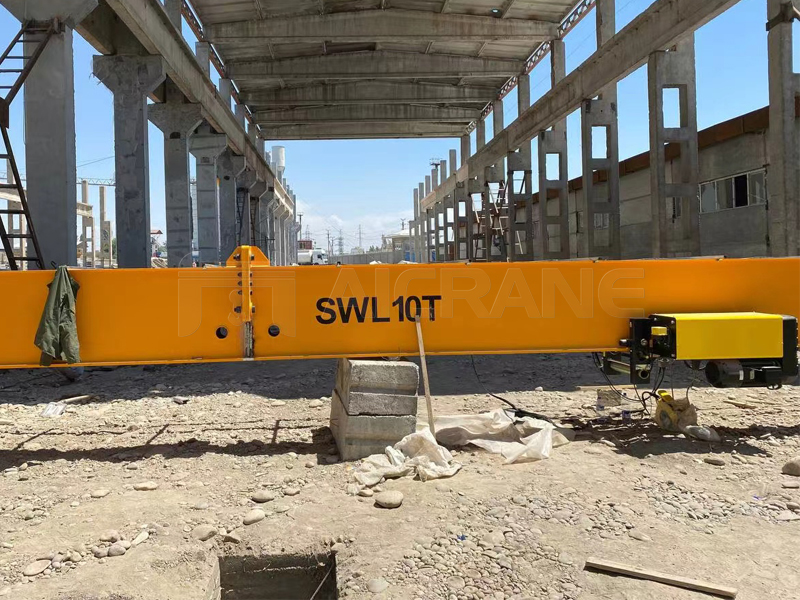
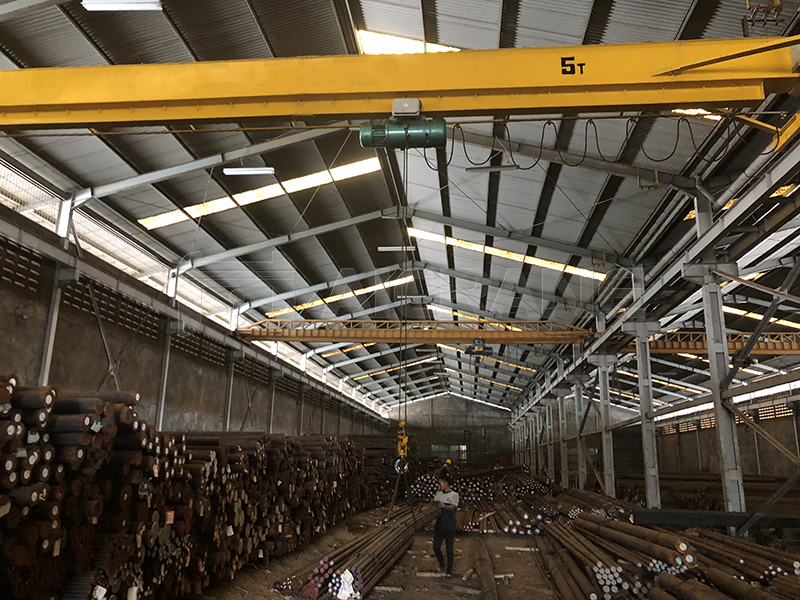
AQ-LD 5 Ton Overhead Crane in Indonesia
AQ-LD 5 ton overhead crane is installed in a bar warehouse to lift and move round bars. The 5t overhead crane Indonesia is equipped with a CD type electric wire rope hoist. Aicrane AQ-LD series overhead crane is a cost-effective choice for small and light duty applications, and can be used in machining workshops, assembly maintenance workshops and warehouses.

Other Lifting Equipment in Indonesia
Besides overhead cranes, we also provide gantry cranes, jib cranes, electric hoists, winches, etc. to Indonesian customers. See our cases below.
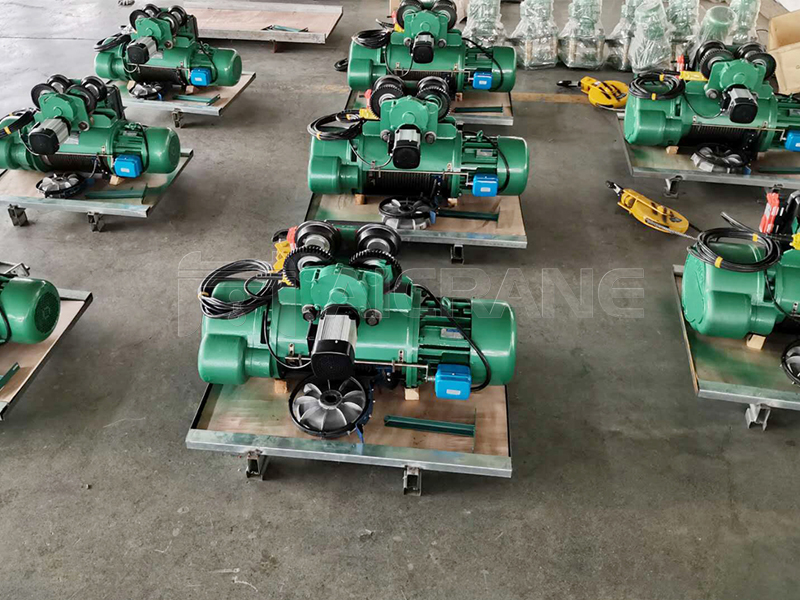
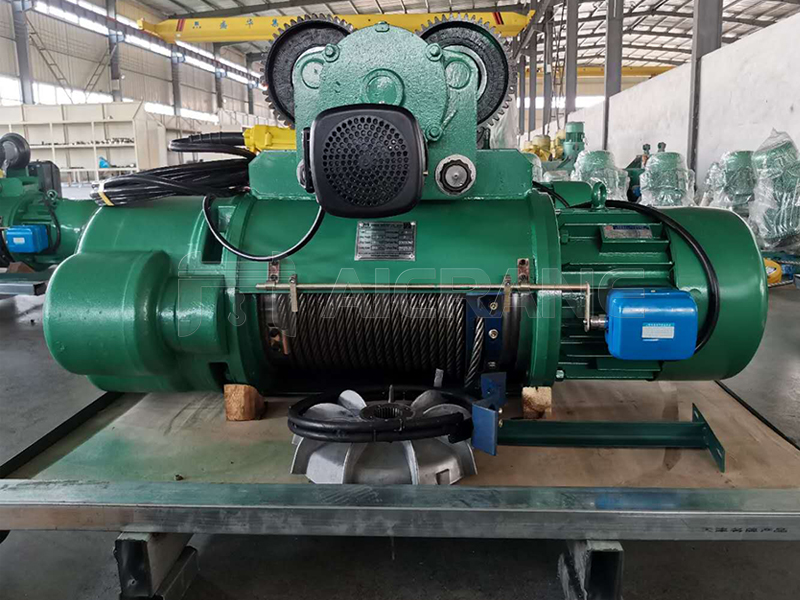
Electric Hoists to Indonesia
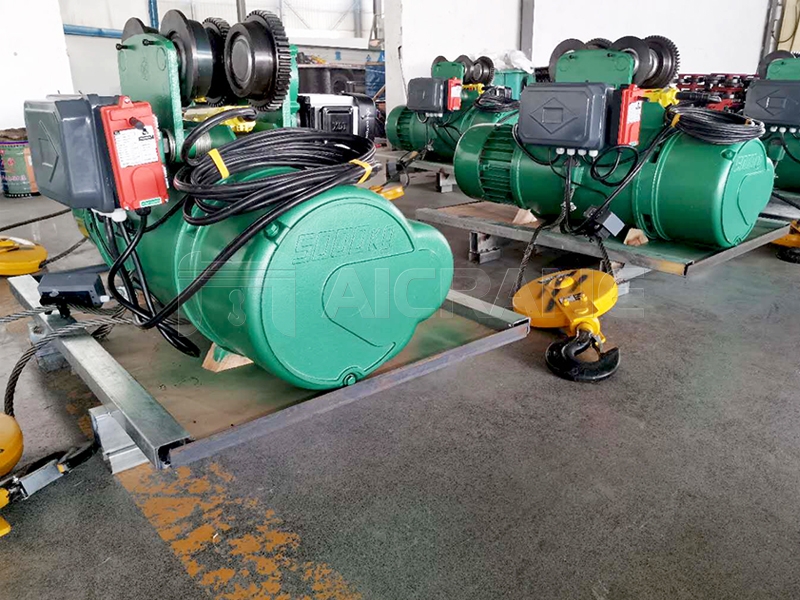
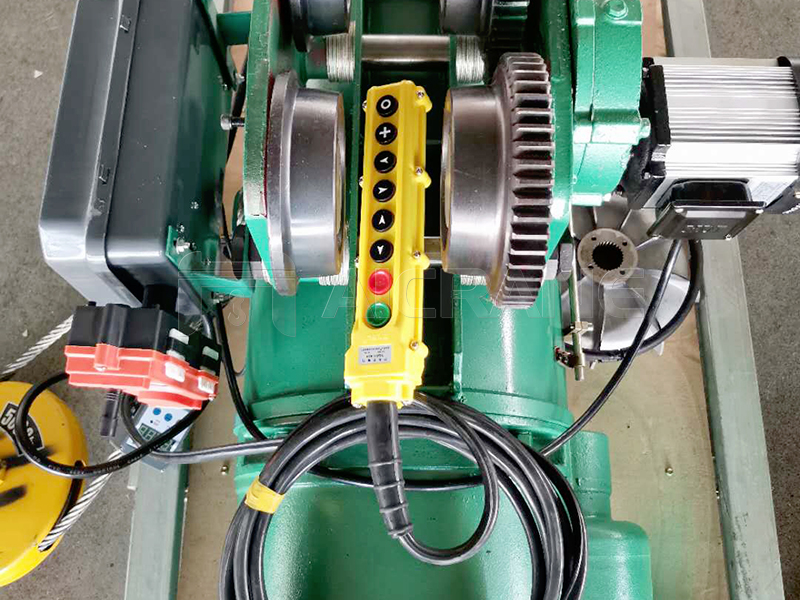
The 8 sets of 3-ton and 5-ton wire rope electric hoists in the pictures below are manufactured for an Indonesian client. The lifting speed of the electric hoist is constant speed, which can meet the general lifting requirements. Our electric hoist can be used alone or installed on bridge cranes, gantry cranes and jib cranes.
1.5 Ton Jib Crane in Indonesia
AQ-BZ 1.5 ton jib crane Indonesia is installed in the assembly workshop to lift accessories. The jib crane is equipped with a CD type electric wire rope hoist, and the valid radius is 5m.

What We Offer to Indonesian Customers
- Office in Indonesia: we have an overseas office in Indonesia to provide customers with high-quality overhead crane products and timely after-sales services.
- Overhead crane design and manufacturing: we provide the most suitable material handling system to improve the work efficiency and safety of customers.
- Technical support: our experienced engineers provide the best design according to the customer’s actual production conditions and process requirements.
- After-sales service: we offer an extensive range of after-sales service, including the crane installation and commissioning, staff training, 12-month warranty, etc.

Aicrane Services
We also attach great importance to service and are committed to providing timely and thoughtful service to our customers.
Packaging & Delivery
1. The steel structure part of the crane is generally packaged with plastic film to protect it from rain. Electrical and other smaller parts are packed in standard export fumigation-free wooden boxes or plywood boxes, and reinforced with iron nails or steel plates to prevent damage in the event of a collision.
2. For transportation, we have a professional shipping department to assist customers in shipment.
3. The delivery time of our bridge and gantry cranes is generally 20~40 days. If special customization is required, the delivery time will be longer.
Watch the video below to see how our cranes are packed and delivered:
Installation & Load Testing
1. For the installation and commissioning of bridge cranes, we can send 1 or 2 engineers to the site to guide the installation, but customers need to pay salary, round-trip air tickets, visas, accommodation and other expenses.
2. Many of our customers choose to install by themselves. We provide 3D installation video, instruction manual, detailed electrical drawings and 24-hour online installation guidance.
The video below is about the 3D installation video of the AQ-HD overhead crane:
A 5 ton overhead crane is undergoing load testing after being installed in the workshop:
Inspection & Certification
1. We have ISO quality management system certificate, and our products have passed CE certification and can enter the EU market.
2. In addition, we can do third-party inspection or certification according to your request.

Warranty
1. The warranty period of our company is 1 year. If the failure or component damage caused by quality problems occurs within 1 year, our company is responsible for providing free replacement parts.
2. We will provide 1 year of wearing parts for free.
Contact Us For The Latest Overhead Crane Price Indonesia
In order to provide you with accurate prices for overhead cranes shipped to Indonesia, please fill out the contact form below or send us an email to let us know the details about the crane you need:
- The type of crane you need
- Rated load
- Span of the crane
- Lifting height
- The type of material to be lifted
- Crane working environment
- How many hours does the crane work per day?
After receiving your inquiry, we will arrange the staff responsible for the Indonesian market to contact you and provide you with professional services!